Motifs
- the total designed environment
- the unity of fine and applied art
- luxury craft against machine kitsch
- the artist's monogram on every object
- geometric elegance
Wiener Werkstätte · Productivgenossenschaft von Kunsthandwerkern
A Viennese production workshop that dissolved the line between fine and applied art in total designed environments.
The Wiener Werkstätte, founded in 1903 by Josef Hoffmann and Koloman Moser, was a production cooperative that tried to dissolve the line between fine and applied art. Growing out of the Vienna Secession and the English Arts & Crafts ideal, it designed and made everything — furniture, metalwork, jewellery, textiles, graphics, whole interiors — to a single refined aesthetic, aspiring to the Gesamtkunstwerk, the total designed environment.
Its geometric elegance and luxury craftsmanship attracted wealthy patrons but never resolved the tension between handcraft ideals and commercial survival. Bankrupted during the Depression and closed in 1932, it nonetheless carried the workshop model and the ambition of unified design forward into the Bauhaus and the whole project of modern design.
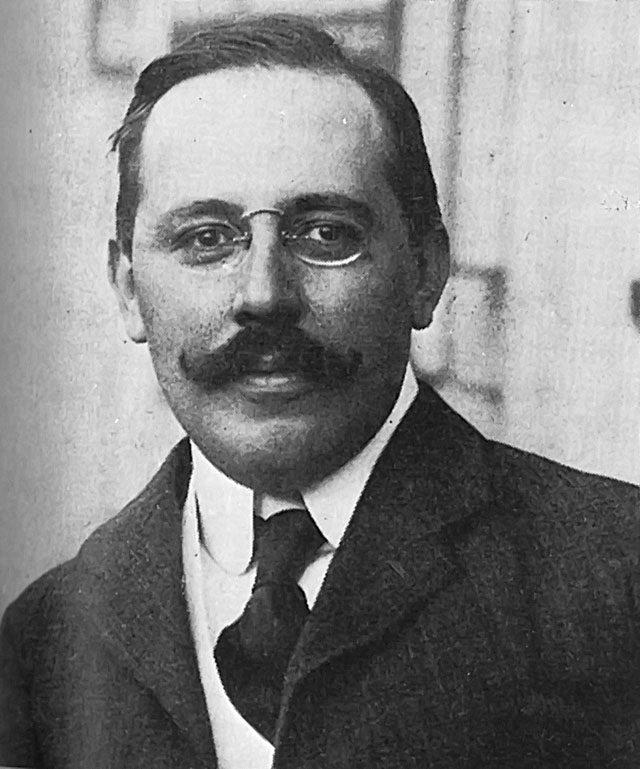
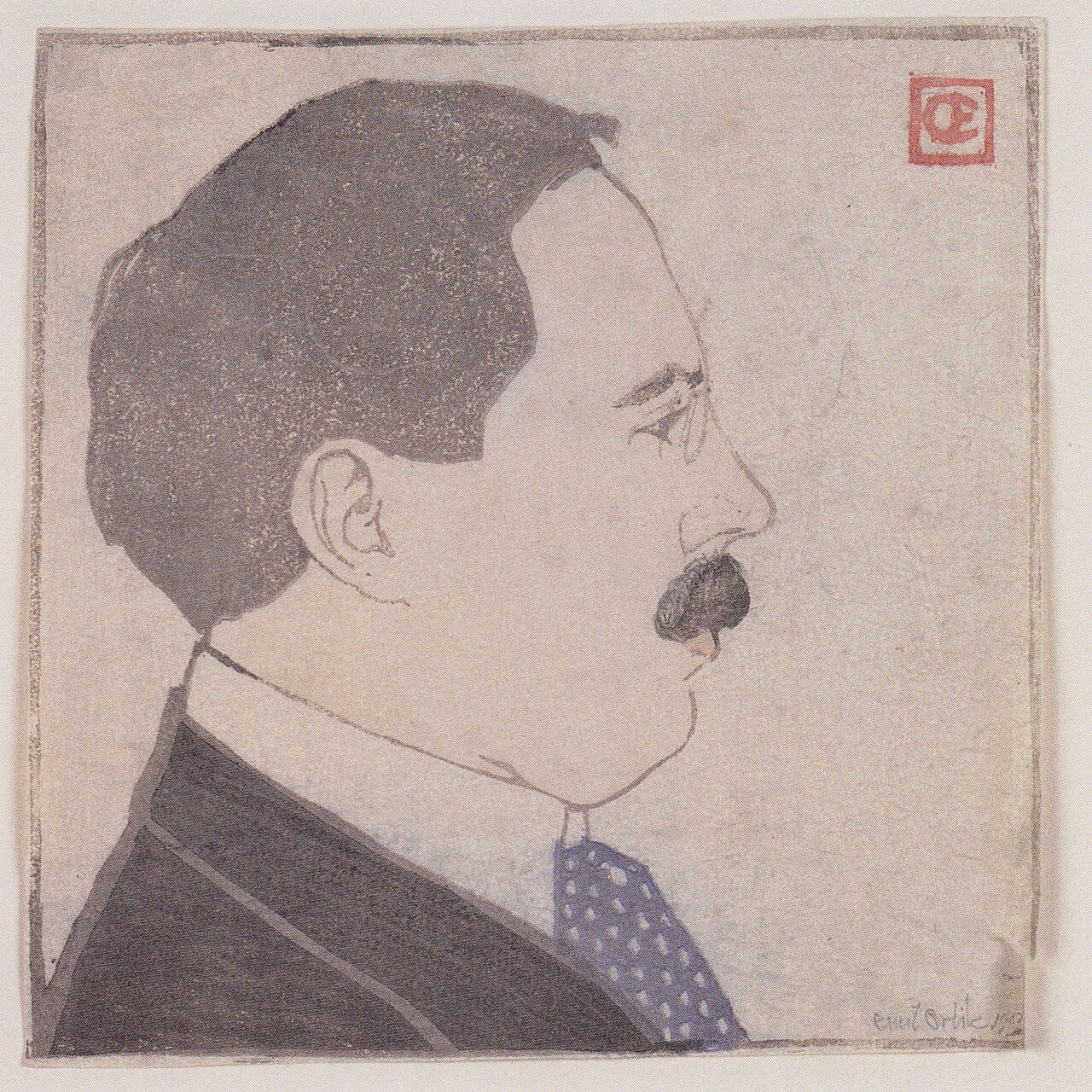
A workshop that treated the whole material envelope of life as one artwork — signing even the cutlery.
A patron-funded workshop run by artist-directors; brilliant and chronically insolvent, sustained by a few rich backers until they and the market gave out.
Shaped modern design and branding — the total identity, the designer monogram — influenced the Bauhaus and Art Deco, and modeled the designer-run studio.
The workshop's ambition reached the smallest ephemera. These printed New Year greeting cards — Herzlichen Glückwunsch zum neuen Jahre, with a Hebrew L'shanah tovah tikatevu — turn a throwaway object into a jewel of flat geometric pattern.
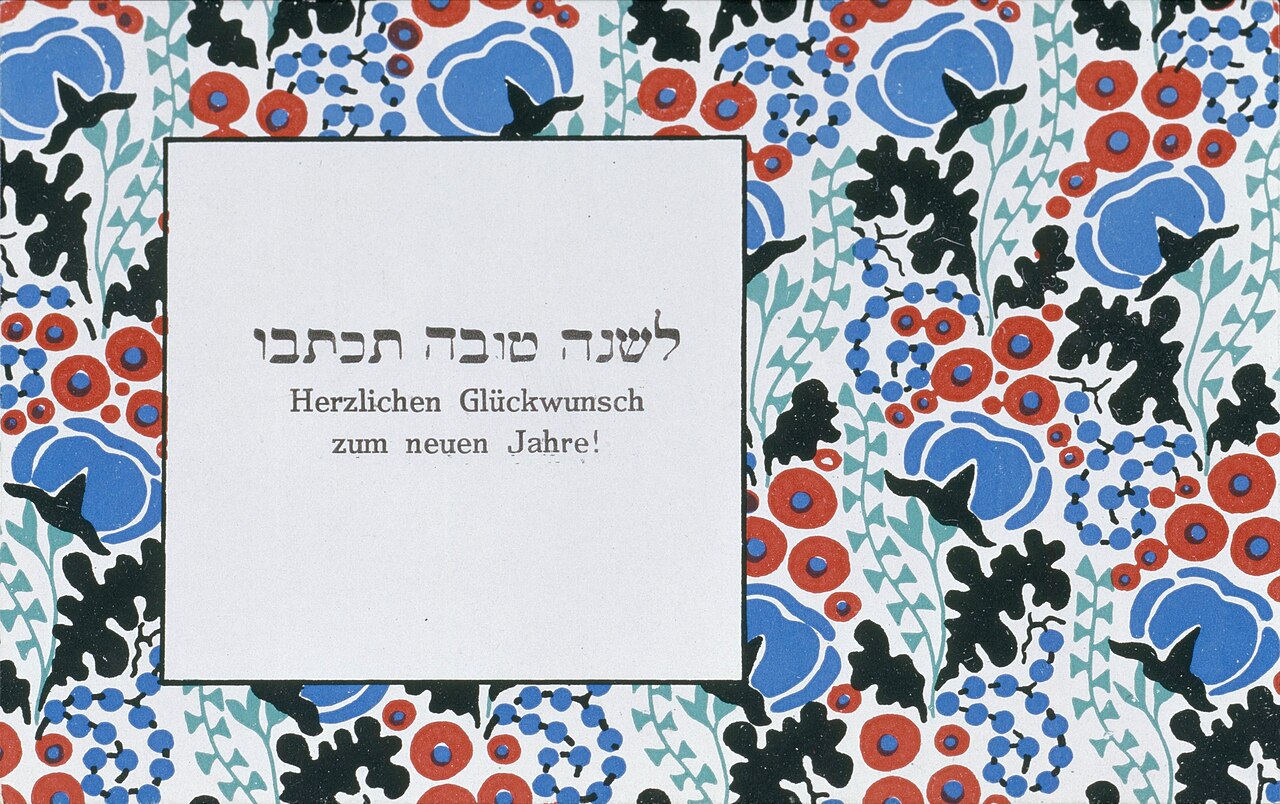
New Year greeting card — a white text panel set into a field of stylized poppies, birds and berries.
Wiener Werkstätte · Lotte Fochler-Frömel / Salomon Kohn · Public domain · Wikimedia Commons
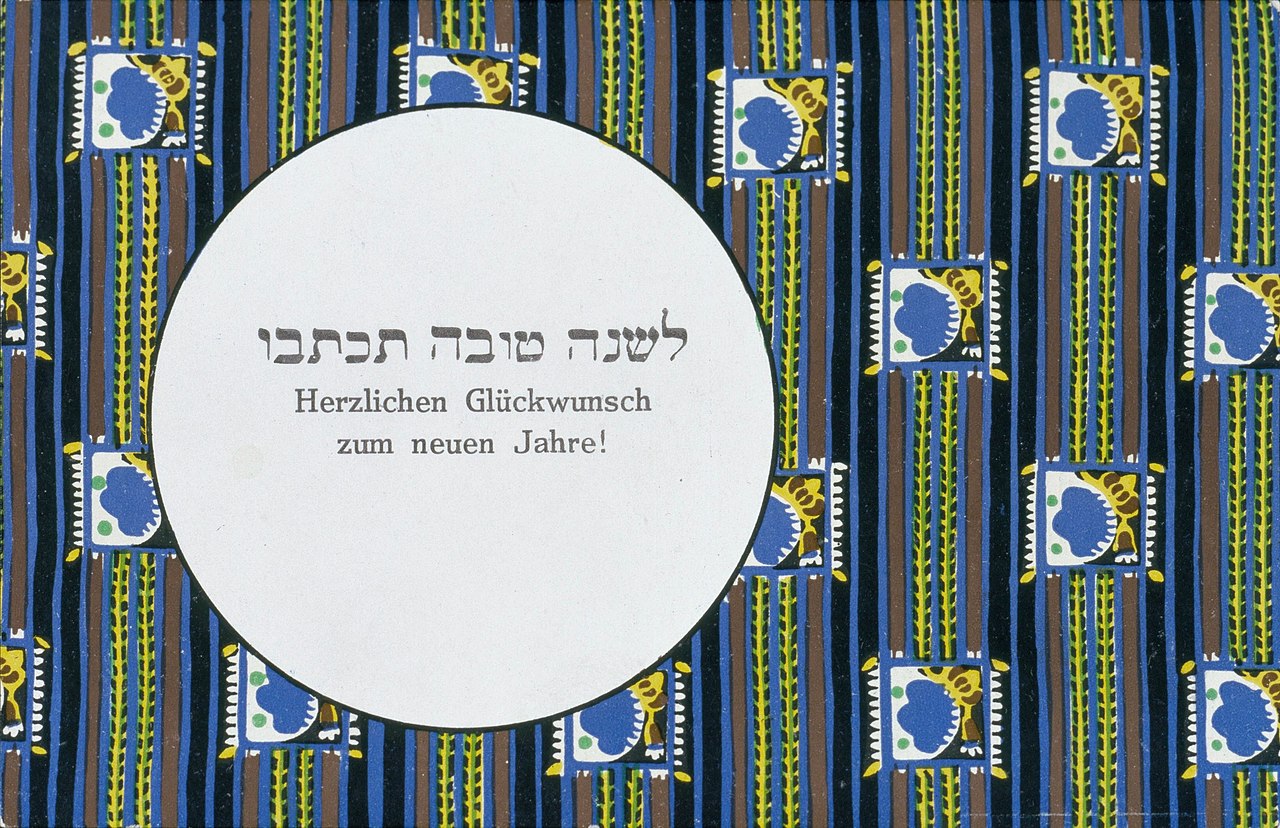
A rondel of text floats on a striped ground of squared flower stamps — geometry disciplining ornament.
Wiener Werkstätte · Eduard Josef Wimmer-Wisgrill · Public domain · Wikimedia Commons
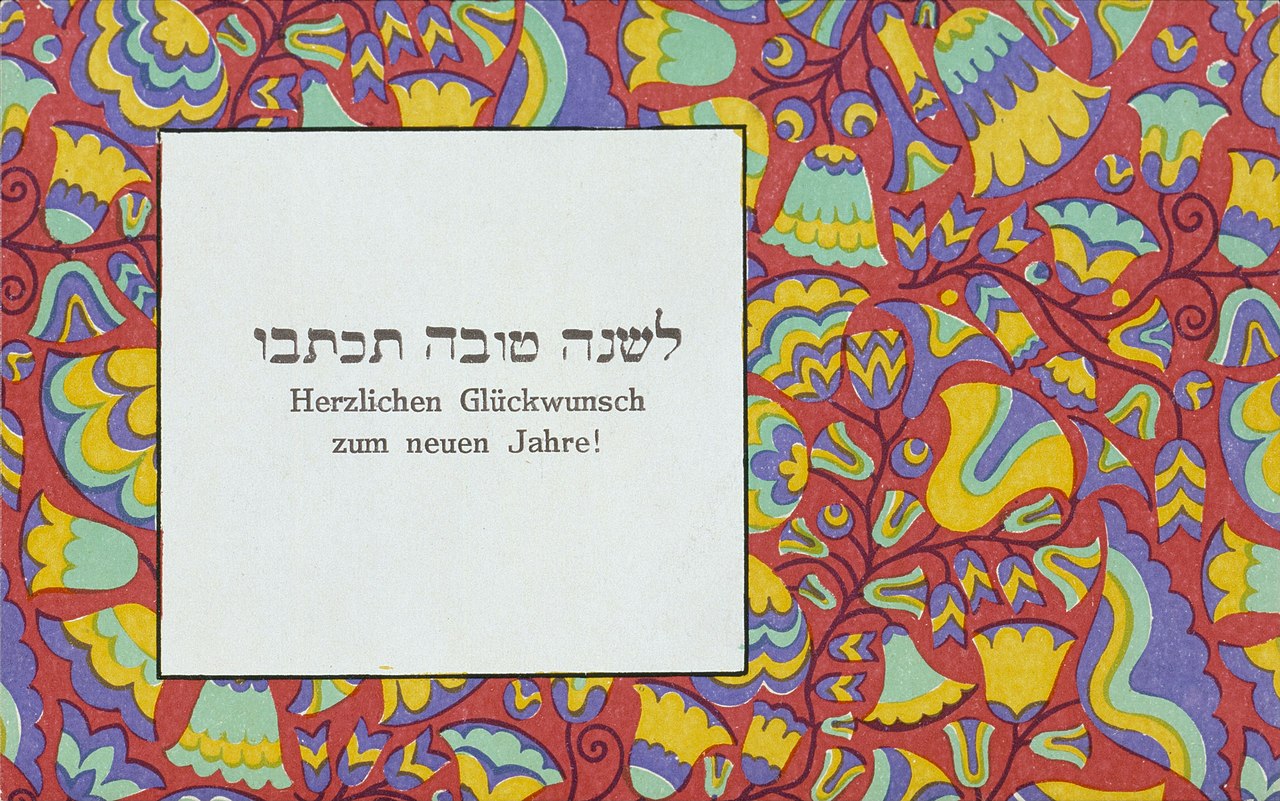
A jewel-toned tangle of tulips and vines by Carl Otto Czeschka — the workshop's more sumptuous, folk-inflected register.
Wiener Werkstätte · Carl Otto Czeschka · Public domain · Wikimedia Commons
The whole material envelope of life, treated as one artwork — and a monogram pressed even into a spoon.
Bankrupted in 1932 by luxury economics and depression; absorbed into the DNA of modern design and the idea of the lifestyle brand.