Purpose
front matterThe Whole Earth Catalog was Stewart Brand’s 1968 answer to a generational bottleneck: a counterculture bent on self-sufficient communal life needed access — to geodesic dome plans, seed catalogs, synthesizers, and Buckminster Fuller’s whole-systems logic — that no single store or school offered.
Structured as a reviewed catalog rather than a store, it converted ‘access to tools’ into an editorial and, eventually, network-building philosophy that outlived its own print runs by three decades.
Motifs on the page
recurring items‘Access to tools’
The Catalog’s whole thesis compressed to three words: not goods for sale, but → the knowledge of what exists and how to reach it.
The whole Earth photograph
A single blue sphere in black space — proof, on the cover, that everything is connected and that stewardship is a whole-systems problem.
The empowered builder
The individual, given the right tool, can build their own world instead of accepting the one institutions hand down.
‘We are as gods’
“…and might as well get good at it.” A blessing on human agency — Promethean, and unafraid of it.
The review as network
Each entry a node: a tool, a price, a voice vouching for it. Stack thousands and you have a map of a movement.
Individuals and small groups, given access to the right tools and information, can take power back from institutions and consciously shape their own lives and environments.
Why it spread
memetic forcesIt flattered the reader
The Catalog treated its reader as a capable world-builder — a stance that was flattering, empowering, and mobilizing all at once.
Everyone could add
Reader-contributed reviews made it a participatory network, not a top-down publication. Belonging, not subscribing.
It blessed both tribes
It resolved the counterculture’s contradiction by blessing technology and nature at once — capturing the back-to-the-land and the wireheads in one object.
The two engines
convergent / divergent→ Convergent · what held it together
- Brand’s singular editorial vision
- the catalog as a shared object owned by a whole generation
- the Bay Area milieu of communes and early computing
↦ Divergent · what forked it outward
- the deliberate hand-off — Brand ended it, passed it on, spun off CoEvolution Quarterly, the WELL, Global Business Network
- its own success spawning successors that each took different pieces
- the drift of its individualism toward libertarianism
How it worked inside
internal dynamicsA publication run as a network — its content crowd-sourced from readers, its editor acting as curator-router — which made it feel like a movement you belonged to rather than a magazine you read.
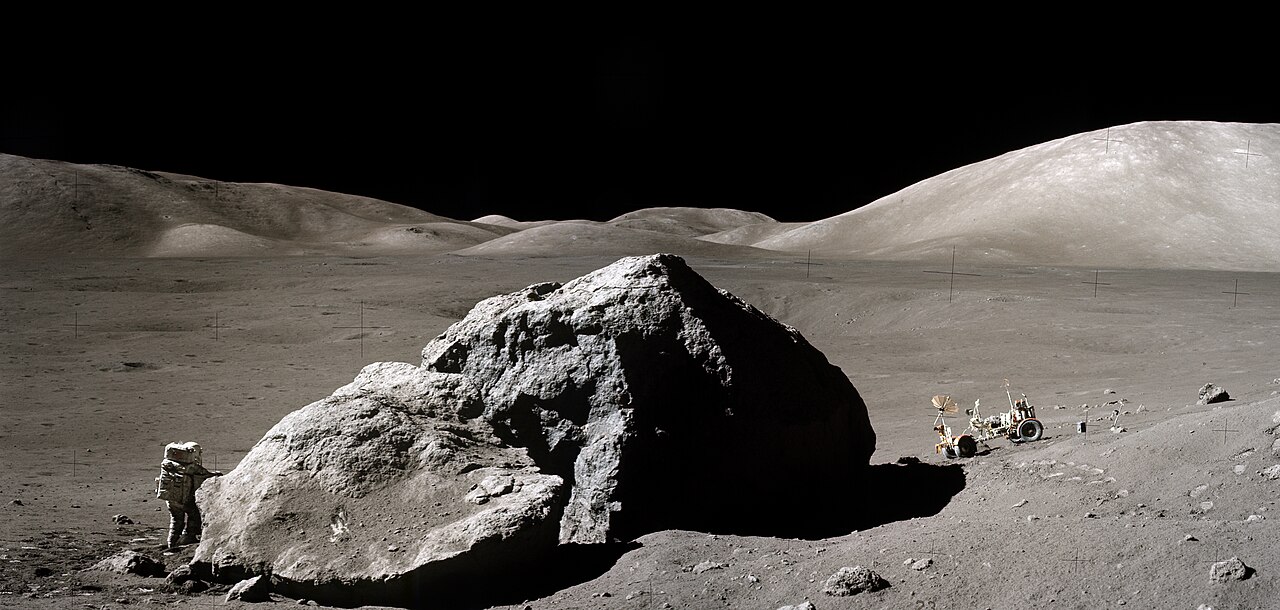
License: Public domain · Photo: Eugene A. Cernan; photomontage by User:Grunpfnul (NASA) · source
Field report
impact & signatureimpact
signature
§ 07 · Fate — the scene that composted itself
Deliberately wound down and forked by Brand into the WELL, Global Business Network, and the Long Now — the rare scene that composted itself on purpose into the next thing.