Mnemosyne
1900 — 1970 · Republic & Salon · morphology: lab
A private library-turned-institute organized by association not alphabet — a scenius for the afterlife of images across cultures.
Panel A The Brief
The Warburg Institute began as the private library of the German art historian Aby Warburg, a scholar obsessed with the survival and migration of images — how ancient symbols and gestures resurface, charged with emotion, across cultures and centuries. He arranged his books not by subject-catalogue but by association, so that browsing itself sparked connections, and pursued this in his unfinished Mnemosyne Atlas of juxtaposed images.
Rescued from Nazi Germany and reestablished in London in 1933, the Institute became a legendary center for the study of the classical tradition and iconology, shaping art history and cultural studies. Warburg's associative, image-driven, cross-disciplinary method feels startlingly contemporary in an age of visual culture.
Panel B The Board


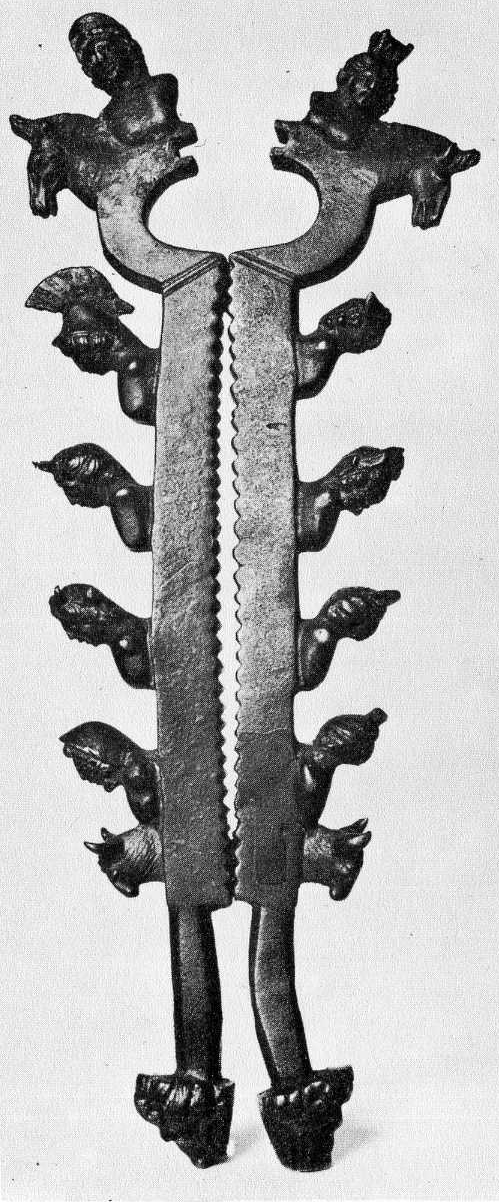
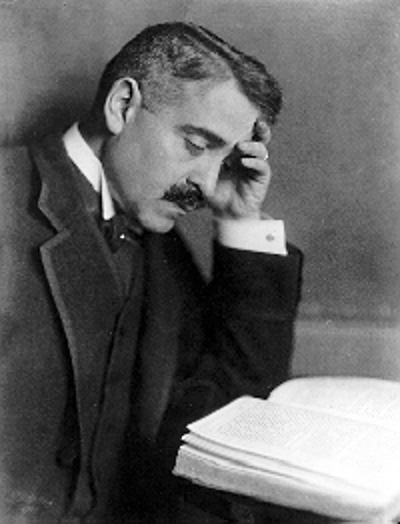
Two plates, one thread. The method of the Atlas was to lay images side by side on black cloth and let the resemblance do the arguing — a gesture repeating across a millennium, a symbol migrating out of Asia Minor into Rome and forward again. Nothing here is captioned into an explanation; the juxtaposition is the claim.
Panel 1 Motifs
Panel 2 The Law of the Good Neighbour
Shelving was the argument. Pull a spine; the neighbours answer. Below, the working parts of this scenius, arranged as they would have stood — not by alphabet.
Good neighbourChoose a volume from the shelf.
Panel 3 Memetic Forces
a library organized by association rather than category enacted a whole method of thought — browsing became discovery
Warburg's obsessive, cross-cultural vision attracted brilliant scholars into a distinctive school
rescuing the library from Nazi Germany bound its members in a shared mission
Panel 4 Unifying Principle
the whole doctrine, in one breathImages carry an afterlife, migrating and recurring across cultures and centuries; a library and an atlas organized by association, not discipline, can trace this memory of civilization.
Panel 5 Engines
Panel 6 Internal Dynamics
A private library-turned-institute whose very shelving embodied a method; a small devoted circle carried Warburg's idiosyncratic vision into a durable school after his death.
Panel 7 Society & Impact
Panel 79 Signature & Fate
A library whose shelving order was itself a theory, gathering a school around the migration of images.
Survived exile to London and endures as an institute; its associative method and image-atlas are newly influential in the digital age.
Apparatus Credits & Sources
Keyed to the standard published literature on this scene (representative, not exhaustive; not independently re-verified against each edition).