← the scenic garden Москва · Moscow · 1920–1930 · a school of the Form & Workshop biome

Высшие художественно-технические мастерские

ВХУТЕ​МАС
VKhUTEMAS

The Higher Art and Technical Studios · founded Moscow, 1920 · dissolved 1930

The Soviet “Bauhaus”: a state design school forging a new material culture for a new society.

Place Moscow

Era 1920–1930

Morphology School

Biome Form & Workshop

Generativity 4 / 5

Not a school of art.
A factory of the new life.

VKhUTEMAS — the Higher Art and Technical Studios — was the Soviet Union's radical state design school, founded in Moscow in 1920 and often called the Russian Bauhaus, though it was larger and, for a moment, more revolutionary. Rodchenko, Tatlin, Lissitzky, and Popova taught a generation to abandon “art” for the making of a new material culture fit for a new society: productivist objects, agitational graphics, workers' clubs, flying cities. Its basic course drilled students in the objective properties of color, form, and construction. Starved of resources and then crushed by the turn to Socialist Realism, it was dissolved in 1930, but its forms escaped west into the Bauhaus and became the grammar of modern graphic and industrial design worldwide.
The masters of the workshops

  • Alexander RodchenkoРодченко
  • El LissitzkyЛисицкий
  • Vladimir TatlinТатлин
  • Lyubov PopovaПопова

Charismatic masters running state workshops on state salaries — the faculty of a school where the design of a teacup was treated as the design of a society.

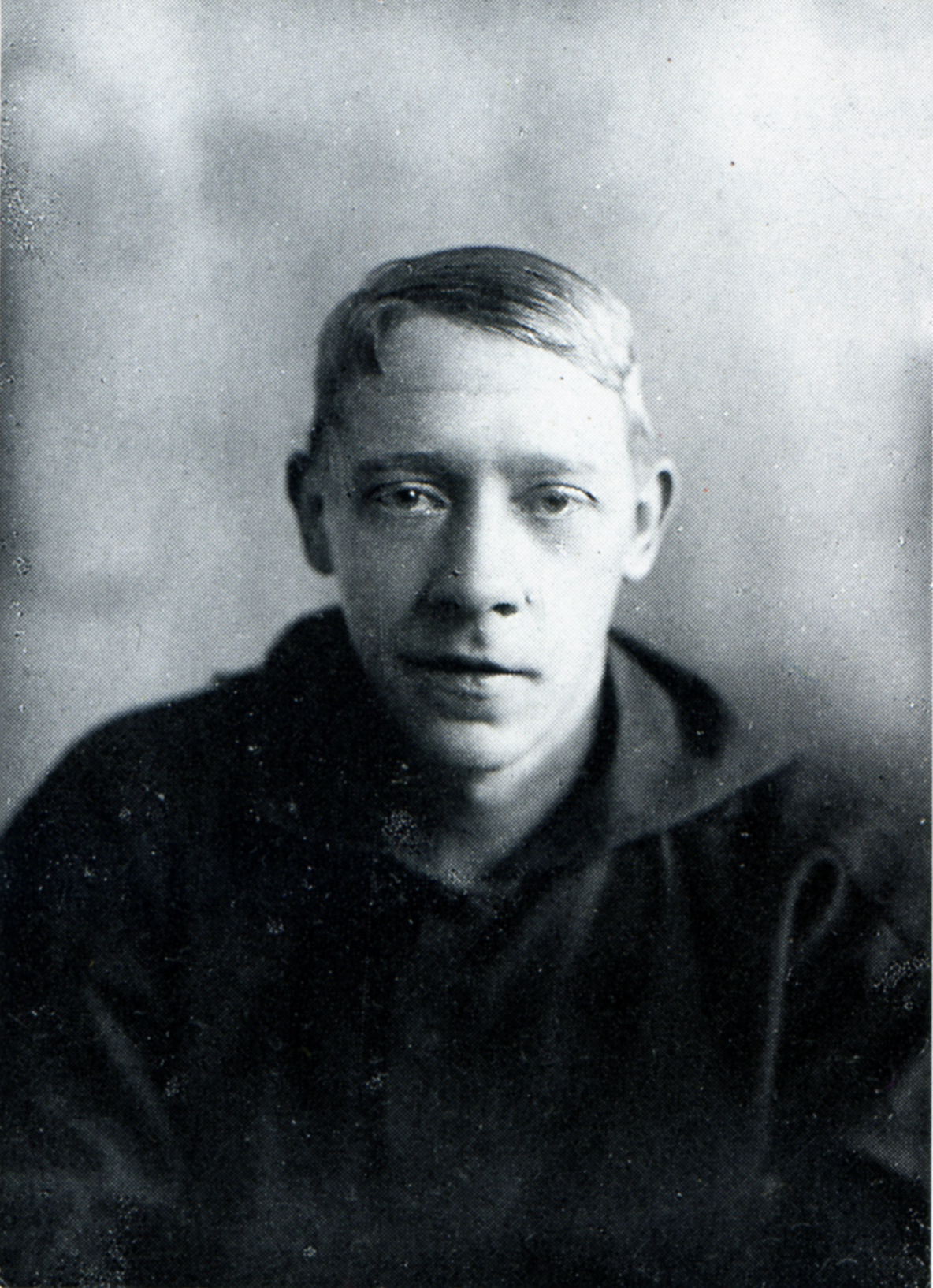
Black-and-white photographic portrait of Vladimir Tatlin dressed as a sailor, gazing directly at the camera
Vladimir Tatlin as a sailor. Photograph, unknown author. Public domain — source: Wikimedia Commons.
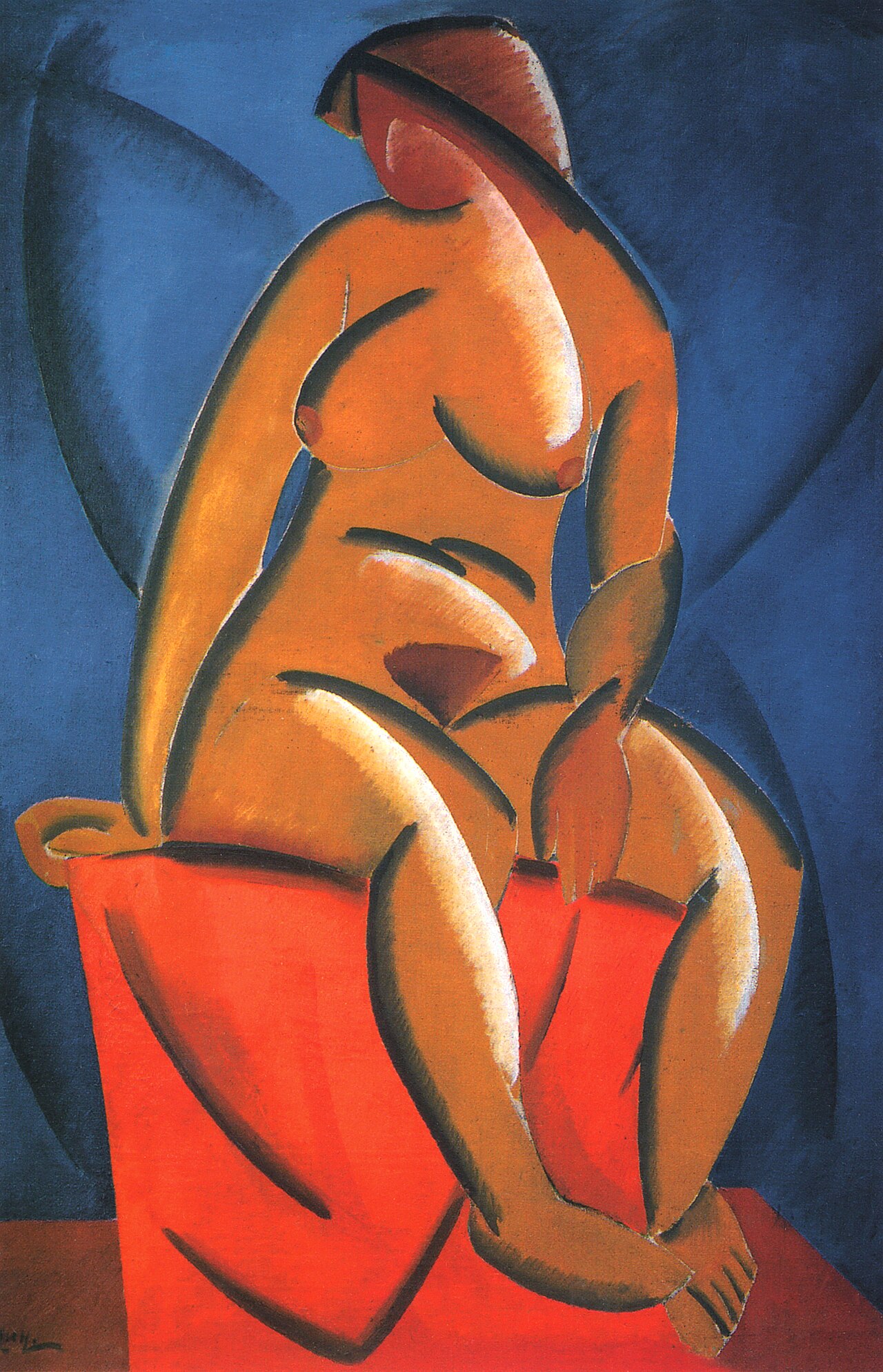
Vladimir Tatlin's painting Female Model, 1913: a seated nude built from curved planes of ochre against blue, on a red-draped stool
Vladimir Tatlin, Female Model, 1913. Public domain — source: Wikimedia Commons.

Directives of the propaedeutic course

Why it burned so hot

Engines of convergence — and of rupture

Convergent

What pulled the school into one force

  • A state design school with a common propaedeutic course
  • Constructivist and productivist doctrine
  • Charismatic masters — Rodchenko, Lissitzky, Popova

Divergent

What tore at it from within and without

  • The fight between pure Constructivists and productivists
  • The tightening Party line toward Socialist Realism
  • Chronic material scarcity in a starving country

Anatomy of the scenius

Internal dynamics

The Soviet Bauhaus: a large state school run through workshops and a shared foundation course, its fate bound to the Party's shifting tolerance rather than internal schism.

Signature

A school where revolution, engineering, and the avant-garde briefly fused, treating the design of a teacup as the design of a society.

Mediums of the scene

the workshop the productivist object the poster

Archetypes

The Guild / Workshop The New Man

What escaped west

Invented much of modern graphic design, photomontage, and industrial-design pedagogy; its forms escaped west into the Bauhaus and the whole language of modern design.

Fate

Расформировано · 1930

Reorganized and shut under Stalin by the early 1930s; its people silenced or scattered, its forms exported and canonized abroad.

Sources & credits

Keyed to the standard published literature on this scene (representative, not exhaustive; not independently re-verified against each edition).

Image credits

  • Vladimir Tatlin as a sailor — photograph, unknown author. Public domain. Wikimedia Commons. Shown here in a red duotone treatment.
  • Vladimir Tatlin, Female Model (1913) — Public domain. Wikimedia Commons.
← Return to the Scenic Garden