the scenic garden

Wien · 1924–1936 · Der Donnerstag-Zirkel

Vienna
Circle

Wissenschaftliche Weltauffassung — the scientific conception of the world

Logical empiricists who tried to purge metaphysics from thought and rebuild knowledge on logic and observation.

PlaceVienna
Era1924 – 1936
BiomeRepublic & Salon
MorphologyThe Circle
MediumsSeminar · Manifesto · Encyclopedia
ArchetypesSalon · Invisible College
1

The Thursday Circle

Der Wiener Kreis · under the chairmanship of Moritz Schlick

The Vienna Circle was the discussion group of philosophers, mathematicians, and scientists that met on Thursday evenings from 1924 to 1936, giving logical positivism — later logical empiricism — its name, its doctrine, and its canon. Its roots lay in an informal 1907–08 reading circle of Philipp Frank, Hans Hahn, and Otto Neurath, heirs to Ernst Mach's anti-metaphysical empiricism. It crystallized once Schlick arrived in 1922 to occupy Mach's old chair, drawing in Rudolf Carnap, Herbert Feigl, Friedrich Waismann, Karl Menger, and the young Kurt Gödel — and treating Wittgenstein's newly published Tractatus Logico-Philosophicus as virtual scripture, read aloud line by line.

One figure = one voice around Schlick's table. The picture-language is Neurath's own — the Vienna Method that became Isotype.

1.1

The unifying principle

A statement is meaningful only if it is analytic or empirically verifiable. Philosophy's task is the logical clarification of scientific language — and metaphysics is literally nonsense.

Verifikationsprinzip · meaning as method of confirmation

2

Motifs

The four recurring commitments

  1. The elimination of metaphysics.
  2. Verification — meaning as the method of its confirmation.
  3. Logic and empirical science as the whole of knowledge.
  4. The unity of science, and its encyclopedia.
3

Why it caught

Memetic forces

The pull

  • The thrill of a demolition project — clearing away "meaningless" metaphysics felt like intellectual hygiene and liberation.
  • A shared enemy — woolly idealism, and later fascism's irrationalism — bonded the group politically as well as philosophically.
  • The rigor of the new logic (Frege, Russell, Wittgenstein) gave members a powerful common tool.

Internal dynamics

  • A disciplined discussion circle organized around Schlick's seminar — arguing toward a common program.
  • While quietly splitting into a left wing (Neurath) and a more formalist wing (Carnap).
  • The scenius signature: modern logic met empirical science under one program — sustained collective argument forging a movement that outlived its dispersal.
3.1

Scripture, read aloud

Wittgenstein's Tractatus · line by line
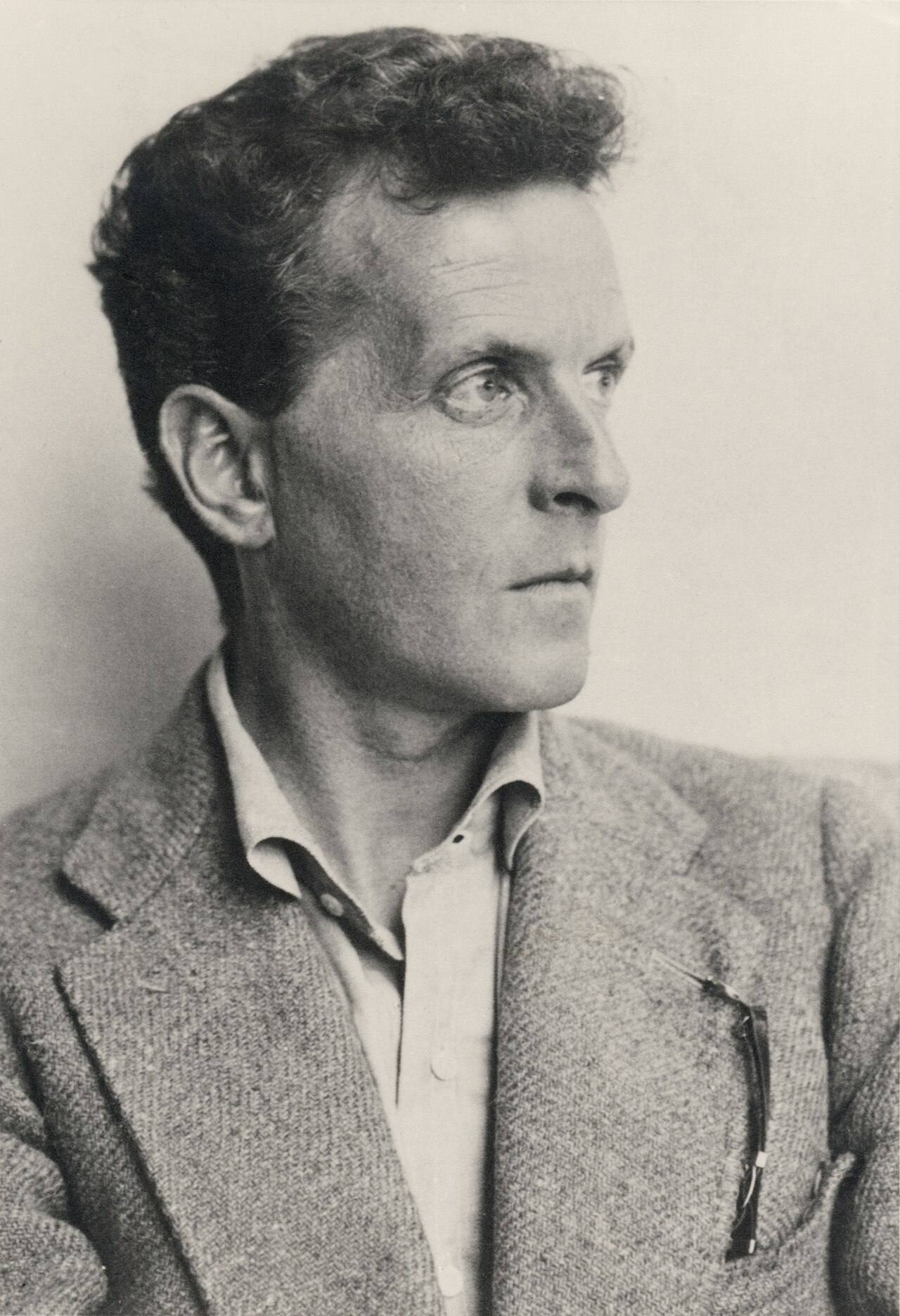
Portrait photograph of Ludwig Wittgenstein, whose 1921 Tractatus Logico-Philosophicus the Vienna Circle read aloud proposition by proposition.

Common scripture

"Whereof one cannot speak, thereof one must be silent."

The Circle took the Tractatus' decimal-numbered propositions as a map of the sayable — the sections of this page borrow that numbering. Its closing line drew the boundary they wished to police: everything meaningful sits inside logic and observation; the rest is silence.

— Ludwig Wittgenstein, Tractatus Logico-Philosophicus, prop. 7 (1921)

Ludwig Wittgenstein (1889–1951). Photograph by Moritz Nähr · Public domain · Wikimedia Commons.
4

Convergent & divergent engines

What held it together · what tore it apart

Convergent — toward one program

  • Moritz Schlick's weekly seminar as the fixed center.
  • A shared manifesto and the Unity of Science movement.
  • Wittgenstein's Tractatus and modern logic as common scripture.

Divergent — toward dispersal

  • Internal disputes over verification and protocol sentences (Neurath vs. Carnap).
  • The assassination of Schlick, 1936, and the rise of Nazism.
  • Emigration that scattered members across the Anglophone world.
5

Two wings, one table

The protocol-sentence dispute

Left wing

Otto Neurath

Protocol sentences are themselves revisable statements of physical science — no incorrigible bedrock, no rebuilding on rock. Knowledge is a boat rebuilt plank by plank at sea, and science is a social, political, unified project.

Formalist wing

Rudolf Carnap

The task is the logical syntax of language — clarify the structure of scientific statements formally, and questions of foundation dissolve into questions of the chosen framework.

6

Impact

On society & the century of thought

It founded logical empiricism and shaped analytic philosophy, philosophy of science, and the rigorous, anti-metaphysical style that dominated Anglophone thought.

Via its diaspora it reshaped American philosophy — Carnap at Chicago and UCLA, Feigl at Minnesota, Frank at Harvard — carrying the seminar's temper into the departments of an entire continent.

7

The circle

Principal figures

01 Moritz
Schlick
Chair · the fixed center
02 Rudolf
Carnap
Logical syntax · formalist wing
03 Otto
Neurath
Left wing · Isotype · unity of science
04 Kurt
Gödel
Adjacent · incompleteness
Seminar Manifesto The Encyclopedia Project The Salon The Invisible College
7.1

Fate

Scattered by murder and fascism into exile, where its members seeded analytic philosophy worldwide. The strict doctrine collapsed — but its temper endures.