← the scenic garden FILE IR/01 — INDUSTRIAL MUSIC FOR INDUSTRIAL PEOPLESHEFFIELD / LONDON · 1975–1981
Sound & SignalMorphology: cellDossier compiled from the published record
Industrial music / COUM
Performance-artists-turned-band who weaponized noise and transgression, founding industrial music and its mail-order network.
Years1975 – 1981
LocationSheffield / London
BiomeSound & Signal
ArchetypesThe Trickster · Orpheus
INDUSTRIAL MUSIC FOR INDUSTRIAL PEOPLE · REFUSE MELODY · REFUSE COMFORT · REFUSE THE ENTERTAINMENT CONTRACT · INDUSTRIAL MUSIC FOR INDUSTRIAL PEOPLE · REFUSE MELODY · REFUSE COMFORT · REFUSE THE ENTERTAINMENT CONTRACT ·
01
The Report
Industrial music was born when the British performance-art collective COUM Transmissions reinvented itself as the band Throbbing Gristle in 1975, declaring an end to entertainment and the start of ‘industrial music for industrial people.’ Using tape, noise, cheap electronics, and deliberately transgressive imagery, Genesis P-Orridge and company (alongside Sheffield’s Cabaret Voltaire) turned confrontation and the studio itself into instruments, and ran their own label and mail-order network to reach a subculture directly. Bleak, provocative, and formally radical, industrial music extended the avant-garde’s shock tactics into the age of the cassette. Its offspring are wide: industrial, techno, noise, and much of the darker, harder edge of electronic music.
02
Motifs — cut up
noise and transgression as content
the cut-up (Burroughs / Gysin)
information war and control
DIY cassette and mail networks
‘industrial music for industrial people’
03
Unifying principle
Use noise, transgression, and the cut-up to expose and short-circuit systems of social control; refuse melody, comfort, and the entertainment contract.
04
Memetic forces
i
Deliberate ugliness and taboo-breaking filtered for the committed and horrified the mainstream — a purifying shock.
ii
Performance-art provenance (COUM) gave the noise conceptual seriousness.
iii
The cassette-and-mail network built a self-selecting global underground.
05
Engines
Convergent
Industrial Records and the cassette/mail network
the COUM performance-art background
a small, ideologically tight core
Divergent
Throbbing Gristle’s acrimonious 1981 split
the diffusion of ‘industrial’ into many divergent genres
the limits of pure transgression
06
Mediums
IR / MEDIUMC60
the cassette
IR / MEDIUMLIVE
the noise performance
IR / MEDIUMPOST
the fan network
07
Personnel
UnitThrobbing Gristle
FigureGenesis P-Orridge
FigureCosey Fanni Tutti
FigurePeter Christopherson
FigureChris Carter
SheffieldCabaret Voltaire
ApparatusIndustrial Records
AntecedentCOUM Transmissions
Archetype · The TricksterArchetype · OrpheusMorphology · cell
08
Plates
Plate A — Genesis P-Orridge
Genesis P-Orridge holding up their Universal Life Church certification as Wedding Officiant inside their home in New York in 2014. Photo by Nadja Sayej.
Penny 12 · CC BY-SA 4.0 · Wikimedia Commons
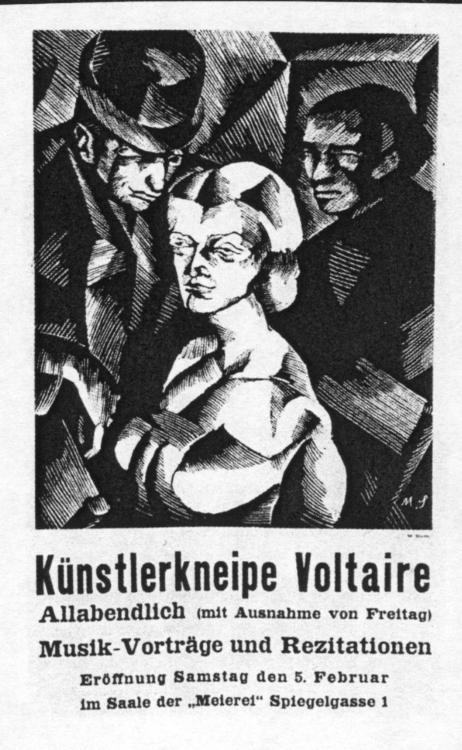
Plate B — Cabaret Voltaire, 1916
Poster for the opening of the Cabaret Voltaire, 1916, lithograph by Marcel Slodki. Kunsthaus Zurich. The Dada club whose name the Sheffield group took.
Marcel Słodki (1892–1944) · Public domain · Wikimedia Commons
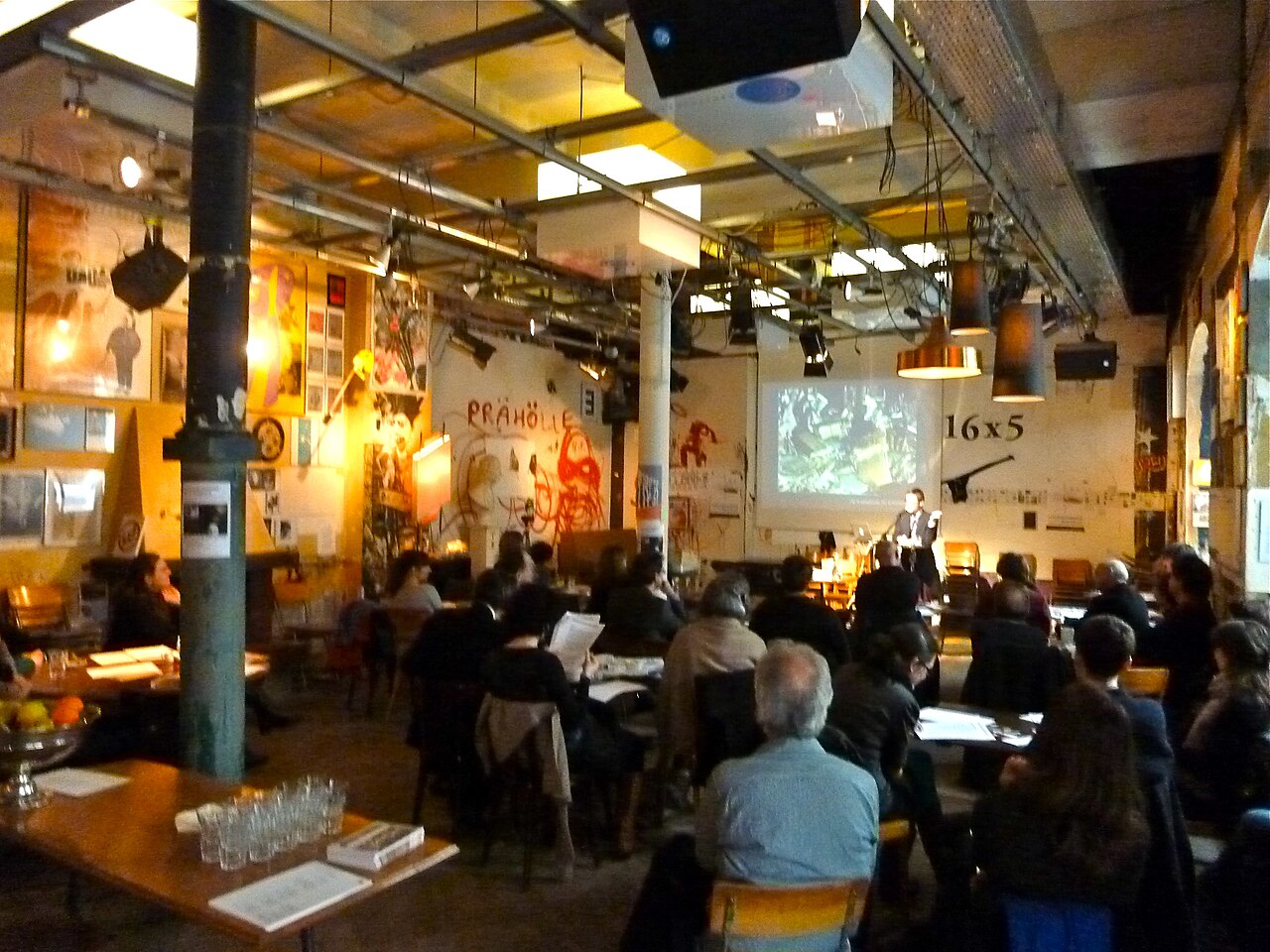
Plate C — Cabaret Voltaire, Zürich
Veranstaltung im Cabaret Voltaire in Zürich — an event in the Zurich room that gave the Sheffield unit its name.
Adrian Michael · CC BY-SA 3.0 · Wikimedia Commons
09
Internal dynamics
Internal dynamics
An art-collective-turned-band running its own label and network as a total project; intense, confrontational, and prone to the personal rupture that ended it.
Scenius signature
Performance artists who turned noise and taboo into a genre and ran the whole apparatus themselves.
Morphology
Cell — a small closed unit that produced its own records, its own distribution, and its own audience.
10
Impact & fate
Societal impact
Founded industrial music and its ethic; seeded techno, noise, EBM, and a whole DIY-transgressive lineage, and pioneered the cassette-network model.
Mission terminated 1981
Split in 1981; ‘industrial’ fragmented into dozens of genres and its confrontational DIY ethic spread across underground music.
11
Documentation
Keyed to the standard published literature on this scene (representative, not exhaustive; not independently re-verified against each edition).
Simon Ford, Wreckers of Civilisation: The Story of COUM Transmissions & Throbbing Gristle (1999)
Simon Reynolds, Rip It Up and Start Again: Postpunk 1978–1984 (2005)
V. Vale & Andrea Juno, RE/Search #6/7: Industrial Culture Handbook (1983)

.jpg)

