login: newuser · g wellcome
The Whole Earth 'Lectronic Link
The seminal online community that discovered what virtual community could be — and coined the "electronic frontier" and much of cyberculture's self-understanding.
OK (? for help): g about
What this place was
conference: about | type read new to continue
The WELL was the Whole Earth Catalog rebuilt as a text-based commons: a dial-up VAX system in Sausalito where, from 1985, several thousand people conducted an unbroken, real-name, topically organized conversation that lasted years rather than minutes.
It took the countercultural conviction that access to tools and information should be decentralized and personal, and rebuilt it as software — "conferences" instead of communes, a modem instead of a bus to the land. In doing so it became the single clearest bridge in this corpus between 1960s Bay Area communalism and the network culture of the 1990s.
OK (? for help): g motifs
Recurring topics
conference: motifs | 5 topics, all new
- virtual community — real relationships through text> 1 new response
- "you own your own words" (YOYOW)> frozen topic · read-only
- the electronic frontier> forked to policy.
- the blend of online and face-to-face — the WELL had picnics> see: offline.
- the online conference as a place> 1 new response
OK (? for help): g memetics
Why it caught and held
conference: memetics | what kept people dialing back in
- Being present at the birth of something — online community — gave members an intense pioneer identity.
- The small, non-anonymous, high-trust membership produced unusually deep relationships that hooked people.
- Its Whole-Earth lineage attracted a self-selecting elite of writers, hackers, and Deadheads who set a literate tone.
OK (? for help): g principle
The one conviction
Genuine community — with intimacy, conflict, obligation, and care — can form among people who meet mainly through a screen, and its members should own and stand behind their words.
OK (? for help): g engines
What held it together — and what pulled it apart
conference: engines | convergent / divergent
Convergent
- a single dial-up system and its "conferences"
- the YOYOW policy and non-anonymity
- the Whole Earth milieu and Bay Area meetups
- a small enough size for everyone to know everyone
Divergent
- famous flame-wars and the departure of key members
- the arrival of the mass web dwarfing its intimate model
- commercial ownership changes and the eternal September of the internet
OK (? for help): g governance
How strangers self-govern
conference: governance | a live experiment
A high-trust, text-based village with real governance struggles over ownership, conflict, and moderation — a live experiment in how strangers self-govern online.
OK (? for help): g hardware
The machine at the other end of the line
conference: hardware | the beige, portable 1980s terminal — modem, keyboard, thermal printer — that carried you into the conferences
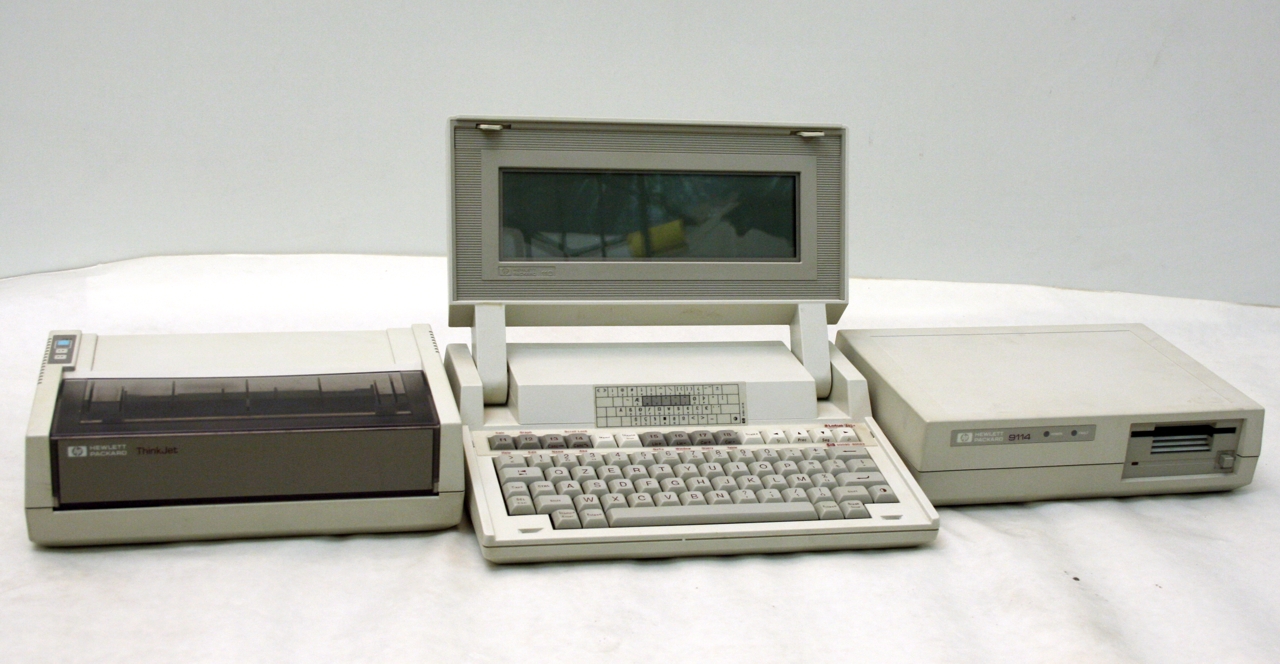
CC BY-SA 4.0 · Hewlett-Packard (progettista / costruttore) · Museo scienza e tecnologia, Milano — Wikimedia Commons

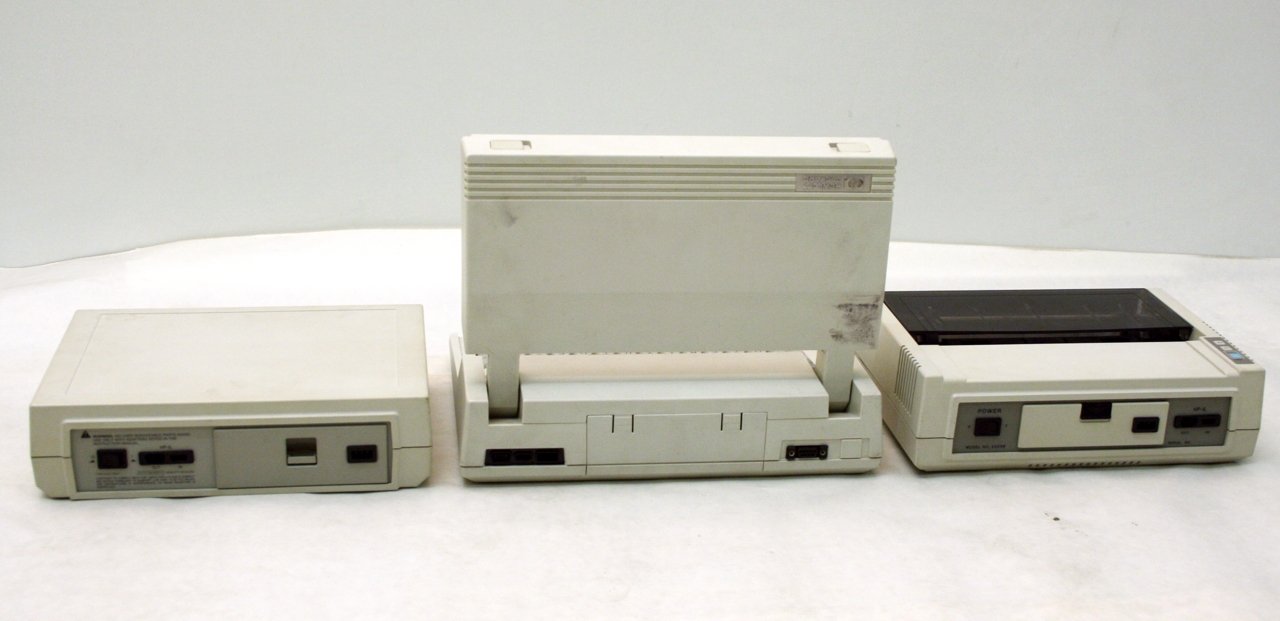
CC BY-SA 4.0 · Hewlett-Packard (progettista / costruttore) · Museo scienza e tecnologia, Milano — Wikimedia Commons

OK (? for help): whoson
Who's on
4 users · real names only · no anonymity
OK (? for help): g impact
What it sent downstream
Produced the language and theory of online community (Rheingold's "virtual community"), the Electronic Frontier Foundation, Barlow's cyber-libertarianism, and a founding template that shaped everything from forums to social media.
OK (? for help): g signature
Scenius signature
A small, literate, non-anonymous crowd who treated an online space as a real place — proving virtual scenius was possible and writing the manual for it.
Survives as a small paid community, long eclipsed in scale but foundational in influence; its ideas are now the water the whole internet swims in.
Image credits
Both photographs are released under Creative Commons Attribution-ShareAlike 4.0 (CC BY-SA 4.0). Artist: Hewlett-Packard (progettista / costruttore), via the Museo nazionale della scienza e della tecnologia "Leonardo da Vinci," Milano, on Wikimedia Commons. Sources: img0 · img1. Images are tinted phosphor-green in-page via CSS; the originals at source are unmodified.
Sourcing
Scene coded from public web sources (Wikipedia-led; not yet independently verified): Wikipedia — The WELL · Encyclopaedia Britannica · HistoryofInformation.com · well.com.
You have new responses waiting.
g bye — disconnecting…