02
Coloured Shapes / White Void
.jpg)
_(Rozanova,_1916-1917)_-_anagoria.jpg)

Non-Objective World · Russia · 1915–1927
Malevich's reduction of painting to pure geometric feeling — the Black Square as the zero-point of a new, non-objective world.
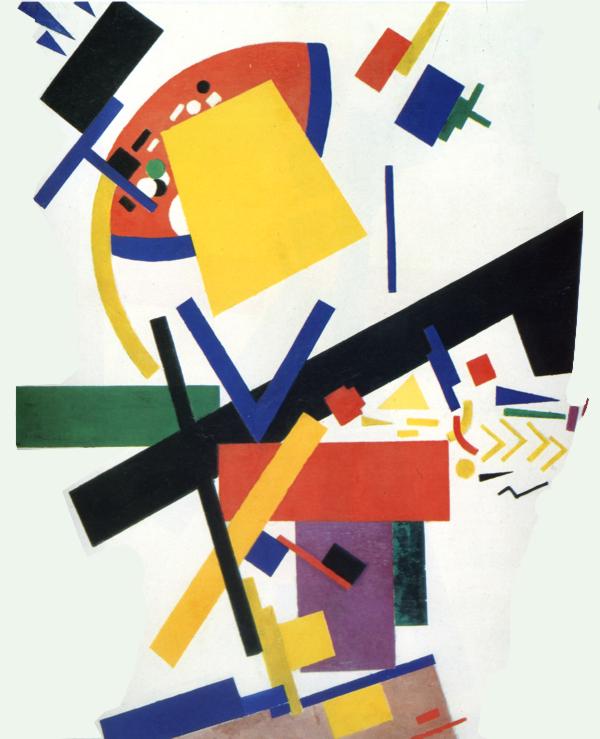
Suprematism was Kazimir Malevich's radical reduction of painting to pure geometric feeling, announced in Russia in 1915 with a room of abstract canvases dominated by his Black Square — hung in the corner traditionally reserved for a religious icon. Rejecting the depiction of objects entirely, Malevich sought "the supremacy of pure artistic feeling," a spiritual, non-objective art of coloured shapes floating in white space, the zero-point from which a new world could be built. Alongside Tatlin's rival Constructivism, Suprematism was one of the two great poles of the Russian avant-garde. Its austere geometric abstraction fed Constructivism, De Stijl, and the Bauhaus, and stands as a foundation of all abstract art.
Declaring a black square the zero-point of art was an audacious absolute that demanded followers take sides.
Its mystical, cosmic ambition gave abstraction a spiritual mission, not just a style.
Revolution's blank-slate mood made "starting art over" feel possible.
A prophet (Malevich) and disciples propagating an absolute; its purity set it against the productivist avant-garde and made it vulnerable to the state.
A foundation of geometric abstraction and non-objective art; via Lissitzky it shaped the Bauhaus, De Stijl, graphic design, and minimalism.
Suppressed by Socialist Realism; its forms escaped into international abstraction and became canonical modernism.
A prophet and his disciples who set a black square as art's zero-point and built a cosmic abstraction on it.
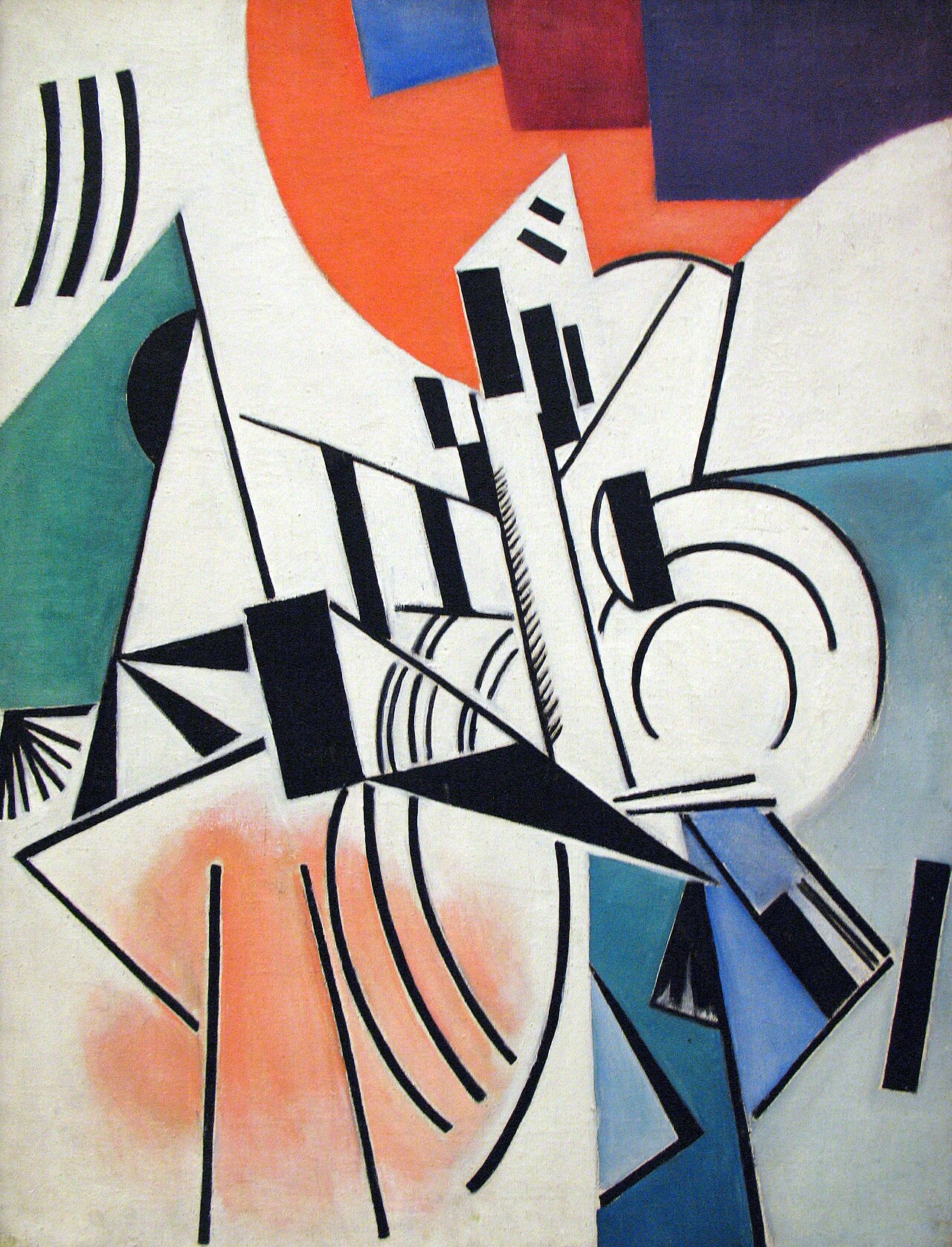
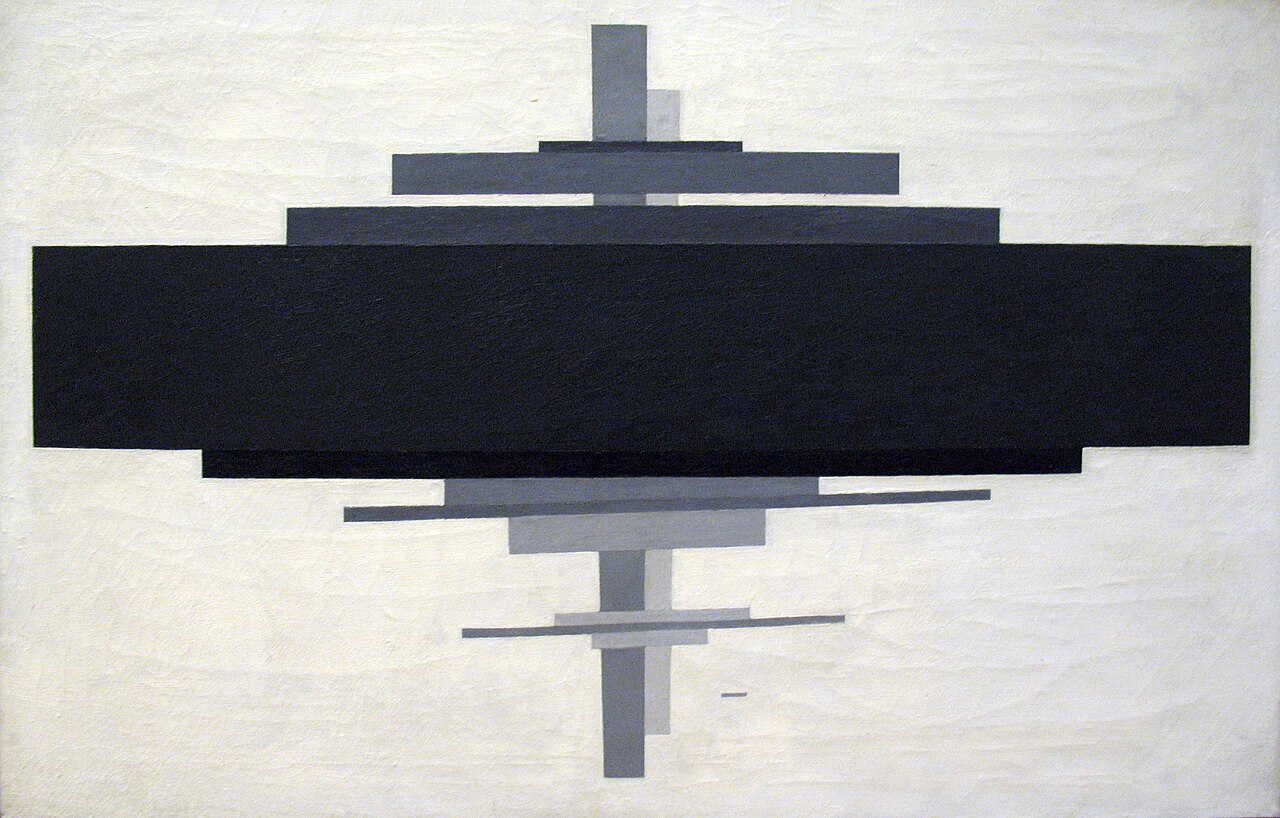
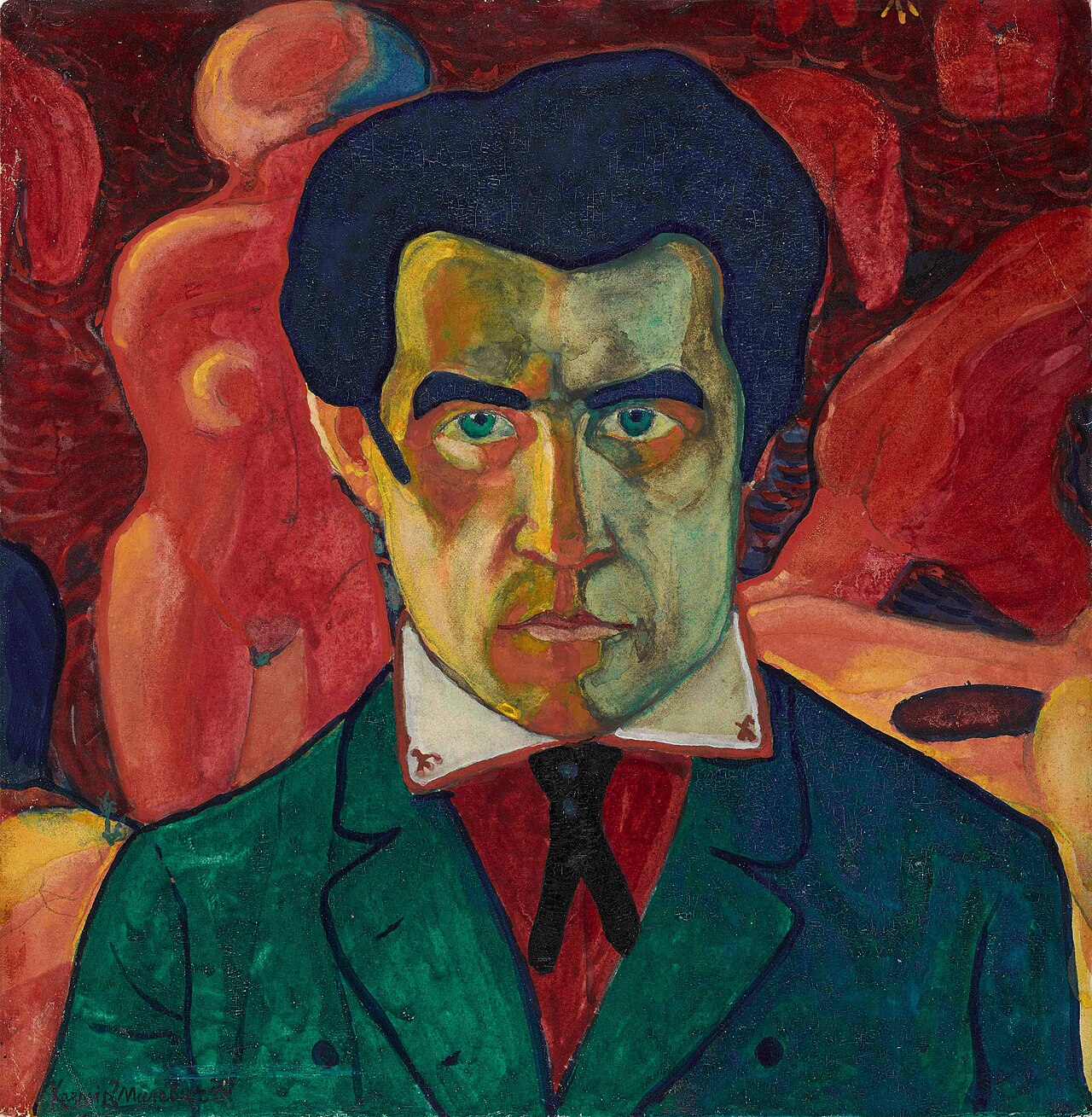
Images. All plates are in the public domain, via Wikimedia Commons. Suprematism (1915) & Self-Portrait (c.1908–11) by Kazimir Malevich; Non-Objective Composition (1916–17) by Olga Rozanova; Suprematismus (1924–25) by Ilya Chashnik. Full source pages linked in each caption above.
_(Kazimir_Malevich).jpg)