The wager
Dystopia as a self-fulfilling genre convention
Solarpunk is a diffuse, leaderless movement of writers, illustrators, architects, and activists that treats the imagining of a livable, joyful, post-carbon future as itself a political act. Coined in a 2008 blog post riffing off steampunk's aesthetic logic, it gathered substance through a 2012 Brazilian anthology rooted in Amazofuturism, a viral 2014 Tumblr aesthetic, and manifesto essays through the 2010s, becoming both a speculative-fiction subgenre and a visual-design sensibility.
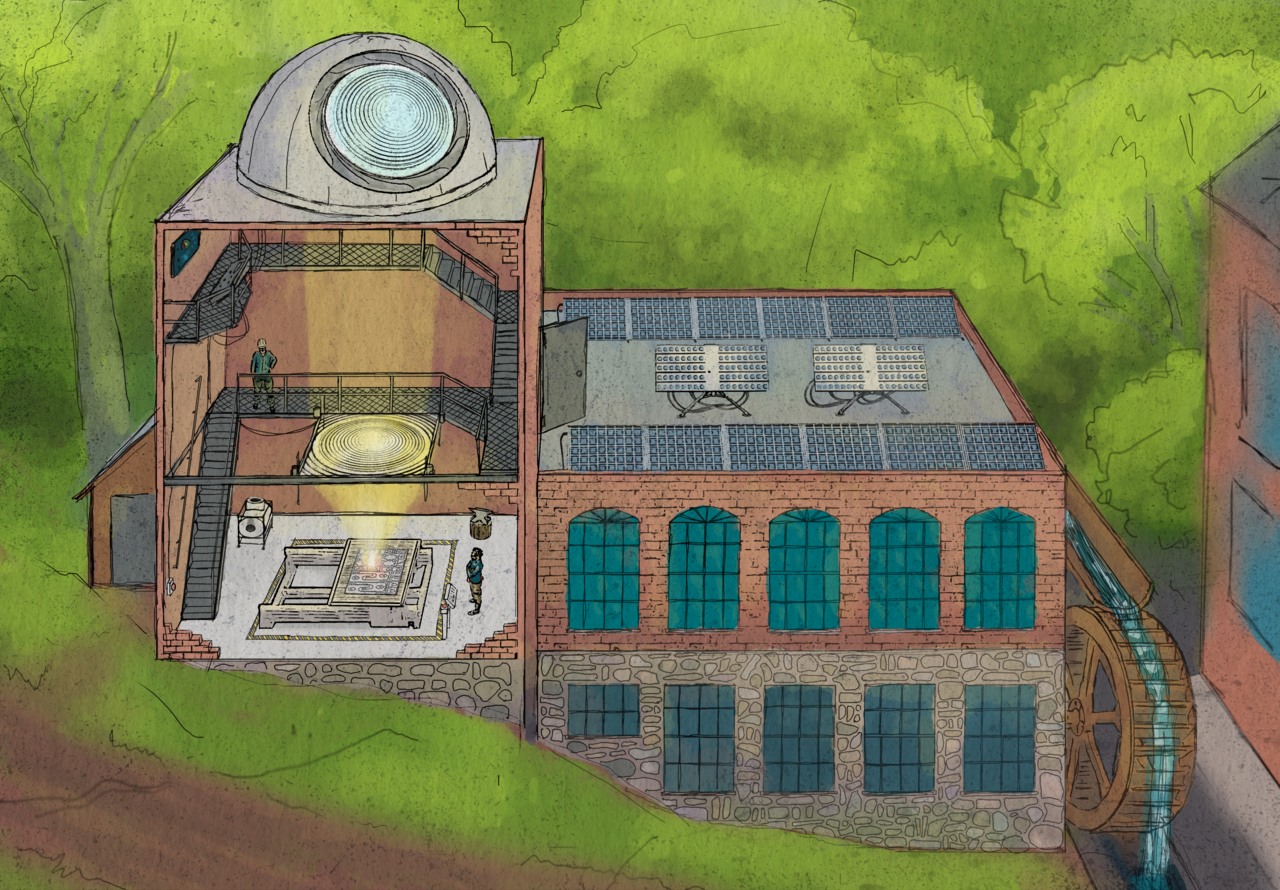
Its core wager is that dystopia has become a self-fulfilling genre convention, and that depicting decentralized solar energy, communal food systems, and craft-and-technology hybrids can pull the culture toward building them.
Motifs
What the movement keeps drawing
- optimistic, ecological, decentralized futures
- high-tech and green reconciled
- the Art Nouveau-meets-solar aesthetic
- design fiction as activism
The unifying principle
A desirable future is possible: one that is ecological, decentralized, socially just, and technologically ingenious — and imagining it vividly, in fiction, art, and design, is itself a form of activism.”
Scenius signature — a distributed online movement coordinated by a shared optimistic aesthetic: collective world-imagining as activism
Memetic forces
Why it spread
- Offering a hopeful, beautiful future in a genre glutted with dystopia was a powerful, mobilizing contrast.
- Its open, participatory aesthetic invited anyone to contribute art, fiction, and DIY projects.
- Born and spread online, it evolved as a genuinely collective, distributed movement.
Engines
What holds it together, what pulls it apart
Convergent
the trellis
- a shared aesthetic and set of values
- online communities and anthologies
- the deliberate contrast with cyberpunk dystopia
Divergent
the scatter
- diffuseness — an aesthetic and mood more than an organization
- debate over whether it is politics or just style
- the gap between imagery and real-world building
Structure & consequence
How it runs, and what it changed
Internal dynamics
A leaderless, online, participatory movement defined by a shared aesthetic and optimism, propagating through fiction, art, and DIY rather than any institution.
Societal impact
Reintroduced hope and desirable futures into ecological imagination, influencing climate fiction, regenerative design, and green-utopian discourse as a counter to collapse narratives.
Scenius signature
A distributed online movement coordinated by a shared optimistic aesthetic — collective world-imagining as activism.
Field label
Mediums, archetypes, hands
Mediums
- the aesthetic/manifesto
- science fiction
- the illustration
- the DIY project
Archetypal layers
- Arcadia
- Prometheus
- The Ideal City
Figures
- (diffuse online movement)
Fate
Living and growing; an increasingly influential counter-current of hopeful ecological futurism.