The evidence — walls & covers
Plates


Revolutionary theorists who fused art and politics to attack “the society of the spectacle” — and helped ignite May ’68.
The report — a court, not a movement
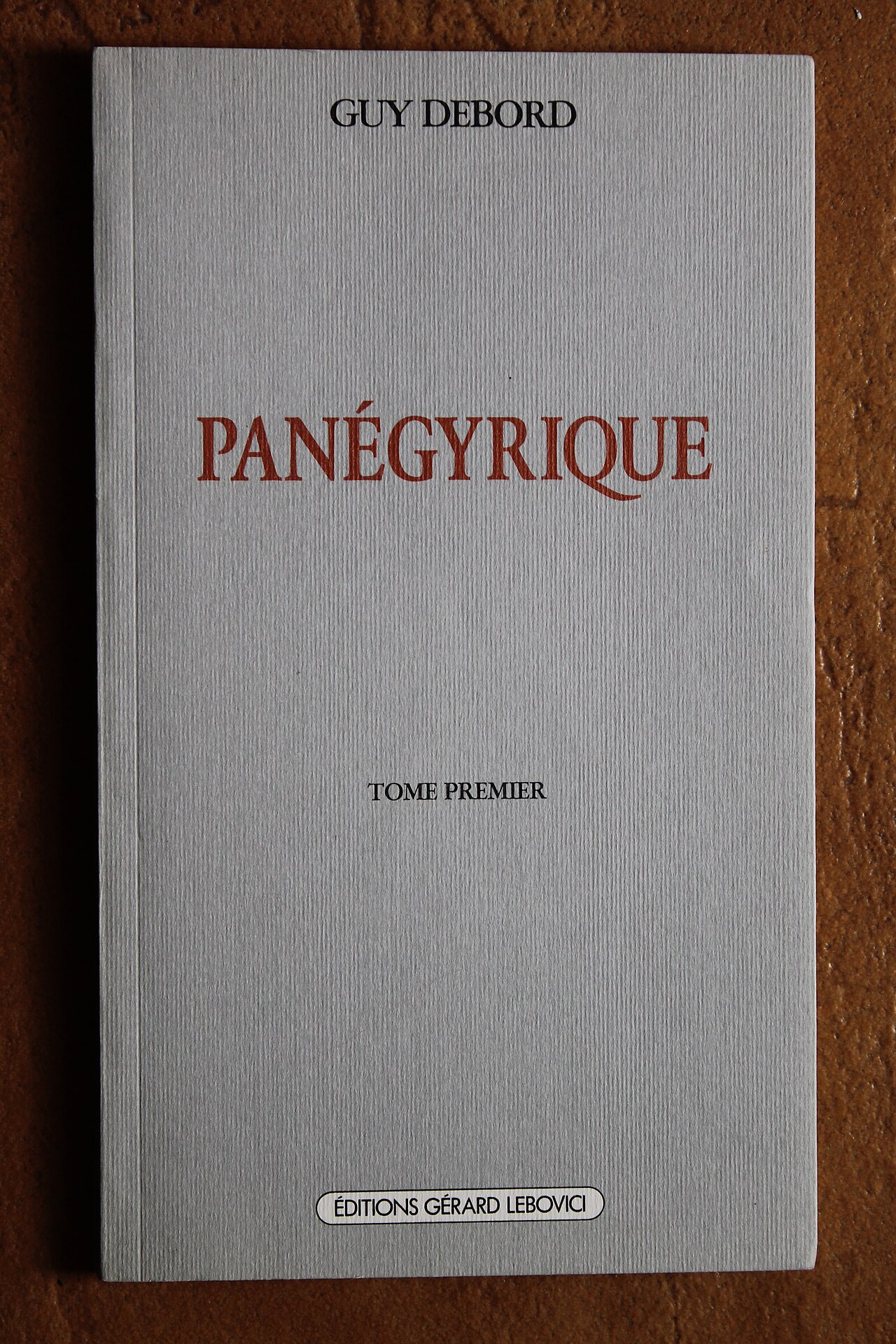
Less a movement than a court: a small, migratory band of artists, architects, and theorists presided over by Guy Debord, who convened in Paris cafes to fuse Hegelian-Marxist critique with Lettrist and CoBrA technique into a single weapon.
The target of that weapon was what Debord’s 1967 La Société du spectacle called “the spectacle” — the total colonization of lived experience by images and commodities. Between 1957 and 1972 the SI produced a body of concepts — détournement, dérive, psychogeography, unitary urbanism, récupération — whose ambition was to abolish the separation between art and everyday life.
It produced almost no lasting artworks or buildings. Instead it detonated, in May 1968, directly into the streets of Paris. The unifying conviction: capitalism has colonized everyday life and turned lived experience into spectacle; liberation means abolishing the separation between art and life and constructing situations of real, unmediated desire.
Détournement — the motifs, hijacked
Why it spread — the memetic forces
A theory that explained your alienation and named the enemy — the spectacle — was intoxicating and totalizing.
Extreme purity and expulsion made the surviving core feel like the last honest revolutionaries on earth.
The slogans were designed to be copied onto walls — engineered to jump off the page and onto the street.
The engines — what held, what tore
Internal dynamics
A vanguard cell run as an ultra-strict club: tiny, brilliant, and constantly purging itself — until Debord dissolved it himself in 1972 rather than let it degrade.
Scenius signature. Theory and gesture fused so tightly that a slogan was an action — a scene whose ideas were engineered to jump off the page onto the street. To write it on a wall was already to do it.
Societal impact. The SI supplied the theory and slogans of May 1968; the intellectual DNA of punk (via Malcolm McLaren and Jamie Reid), culture-jamming, and Adbusters. “The spectacle” entered the language itself.
The court & its instruments
The evidence — walls & covers
Fate — dissolved at its peak
Dissolved by Debord at its peak; composted into punk, activism, and academia — its concepts now so absorbed they are quoted by the advertising it despised.
