Studio Collective · voltage-controlled · live tape
San Francisco
Tape Music
Center
A collective electronic-music studio that birthed minimalism, deep listening, and the Buchla synthesizer out of Bay Area experiment.
00 / patch notes
Pool the machines,
share the room
The San Francisco Tape Music Center was a collective electronic-music studio, founded in 1962 by Morton Subotnick and Ramon Sender, that became a crucible of the American experimental avant-garde.
Pooling scarce equipment and open to all comers, it hosted Pauline Oliveros, Terry Riley, and Steve Reich, and midwifed both West Coast minimalism — Riley's In C premiered here — and Oliveros's practice of "deep listening."
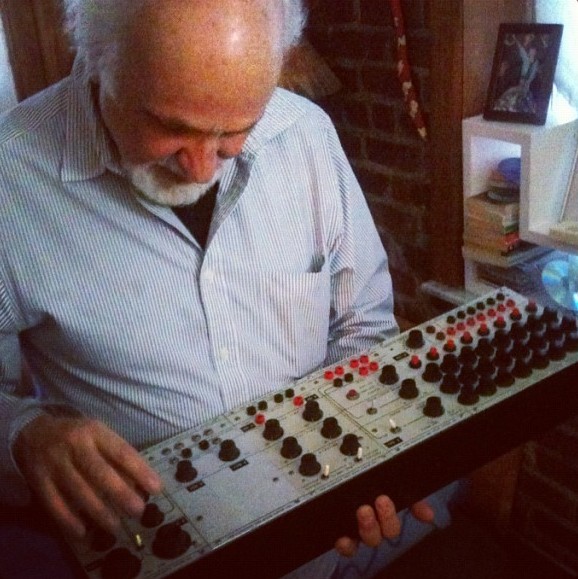
Crucially, its need for better tools led to a collaboration with engineer Don Buchla and the birth of one of the first voltage-controlled synthesizers. A model of scarcity-driven, collaborative invention, the Center helped set the course of minimalism, synthesis, and experimental sound.
01 / patch points — the circle
Figures
02 / recurring motifs
Motifs
signal chain
- the collective electronic studio
- the Buchla "Music Box" synthesizer
- minimalism and repetition — Riley's In C
- deep listening — Oliveros
- live electronic performance
internal dynamics
An artist-run cooperative studio built on mutual aid and shared gear — intimate and non-hierarchical, until absorption into a college changed its nature.
03 / the unifying principle
Unifying principle
◆ tuned to one idea
Electronic music should be made collectively and performed live — exploring repetition, drone, and deep attention outside both the academy and the commercial studio.
◇ 53 repeating cells — the pulse of In C
A single pulse, held in common; each player advancing through the same 53 figures at their own pace. Scarcity of gear, abundance of time.
04 / memetic forces
Memetic forces
why it caught
A shared, artist-run studio pooled scarce equipment and made electronic music communal, not solitary.
open circuit
The Bay Area's experimental openness attracted a cross-arts crowd — dancers, poets, filmmakers, engineers.
a tool no one else had
Commissioning Buchla to build an instrument gave the group an advantage no rival studio could copy.
05 / engines — gain & decay
Convergent and divergent engines
▲ convergent
what pulled it together and held the signal
- 01 the shared cooperative studio
- 02 the Buchla synthesizer, built for the group
- 03 a tight circle — Subotnick, Sender, Oliveros, Riley
▼ divergent
what dispersed the signal outward
- 01 the move into Mills College — institutionalizing it
- 02 members' diverging major careers
- 03 funding and space precarity
06 / live at the patch bay
Performance plates
07 / what it sent downstream
Cradle of
the West Coast sound
08 / fate — decay to silence
Fate
▼ signal fades
Moved to Mills College and dispersed as its members became major figures — its Buchla and minimalist legacies became foundational.
09 / from the archive — a name's lineage
Sender lineage
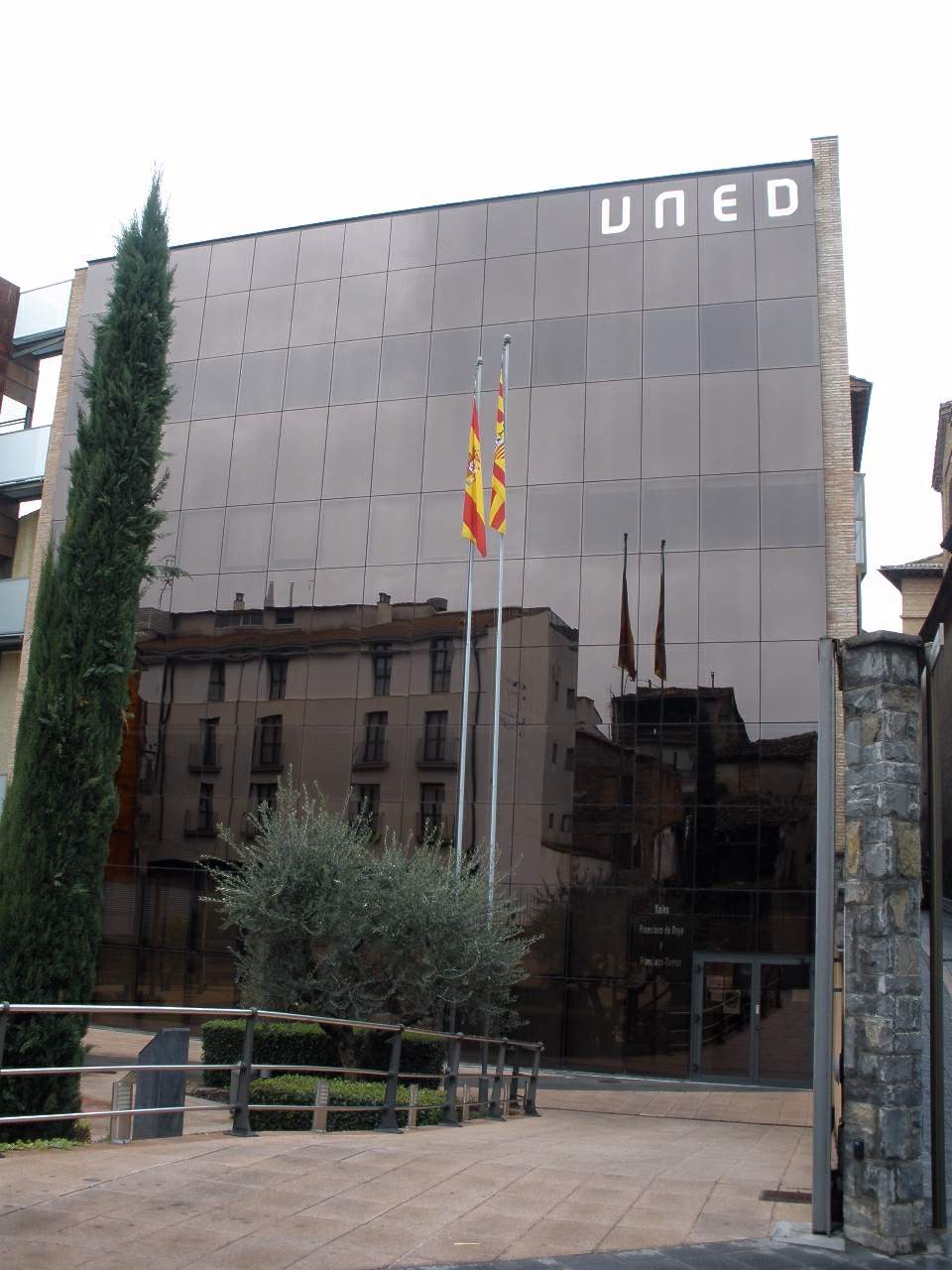
A shared surname, an exile's shadow
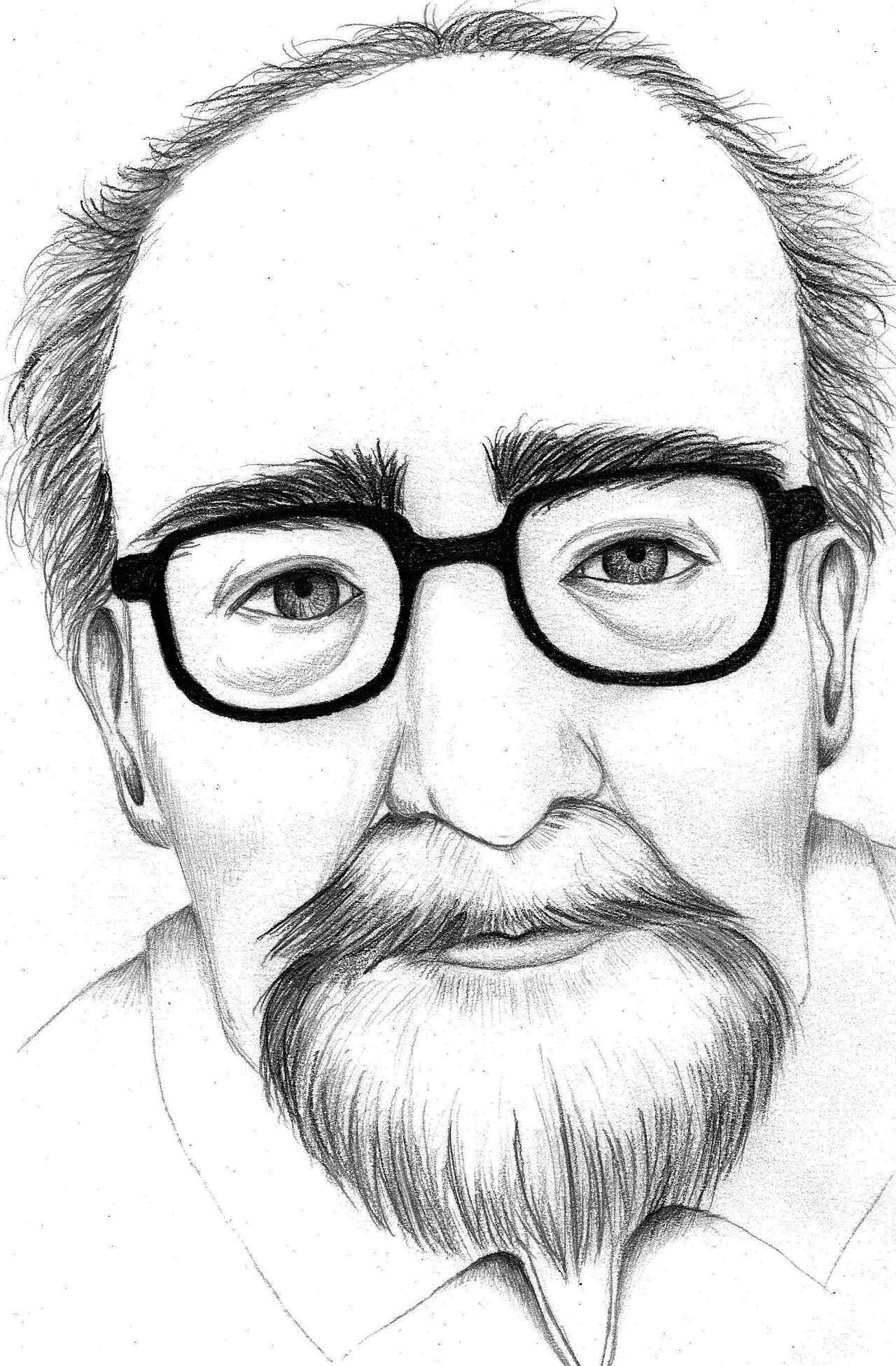
Co-founder Ramon Sender — born Ramón Sender Barayón — carried a literary inheritance: he was the son of the exiled Spanish novelist Ramón J. Sender (1901–1982), a native of Barbastro whose name a foundation and university centre in Spain still bear.
These two plates surface from the media archive under that shared name. Top: a portrait of the novelist Ramón J. Sender, drawing by Alexandrapociello — Wikimedia Commons, CC BY-SA 3.0. Bottom: the UNED Barbastro / Fundación Ramón J. Sender building, photograph by Zarateman — Wikimedia Commons, CC0.
10 / mediums & archetypes
Mediums and archetypes
Image credits & sources
- img0 — Morton Subotnick with vintage '60s Buchla 100 modules. Ethan Hein · CC BY 2.0 · source
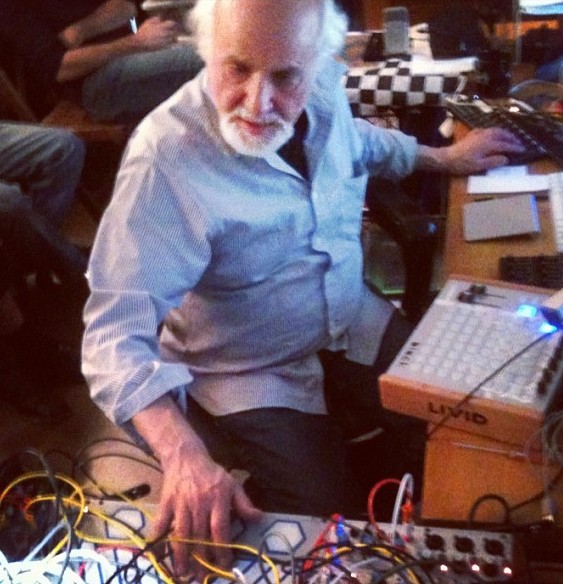
- img1 — Simultaneous MIDI control and Buchla touch keyboard. Ethan Hein · CC BY 2.0 · source
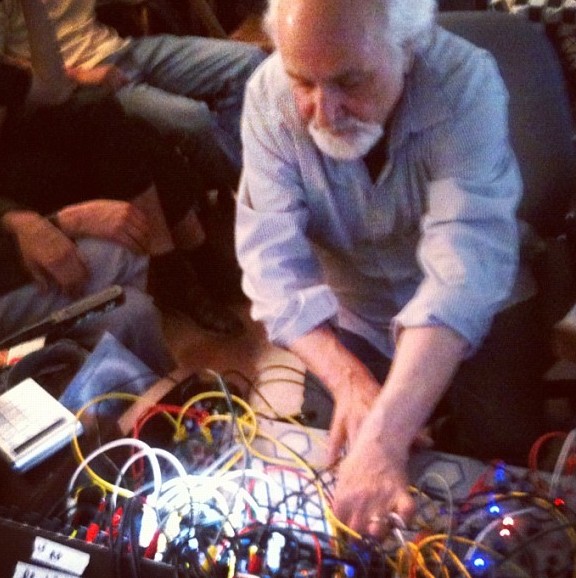
- img2 — Subotnick kicks out the jams. Ethan Hein · CC BY 2.0 · source
- img3 — Ramón J. Sender (portrait). Alexandrapociello · CC BY-SA 3.0 · source
- img4 — UNED Barbastro / Fundación Ramón J. Sender. Zarateman · CC0 · source
Text keyed to the standard published literature — David W. Bernstein (ed.), The San Francisco Tape Music Center: 1960s Counterculture and the Avant-Garde (2008). Compressed for the Scenic Garden; representative, not exhaustive.