← the scenic garden

The Republic of Letters · an informal parliament

Salon
culture

la chambre bleue & the drawing rooms of Paris

The hostess-curated drawing room that turned conversation into an institution and women into impresarios of ideas.

the at-home

An unlicensed, women-governed room

Salon culture names the tradition of regular, privately hosted gatherings—chambers, ruelles, sociétés (the term ‘salon’ itself is a nineteenth-century retrospective label)—in which a woman of rank or wealth, the salonnière, convened a mixed company of aristocrats, philosophes, artists, and visiting foreigners for conversation, reading, and critique.

Beginning with Catherine de Vivonne, Marquise de Rambouillet’s ‘chambre bleue’ from around 1610 and reaching its Enlightenment apex in the Parisian houses of Marie-Thérèse Geoffrin, the Marquise du Deffand, Julie de Lespinasse, and Suzanne Necker, salons functioned as the informal parliament of the Republic of Letters: unlicensed, women-governed rooms where ideas too risky for print or the royal Academies were tested, refined, and converted into pensions, elections, and books—most consequentially the Encyclopédie, several of whose contributors Geoffrin funded and sheltered.

Germaine de Staël’s 1790s salon then carried the form directly into revolutionary and Napoleonic politics.
the motifs

The manners of the room

  1. Ithe hostess as impresario of ideas
  2. IIconversation as an art form and an institution
  3. IIIthe mixing of ranks, sexes, and disciplines in one room
  4. IVthe regular ‘day’ — a rhythm of gathering

the unifying principle

Cultivated conversation, curated and hosted (often by women), is a generative institution in its own right — a space where ideas, reputations, and alliances are made through talk.

the engines

What drew the circle, what dispersed it

convergent

What held the circle together

  • a charismatic host and a fixed gathering day
  • a shared code of politeness and wit
  • the physical drawing room as neutral ground
divergent

What scattered it

  • dependence on a single host’s energy, fortune, and life
  • political upheaval (revolutions) dispersing or endangering circles
  • the rise of other institutions — academies, cafés, the press — absorbing its functions

memetic forces

Why the room compounded

internal dynamics

The hostess governs. A private space governed informally by its hostess, whose taste set the tone and whose invitations conferred belonging; authority was social and conversational, not official.

the company

Those who kept the day

Madame de Rambouillet
the chambre bleue · c.1610
Madame Geoffrin
patron of the Encyclopédie
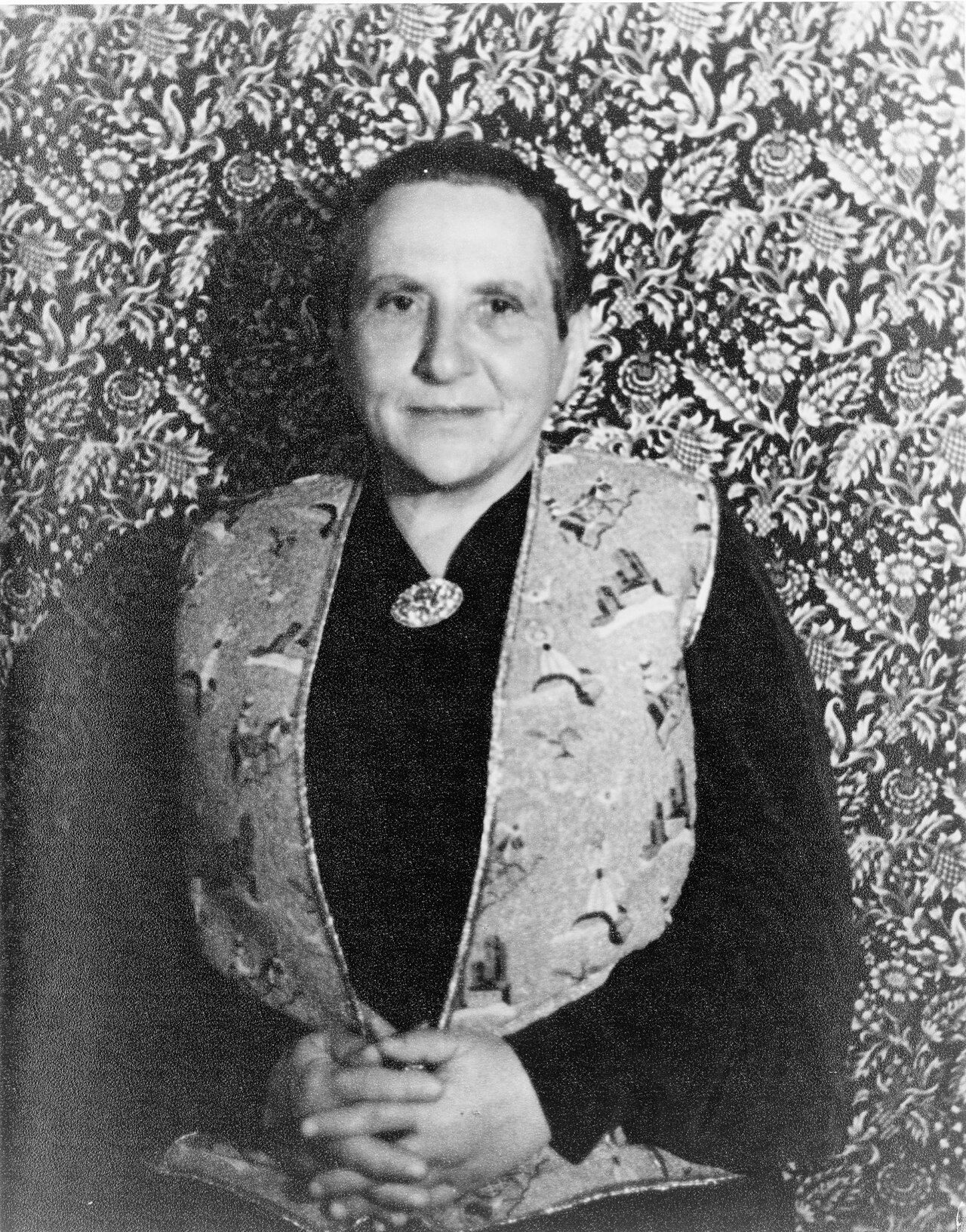
Gertrude Stein
27 rue de Fleurus · Paris
Mabel Dodge
the modern American salon

the mediums

conversation the at-home correspondence

the plates

The salonnière, framed

Photographic portrait of Gertrude Stein seated before a densely patterned floral-damask wallpaper, wearing a dark robe with an embroidered collar, hands folded.
Gertrude Stein, before her wall of pattern — New York, 4 November 1934. Her Paris apartment at 27 rue de Fleurus was the twentieth century’s most famous salon. Carl Van Vechten · Public domain · Wikimedia Commons
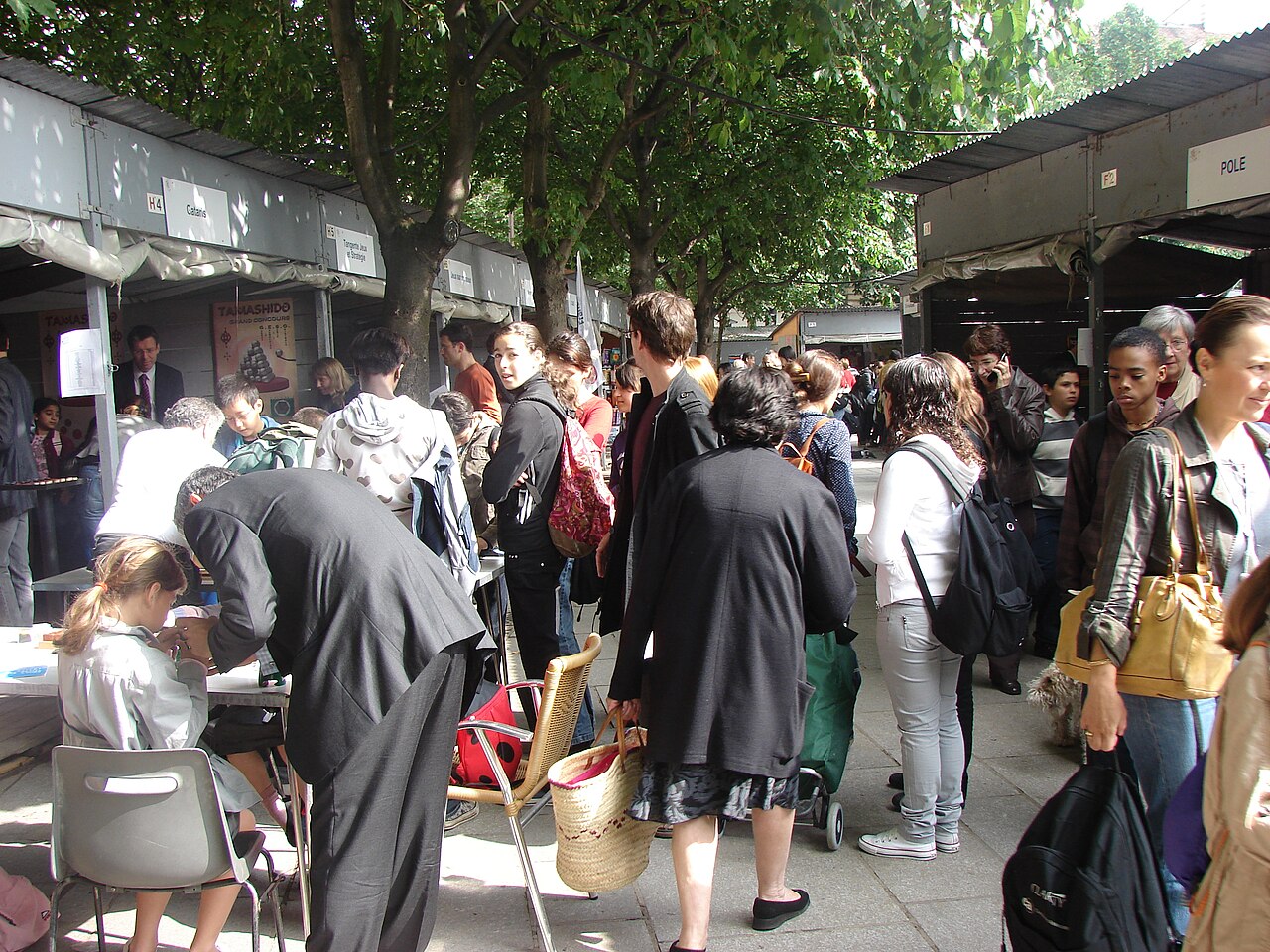
A crowded outdoor avenue of booths at a modern Paris culture-and-mathematics fair, with visitors browsing stalls beneath trees.
The word’s afterlife: a modern Parisian ‘salon’ — the culture-and-mathematical-games fair, 2008. The term now names any convening. Geoml · CC BY-SA 3.0 · Wikimedia Commons

Three centuries separate these rooms, yet both answer to one word — proof of the form’s stubborn return.

Images via Wikimedia Commons, reused under their stated licenses · portrait by Carl Van Vechten (Public domain) · fair photograph by Geoml (CC BY-SA 3.0)

society & impact

Salon culture shaped the Enlightenment, modern literature, and political networks; it pioneered a public role for women as intellectual conveners; and it modeled the durable idea of the gathering as an engine of culture — echoed later by Bloomsbury and Edge.

The scenius signature — curated conversation as reactor: a host, a room, and a rhythm turning dispersed talent into a compounding exchange.

the fate

Recurrent rather than finished: the salon form dissolves and re-forms across centuries wherever a host turns a drawing room into an institution.