01 — The brief
Rowdy, Left, unrepeatable
Russian Futurism was a rowdy poetic and artistic revolt of the 1910s that, unlike its Italian namesake, fed the Left of the Revolution rather than the Right. Its poets — Mayakovsky, Khlebnikov, Kruchyonykh — invented zaum, a “trans-sense” language beyond meaning, and staged deliberately outrageous performances (yellow blouses, painted faces) to shock bourgeois Russia awake.
Khlebnikov’s utopian linguistics and the movement’s fusion of word and image cross-pollinated with Suprematism and Constructivism. Its stranger late offshoot, the Leningrad OBERIU (Kharms, Vvedensky), pushed into absurdism just as Stalinism closed in and destroyed them. Russian Futurism’s experiments seeded Soviet avant-garde art, sound and concrete poetry, and the twentieth-century conviction that remaking language could remake the world.
02 — Recurring motifs
Five stamps
03 — The unifying principle
Language must be liberated from meaning into pure sound and self-made words — the poet forges the future by remaking the word itself.
04 — Memetic forces
Why it spread
- Inventing a language beyond sense promised total creative freedom — and outraged the literary establishment gloriously.
- Revolution’s turbulence made radical form feel historically necessary.
- Tight bohemian friendship and shared scandal bonded the groups.
05 — Convergent & divergent engines
What held it / what tore it
+ Convergent — what pulled together
- 1 Manifestos and provocative tours
- 2 The little almanac and hand-made book
- 3 Charismatic nuclei (Khlebnikov, Mayakovsky; later Kharms’s OBERIU)
× Divergent — what pulled apart
- 1 Mayakovsky’s turn to Revolutionary service versus Khlebnikov’s mysticism
- 2 The state’s hardening intolerance of the absurd
- 3 Arrests and deaths — Kharms and Vvedensky perished under Stalin
06 — The cell
Budetlyane — people of the future
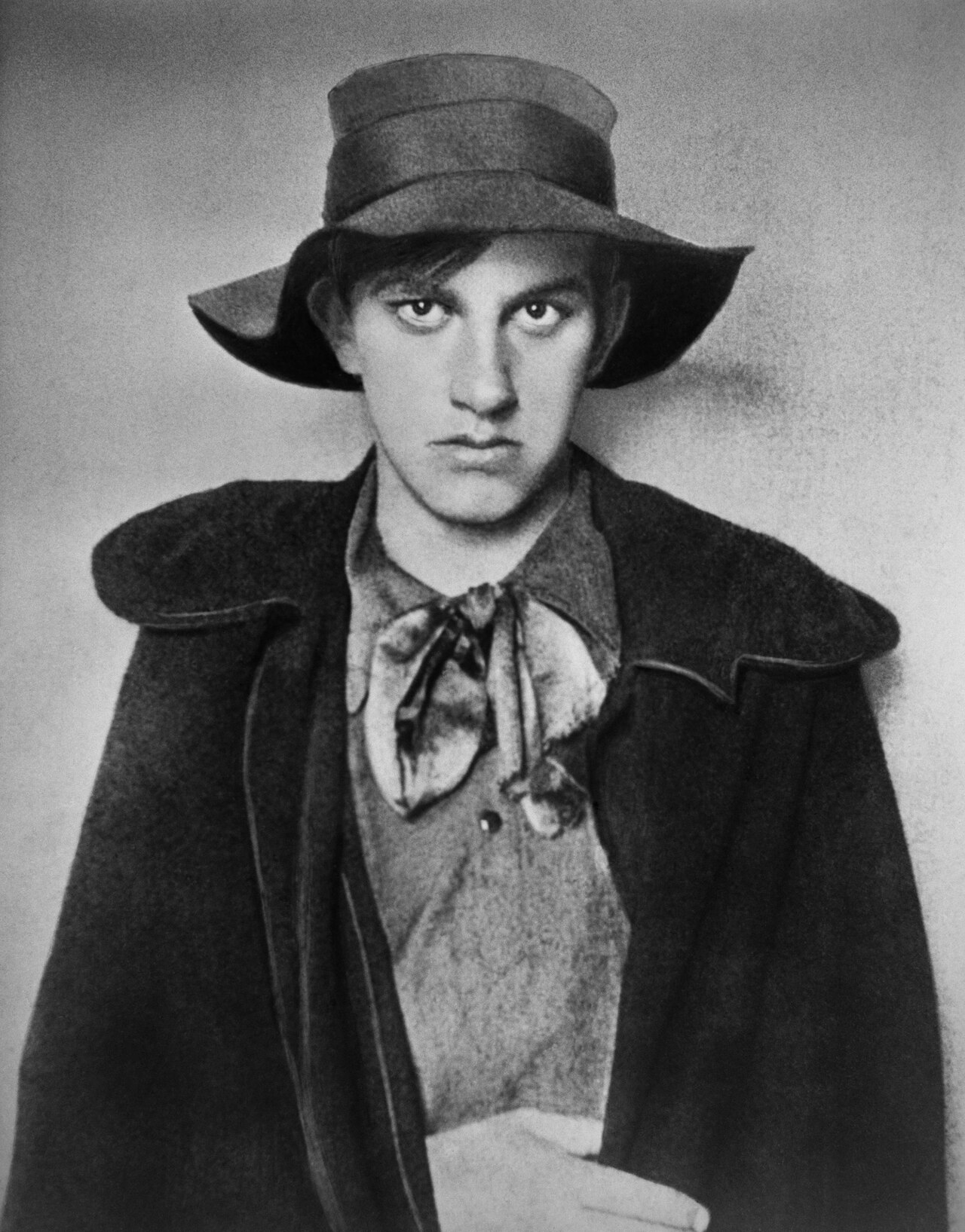

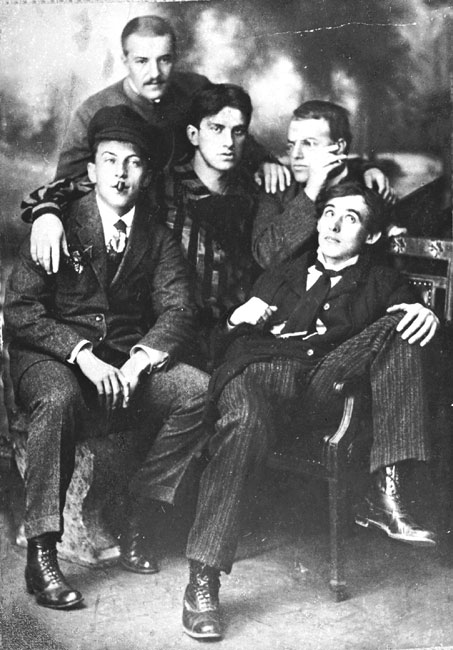

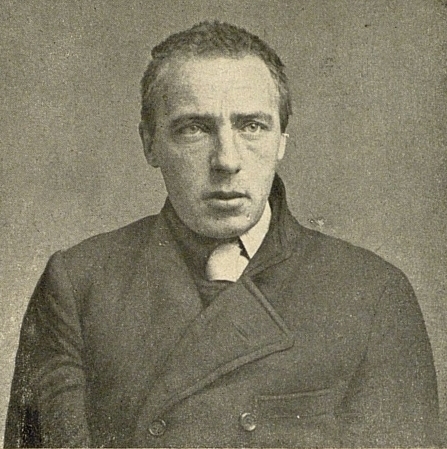
.jpg)
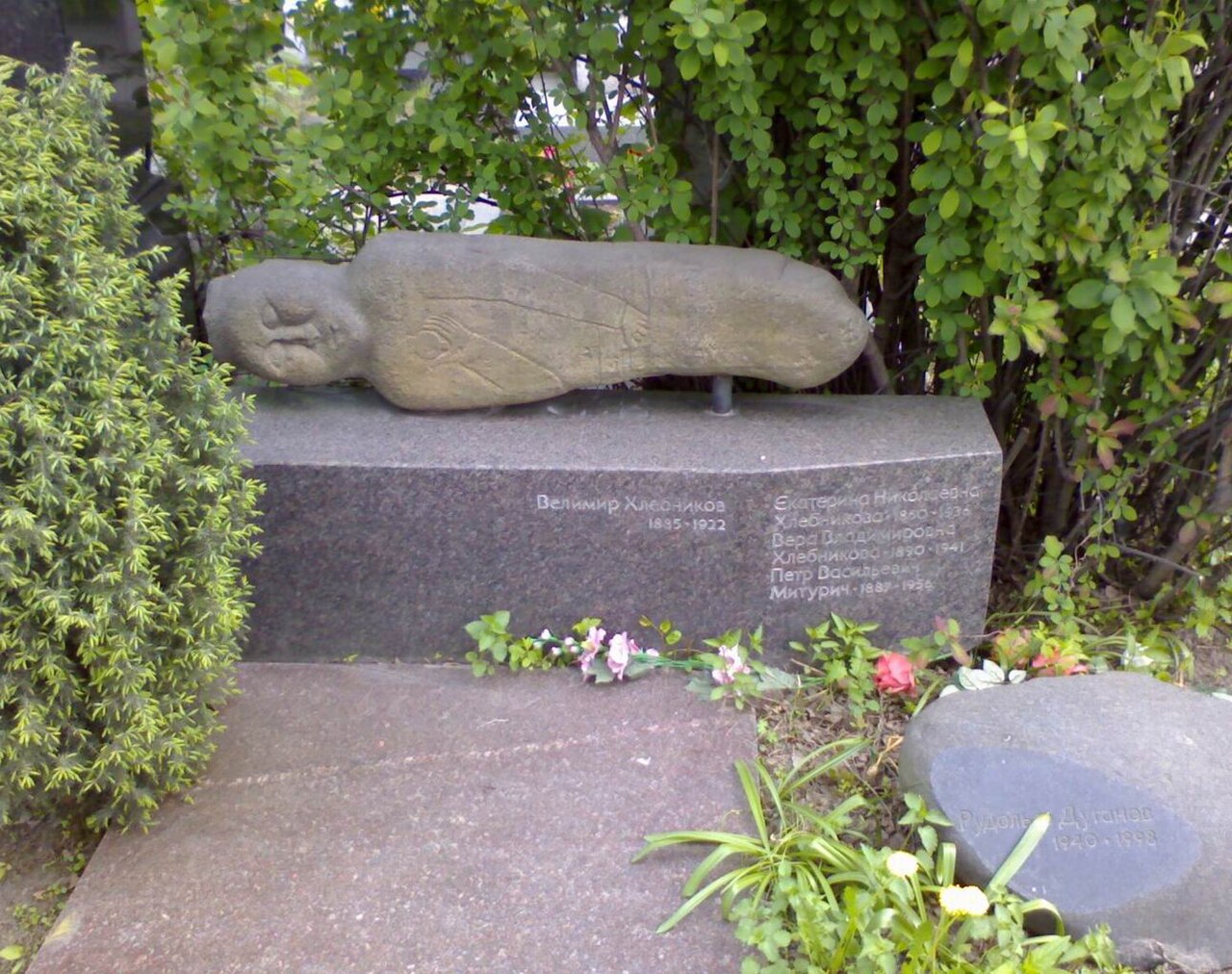

07 — Internal dynamics & impact
Empowered, then crushed
Internal dynamics
Overlapping bohemian cells bound by friendship and scandal; the Revolution first empowered then crushed them, and the OBERIU absurdists were literally destroyed by the state.
Society impact
Fed Constructivist art and Soviet poster culture, prefigured sound poetry and concrete poetry, and made the absurdists posthumous heroes of anti-totalitarian art.
08 — Scenius signature
Friends who invented a language to escape the given world — then were destroyed by the world they helped remake.
09 — Fate
Silence, then return
Suppressed under Stalin — deaths, silence; rediscovered late as ancestors of the neo-avant-garde and conceptual poetics.
10 — Keyed to the literature
Sources
Keyed to the standard published literature on this scene (representative, not exhaustive; not independently re-verified against each edition).
- Vladimir Markov, Russian Futurism: A History (1968)
- Anna Lawton (ed.), Russian Futurism through Its Manifestoes, 1912–1928 (1988)
- Camilla Gray, The Russian Experiment in Art (1962)