Plate II & III
Erasmus of Rotterdamthe first citizen of the republic
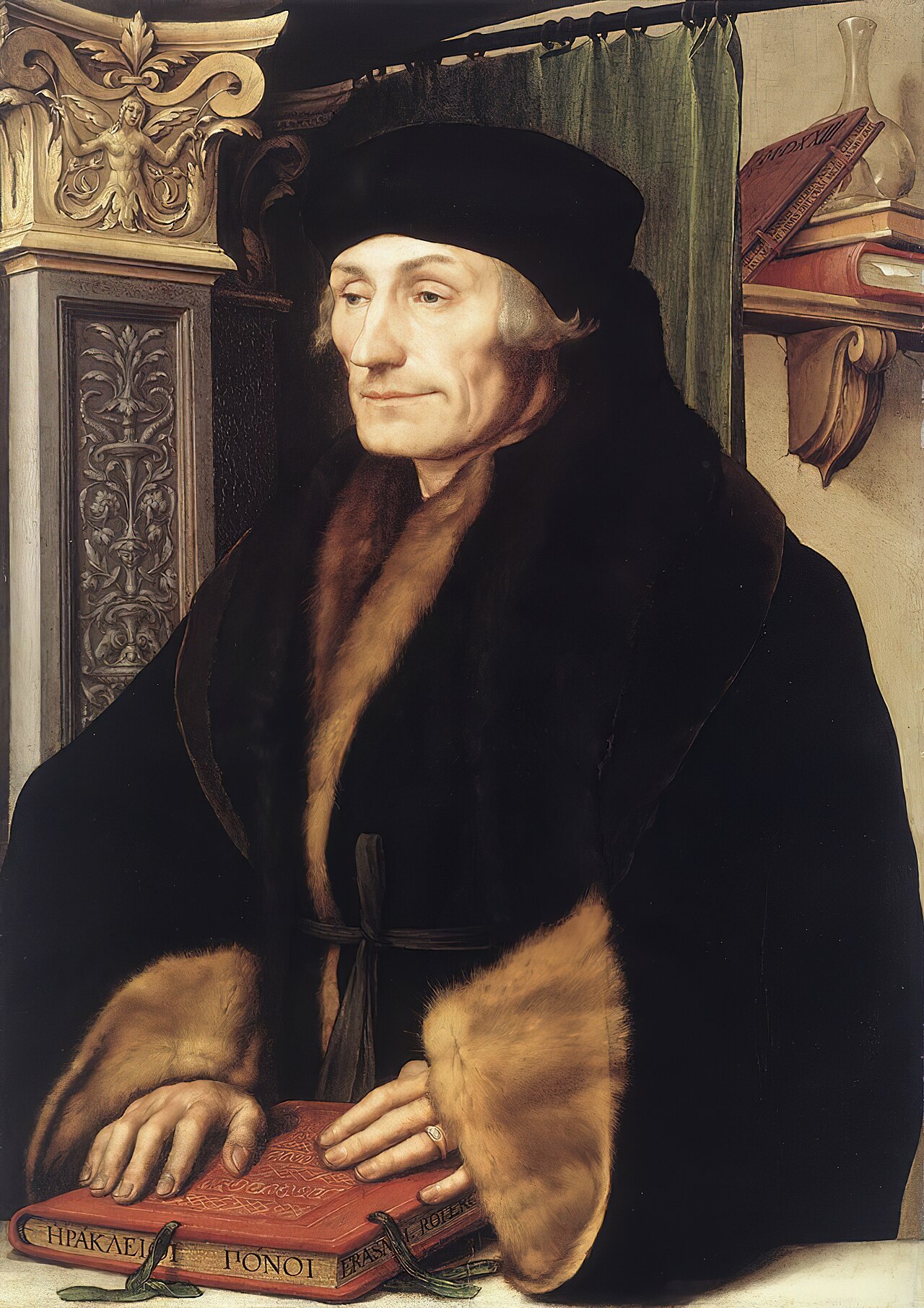

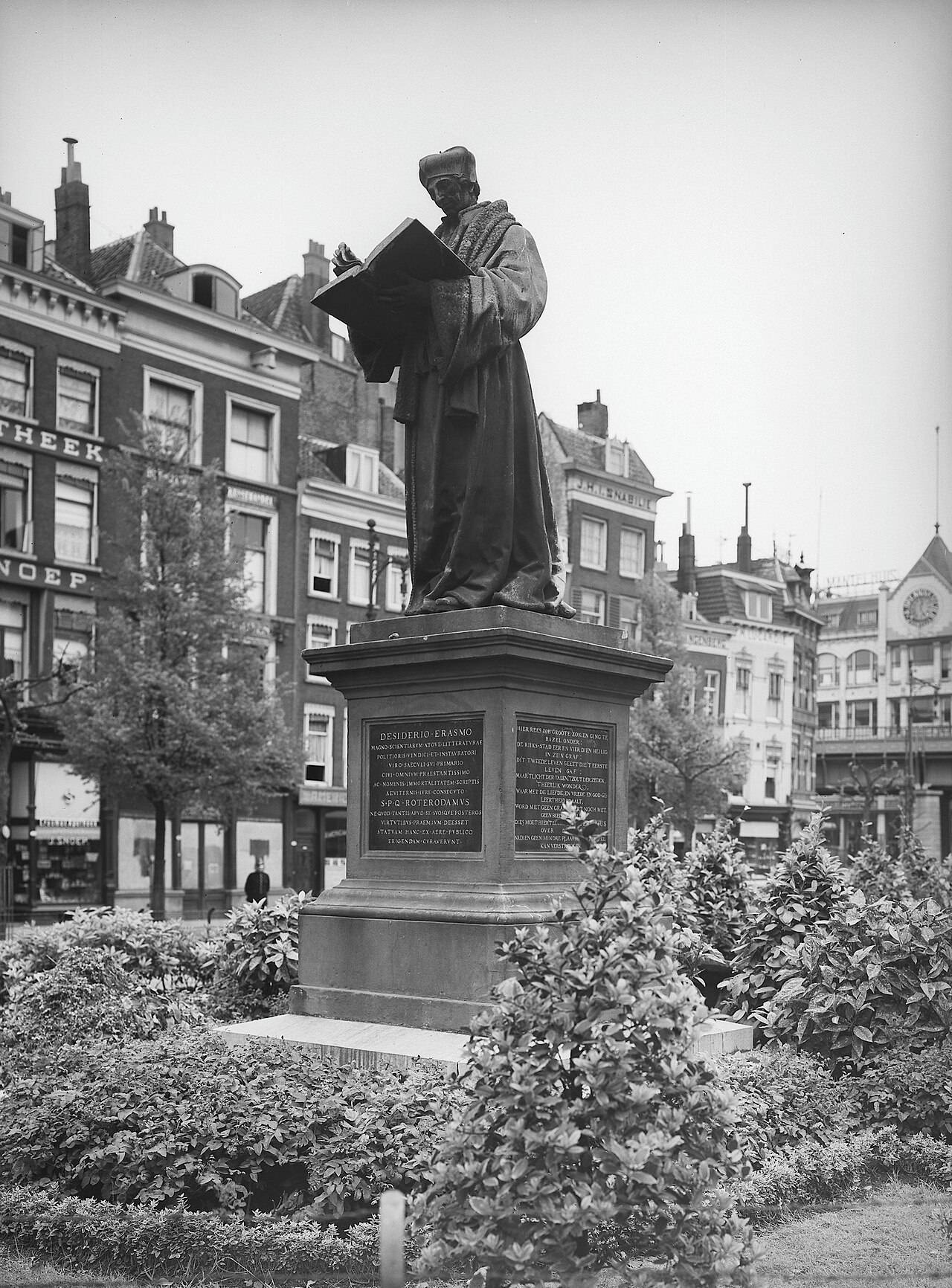
Respublica literaria · République des Lettres
A metaphysical republic of scholars
c.1550 — 1800
Pan-European · Paris · Leiden · London
of the biome Republic & Salon
“A borderless commonwealth of scholars who made the letter a protocol and citizenship a matter of correspondence.”
The Argument
The Republic of Letters — Respublica literaria, the République des Lettres — was not a place or an institution but an imagined polity of scholars: a “metaphysical republic” spanning Catholic and Protestant Europe and reaching into the Ottoman world and the Americas, from roughly Erasmus’s generation through the fading of the Enlightenment public sphere around 1800.
Historian Dirk van Miert stretches its life across 1417–2008 as an idea, but its dense operative century runs c.1650–1800, when Pierre Bayle, Voltaire, and G. W. Leibniz corresponded across confessional and dynastic lines in a shared Latin-then-French lingua franca — holding that citizenship in this republic was earned by learning and civility, not by birth or creed.
Knowledge is common property; merit is transnational; disagreement is conducted by argument and courtesy — not by force or decree.
Recurring Devices
Why It Spread
Reputation earned only by peers, not patrons — a distributed status economy that rewarded contribution over birth.
The thrill of belonging to an invisible nation while remaining the subject of a very real king.
Letters were copyable and forwardable: an idea gained reach simply by being passed on.
The Two Presses
Plate I
Plate II & III
Observations
No centre, no charter; run on obligation and honour. Hub-correspondents — Mersenne, Oldenburg, Bayle — held disproportionate power precisely because they controlled the flow of letters. An early lesson that the router owns the network.
Rapid exchange plus tolerance for the heterodox across a whole continent: the network effect of minds before there was a wire.
It prototyped peer review, the scientific journal, and the norm that truth-claims travel on evidence and reputation rather than authority — the social operating system that science still runs on.
Roll of Correspondents
Erasmus Pierre Bayle Voltaire Émilie du Châtelet Leibniz
Envoi
Institutionalised into the learned academies and journals, then nationalised by the nineteenth-century university — its borderless ideal surviving as the still-invoked myth of a “republic” of science.
