A mass underground of illegal all-night dance gatherings that built temporary utopias around the beat and the sound system.
The brief
Rave and free-party culture was a leaderless, cellular movement of illegal and semi-legal electronic-dance gatherings that swept Britain from 1988 through the mid-1990s, converting a Chicago drum-machine sound and a Balearic clubbing epiphany into a mass, class- and race-mixing ecstatic ritual staged in warehouses, fields, and motorway lay-bys around the M25.
It was simultaneously a hedonistic youth culture, a logistics operation (PA rigs, generators, decks, convoys), and — once the state moved against it — an accidental political movement, its collision with Thatcherite and then Majorite law producing one of the most quoted pieces of legislative prose in British cultural history: the Criminal Justice and Public Order Act's ban on gatherings around music ‘characterised by the emission of a succession of repetitive beats.’
The rig
Sound system plus crowd plus beat
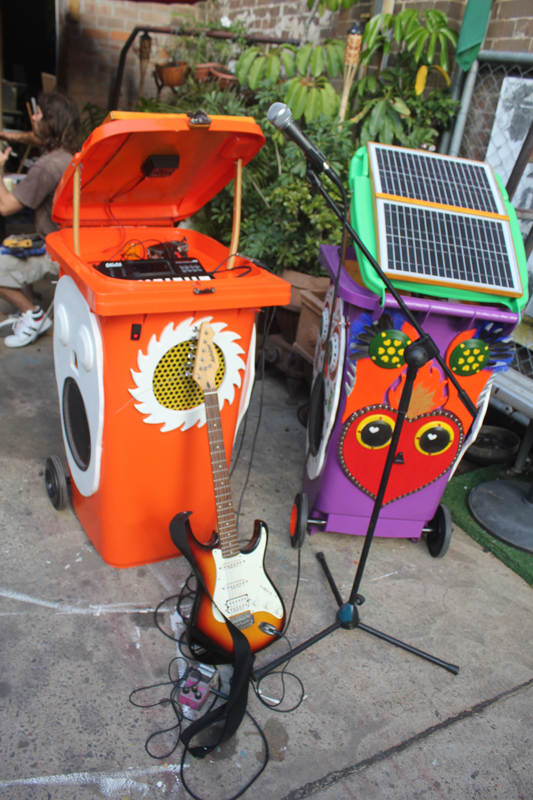
The whole culture reduced to a portable technology: a stack of speakers, a generator, a mixer, a crate of records. Anyone with a rig could summon a temporary community out of an empty field. No stage, no headliner — the system is the ritual leader.
The sound system, the DJ, and the beat as ritual leader.
04
PLUR — peace, love, unity, respect — and chemical empathy.
Memetic forces
Why it spread
>>
MDMA-mediated collective euphoria created intense, repeatable bonding and evangelism.
>>
Illegality and the thrill of the secret location built subcultural identity and urgency.
>>
Cheap technology — samplers, sound systems — let anyone throw a party, so the scene self-replicated virally.
Engines
Pulled together / torn apart
Convergent
what gathered the crowd
The sound system and the DJ as gravitational center.
Pirate radio and flyers coordinating a semi-secret crowd.
Shared music — acid house, techno — and drug culture.
Divergent
what split it apart
State crackdown and anti-rave legislation forcing splits between commercial clubs and free parties.
Commercialization pulling the scene toward superclubs and festivals.
Endless genre fragmentation of the music.
Unifying principle
An all-night mass dance can dissolve the individual into a temporary community of shared euphoria.
Internal dynamics
A decentralized, self-organizing culture of crews, DJs, and dancers with no leadership beyond the sound system — perpetually improvising around law, location, and music.
The state responds
‘Repetitive beats’
Criminal Justice Act 1994
CRIMINAL JUSTICE AND PUBLIC ORDER ACT 1994 — PART V, s.63
…music that “includes sounds wholly or predominantly characterised by the emission of a succession of repetitive beats.”
When Parliament tried to define an outlawed party, it had to legislate against rhythm itself — and in doing so wrote rave into the statute book. The clause turned a hedonistic youth culture into an accidental civil-liberties movement, splitting free parties and travellers from the licensed clubs for good.
Society impact
Reshaped global popular music and nightlife, birthed the festival economy, provoked landmark civil-liberties battles (the UK Criminal Justice Act), and gave a generation a template of temporary mass communion.
Scenius signature
A leaderless ritual technology — sound system plus crowd plus beat — that reproduced itself across the world without any center.
Fate
Living but bifurcated: absorbed into the vast commercial festival and superclub economy on one side, sustained as an underground free-party ethic on the other.
Figures
(collective)acid-house DJssound-system crews
Mediums
the ravethe sound systemthe pirate radio stationthe flyerthe drug (MDMA)