← the scenic garden Wire & Commons · Network · 2018–present

Mechanism design as political technology · a distributed research program

Radical× Change

New market & democratic mechanisms — quadratic voting, partial-common-ownership — engineered for a fairer, more pluralist future.

Founded
2018 · E. Glen Weyl
Locus
Global (online chapters)
Biome
Wire & Commons
Morphology
Network
Register
Seminar / lab / NGO
01 ×

The founding gambit

RadicalxChange (RxC) is a hybrid intellectual movement and nonprofit foundation launched in 2018 by economist E. Glen Weyl, in the immediate wake of Radical Markets: Uprooting Capitalism and Democracy for a Just Society, co-written with University of Chicago legal scholar Eric Posner. Its founding gambit is to treat the exhausted capitalism-versus-socialism argument not as an ideological choice but as an engineering problem.

Design better allocation and voting mechanisms — quadratic voting, quadratic funding, Harberger (common-ownership self-assessed) property taxes, data-as-labor compacts, radically open immigration sponsorship — and power, wealth, and voice redistribute themselves without abolishing markets. Equal parts economics seminar, crypto-governance laboratory, and civic-reform NGO, RxC runs through globally distributed online chapters, an annual flagship conference, and dense traffic with the Ethereum ecosystem, where Weyl and Vitalik Buterin's quadratic funding formula became the allocation engine behind Gitcoin Grants.

It functions less as a school with one settled doctrine than as a distributed research program in mechanism design as political technology — whose center of gravity has since drifted toward Weyl's broader Plurality project with Audrey Tang.
02 ×

The toolkit

Motifs — the shareable, testable mechanisms

MECH.01

Quadratic voting & funding

Voice priced by the square of intensity. Buy conviction, not majorities.

MECH.02

Partial common ownership (COST)

Self-assess, self-tax, stay sellable. Property held on a leash to the commons.

MECH.03

Markets redesigned for pluralism

Allocation engineered for efficiency and equality at once.

MECH.04

Mechanism design as social reform

Economic theory turned into institutional source code.

03 ×

Cost = votes²

The signature mechanism

Every voter gets a budget of voice credits. Each additional vote on one issue costs the square of the votes cast — so a lone zealot pays dearly, while the mildly-preferring many are cheaply heard. Intensity becomes legible without letting money simply buy the outcome.

funding = ( Σ √cᵢ )²

Quadratic funding: many small gifts outweigh a few large ones — the matching engine behind Gitcoin Grants.

04 ×

How it spread

Memetic forces

FORCE.A

Elegance dissolves the binary

Mechanisms that transcend market-vs-state drew economists, technologists, and reformers alike.

FORCE.B

Crypto supplied a live testbed

A world hungry for new governance gave the ideas real deployments — and funding.

FORCE.C

A book & charismatic advocates

A bold text gave a scattered set of ideas the gravity of a movement.

05 ×

The unifying principle

Cleverly redesigned market mechanisms can deliver both efficiency and equality — transcending the old choice between free markets and central control.

06 ×

The two engines

Convergent — what holds it together

  • 01Radical Markets (Weyl & Posner) as founding text.
  • 02Conferences and a formal foundation.
  • 03Adoption experiments in the crypto and govtech worlds.

× Divergent — what pulls it apart

  • 01The gap between elegant theory and messy implementation.
  • 02Dependence on crypto funding and hype cycles.
  • 03Debates over which mechanisms actually deliver.
07 ×

Internal weather

Internal dynamics

A think-tank-like movement of economists, technologists, and activists propagating specific mechanisms through a book, a foundation, conferences, and pilots.

Scenius signature

A movement organized around a toolkit of novel mechanisms — turning economic theory into a shareable, testable program for institutional reform.

08 ×

Escaped into the world

RxC popularized quadratic voting and funding and reframed mechanism design as a tool of democratic reform. Its mechanisms have escaped the seminar room into real pilots — government, crypto, and participatory budgeting — even as the movement itself stays deliberately small.

Mediums

the book (Radical Markets) the mechanism the conference the pilot

Archetypes

The Ideal City The Invisible College
SiteDeployment
COLORADOQuadratic voting used by the state legislature to prioritize bills.
GITCOINQuadratic funding matches open-source grants on Ethereum.
TAIWANCivic-tech experiments channel the mechanisms toward Plurality.
09 ×

The advocates

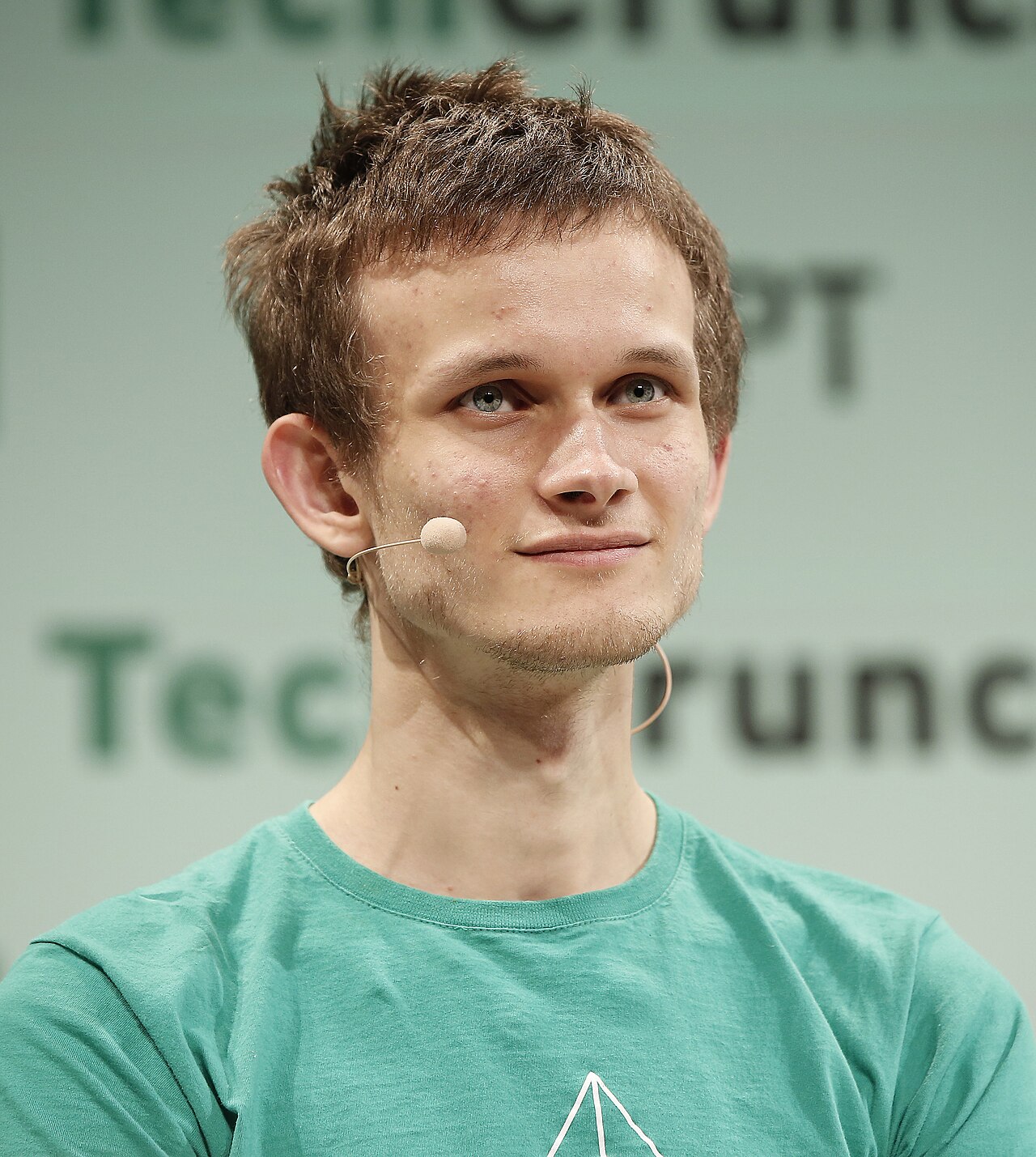
Portrait of Vitalik Buterin, founder of Ethereum, speaking at a conference in 2015; rendered as a vermilion-and-ink duotone poster.
Vitalik Buterin at TechCrunch Disrupt London, 2015 — the Ethereum founder whose quadratic-funding collaboration with Weyl became the allocation engine behind Gitcoin Grants.
Photo: John Phillips · Wikimedia Commons · CC BY 2.0
  • Glen Weyl
    Economist · founder · co-author of Radical Markets
  • Vitalik Buterin
    Ethereum · co-author of the quadratic-funding formula (adjacent)
  • Audrey Tang
    Civic technologist · the Plurality turn (adjacent)
10 ×

Fate

Status · Living

Its mechanisms have escaped into real pilots — govtech, crypto, participatory budgeting — even as the movement itself stays small.