The Berkeley circle of Christopher Alexander, with
Sara Ishikawa and Murray Silverstein — an architect's attempt to
distill living, humane design into a shared grammar of reusable patterns.
Berkeley, California◆1967 – 1980◆253 patterns
An architect's attempt to distill living, humane design into a shared
grammar of reusable patterns.
✳ ✳
Preface — the timeless way
A Pattern Language was the great work of architect Christopher
Alexander and his Berkeley circle in the 1970s: an attempt to distill humane,
living design into a shared grammar of 253 reusable "patterns" — from the scale
of a region down to a windowsill — each naming a recurring problem and a
time-tested solution.
Against modernist master-planning, Alexander argued that good environments
grow from ordinary people applying such patterns themselves, generating a
"quality without a name." The building projects were mixed, but the idea proved
astonishingly portable: software engineers adopted "design patterns" wholesale,
the wiki was invented to host pattern discussions, and Agile development traces
part of its lineage here.
Few architecture books have so deeply shaped a field the author never worked in.
What follows is that scene set as its own pattern language — each section a
pattern: a problem named, a solution proposed, a diagram drawn.
Gathering One
The Vocabulary
Five motifs form the working words of
the language. Learn these and the rest of the patterns fall into place.
m.1
The pattern as reusable solution
A named, recurring problem married to a time-tested answer —
small enough to carry, general enough to reuse anywhere.
m.2
The quality without a name
The felt aliveness of a good place — nameless, but real, and
the thing every pattern is secretly reaching toward.
m.3
The timeless way of building
A conviction that living structure is not invented but grown,
the way it has been grown in every age before the modern one.
m.4
User as designer
The people who will inhabit a place are the ones fit to shape
it — an anti-expert populism at the heart of the method.
m.5
Wholeness and living structure
Good form emerges when each act of building heals and completes
the whole around it, one center strengthening the next.
The tools of the hand. The language is drawn, not decreed —
every pattern in the book arrives with a sketch.Photograph: MichaelMaggs · CC BY-SA 3.0 ·
Wikimedia Commons
Gathering Two
The Patterns
Pattern 1✳ ✳
A Shared Grammar of Places
. . . this is the root pattern. It stands beneath
the vocabulary and gives every other pattern its reason
for being . . .
Modern master-planning imposes whole environments from above,
and the places it makes rarely come alive.
Alexander's answer was not another style but a method. Good
environments arise from a shared vocabulary of tested spatial patterns that
ordinary people can combine to generate living, whole places — without an imposed
master plan. The expert supplies the language; the inhabitants supply the poem.
Therefore
Give people a common language of patterns — each a proven problem-and-solution —
and let them build up their own surroundings, piece by piece, into a living whole.
centers within centers — wholeness
Pattern 2✳ ✳
Why It Travelled So Far
. . . follows from a shared grammar of places;
it explains how a book about buildings became infrastructure for another field entirely . . .
Most design theories die in their discipline. This one leapt the wall.
What made the pattern idea so contagious?
Naming an ineffable "aliveness" in good places — and promising a method
to reach it — was seductive to designers, and later to programmers.
The anti-expert populism (ordinary people can design) empowered a wide audience
beyond the profession.
A numbered, quotable catalog of 253 patterns was infinitely copyable and applicable —
a format built to be forwarded.
Therefore
Package hard-won craft as a numbered, named, quotable catalog, and it will
outrun the discipline that made it.
253 entries, endlessly copyable
The guild's shelf. A pattern is a part with a proven fit — kept,
named, and reached for again, the way a workshop keeps its bearings.Photograph: Dietmar Rabich · CC BY-SA 4.0 ·
Wikimedia Commons
Pattern 3✳
The Forces For and Against
. . . every living scene is held in tension. Here are the engines
that drew the circle together, and the ones that pulled it apart . . .
A scene coheres only while its binding forces outweigh its
fracturing ones. Name both, honestly.
What drew it together
Alexander's Berkeley circle and its built experiments.
The book A Pattern Language as a single shared reference.
One strong theorist, holding the centre.
What pulled it apart
The gulf between the mystical later Alexander and his pragmatic readers.
Architecture's establishment rejecting him while software embraced him.
The sheer difficulty of actually building the way the theory demands.
Therefore
A single theorist and a single book can bind a circle tightly — and the same
singularity, pushed toward metaphysics, is what finally splits it.
gather, then scatter
Pattern 4✳
A Home Next Door
. . . refines the forces for and against;
it describes what a theorist-led circle does when its ideas take root elsewhere . . .
A research circle led by one mind can find that its ideas belong
to a discipline it never entered.
This was a theorist-led research circle whose ideas found their real
home outside architecture. Alexander's increasingly metaphysical turn — toward
wholeness, life, the nature of order — split the pragmatic followers, who wanted a
usable toolkit, from the disciples, who wanted the whole mystical cosmology.
Therefore
Expect the pragmatists to keep the method and the disciples to keep the master —
and expect the method to travel further than either.
the idea, moving house
Pattern 5✳ ✳
The Leap Into Computing
. . . the largest pattern in the language. It is why this
architecture book is read most closely by people who have never poured a foundation . . .
The theory was largely bypassed in the field it was written for.
Where, then, did it actually land?
Largely bypassed in architecture, it transformed software.
"Design patterns" became a standard of the craft; the wiki was invented expressly to
host pattern discussions; Agile development drew part of its lineage from here; and
Christopher-Alexander-citing programmers turned up everywhere. A grammar for
windowsills and streets became foundational infrastructure of software culture.
Therefore
Where a discipline is young and hungry for craft-wisdom, a portable pattern
language will be adopted whole — bricks and mortar be damned.
building → code
Pattern 6✳ ✳
The Scenius Signature
. . . if you remember only one thing about this circle,
let it be this . . .
What is the one move that makes this scene itself, and no other?
A small circle distilled the felt quality of living places into a
copyable grammar — and that grammar then jumped disciplines into computing.
The signature is that double gesture: first the compression of the ineffable into
something teachable, then its unexpected leap across a wall.
Therefore
Compress a felt, nameless quality into a shareable grammar — and it may outlive
and out-travel every building you meant it for.
Pattern 7✳ ✳
Fate — Marginal at Home, Generative Next Door
. . . the last pattern, and the epitaph . . .
How does a movement rejected by its own field still end up
shaping the world?
Marginal in its home field, it was wildly generative next door:
the pattern idea became foundational infrastructure of software culture. The
verdict of architecture and the verdict of computing could hardly have differed
more — and the second one is the one that stuck.
low here, high there
Gathering Three
The Circle
Christopher Alexander theorist · architect
Sara Ishikawa co-author
Murray Silverstein co-author
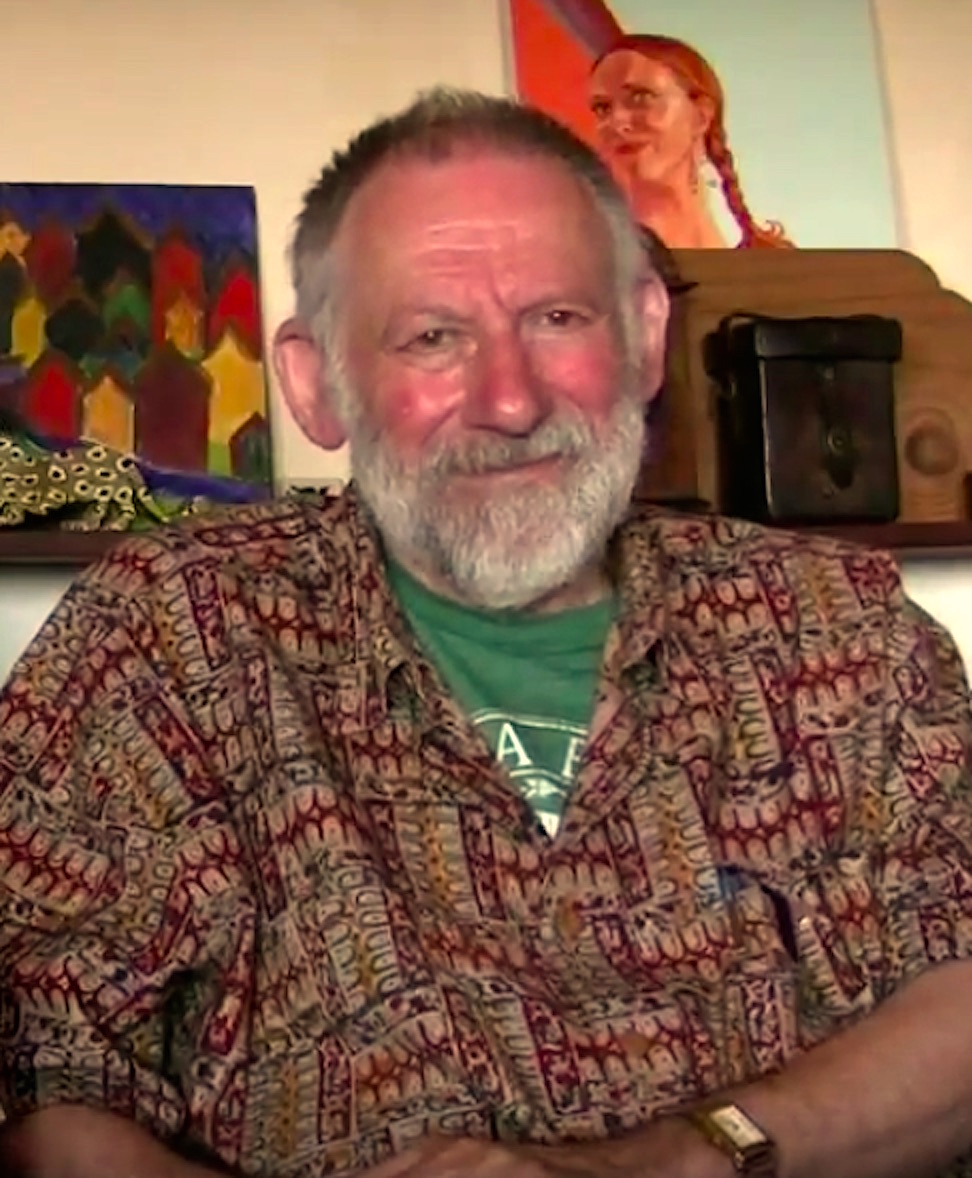
Christopher Alexander in Berkeley, California, May 2013 — the
single strong theorist who held the centre of the circle.Photograph: Michaelmehaffy · CC BY-SA 4.0 ·
Wikimedia Commons
Mediums
the pattern
the book
the built prototype
Archetypes
The Guild / Workshop
Arcadia
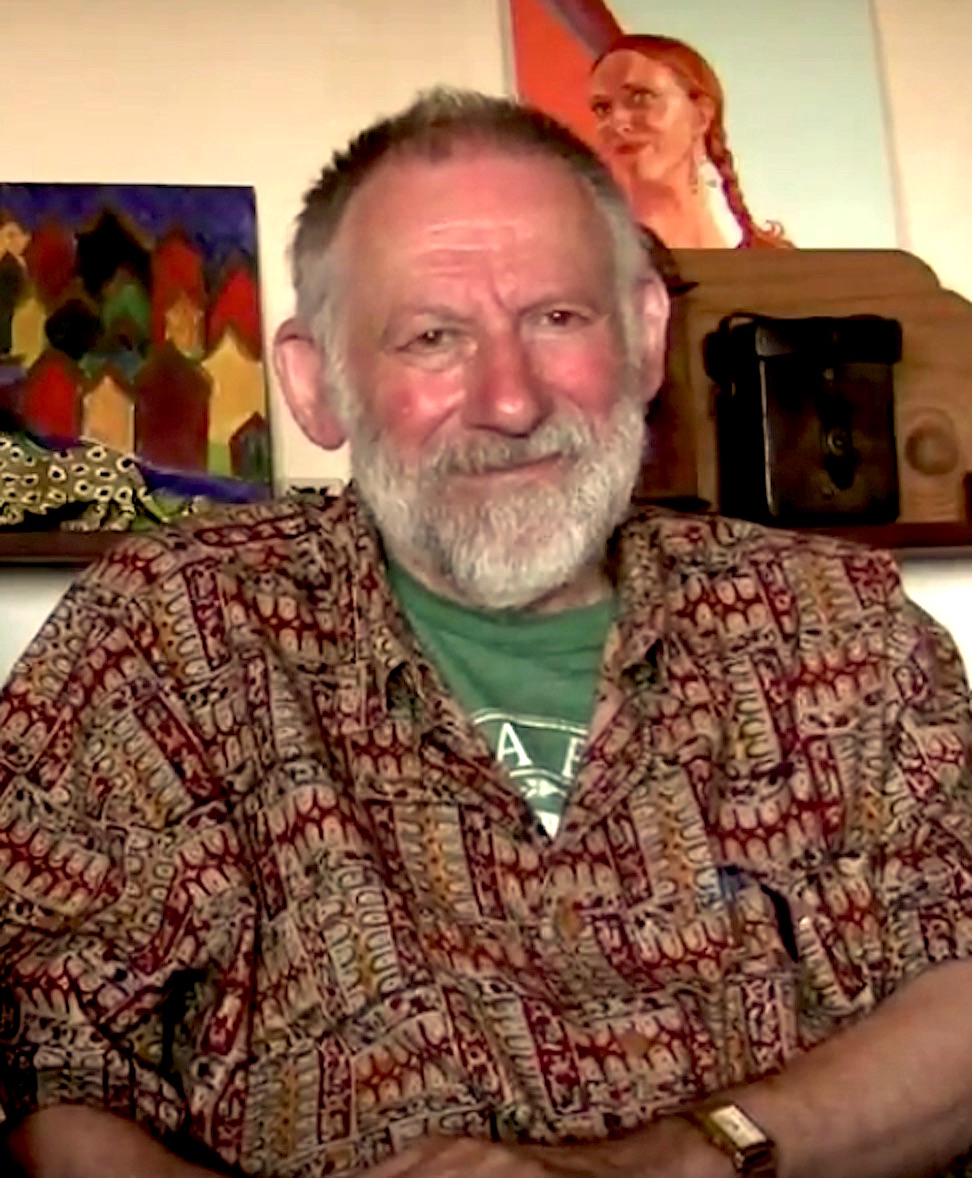
At the Center for Environmental Structure, Berkeley, 2013 — the
workshop from which the language was assembled.Photograph: Michaelmehaffy · CC BY-SA 4.0 ·
Wikimedia CommonsMaterial, weathering into wholeness — the kind of ordinary,
time-touched surface Alexander held up as more alive than any polished plan.Photograph: Dietmar Rabich · CC BY-SA 4.0 ·
Wikimedia Commons
Sources
Christopher Alexander et al., A Pattern Language (1977) — the primary work.
Christopher Alexander, The Timeless Way of Building (1979).
Erich Gamma et al., Design Patterns (1994) — the software adoption.
Keyed to the standard published literature on this scene
(representative, not exhaustive; not independently re-verified against each edition).
Image credits
All photographs are used under Creative Commons licences and shown with attribution.
Colouring pencils — MichaelMaggs, CC BY-SA 3.0 (source).
Tool-shed bearings, Haltern am See — Dietmar Rabich, CC BY-SA 4.0 (source).
Sheet metal, Nyhavn — Dietmar Rabich, CC BY-SA 4.0 (source).
Christopher Alexander, 2013 — Michaelmehaffy, CC BY-SA 4.0 (source).
Christopher Alexander at CES, 2013 — Michaelmehaffy, CC BY-SA 4.0 (source).





,_Nyhavn_--_2017_--_1711.jpg)

