Avant & Anti-Art1960 – 1970Manifesto by Pierre Restany
Nouveau Réalisme
A European answer to Pop that seized the real objects of consumer society — trash, machines, the void.
Declared 27 Oct 1960, MilanSignatories: Klein · Tinguely · Arman · Saint Phalle · ChristoColour of record: IKB
Poetic recycling of the real
The Declaration · 1960
Painting is exhausted. Seize the real directly.
— The unifying principle. Restany bound a handful of loners just long enough to claim the consumer object for art.
Nouveau Réalisme was France's answer to Pop, declared in 1960 by critic Pierre Restany with a group including Yves Klein, Jean Tinguely, Niki de Saint Phalle, Arman, and Christo. Where American Pop depicted consumer culture, the Nouveaux Réalistes seized its actual objects — crushed cars, accumulated trash, torn posters, the void itself — as raw material, calling it a "poetic recycling of urban, industrial reality."
Klein's monochromes and immaterial gestures, Tinguely's self-destroying machines, and Saint Phalle's shooting paintings pushed the readymade into performance and spectacle. Short-lived as an organised group, it dissolved by 1970 — but pumped a distinctly European, materials-first energy into the international turn toward Pop, assemblage, and kinetic art.
AssemblageThe machine-sculptureThe monochromeThe happeningArchetype · The Trickster
Unifying Principle
New ways of perceiving the real
Painting is exhausted; the artist should appropriate the real objects, gestures, and voids of modern industrial life directly — as "new ways of perceiving the real." Not a picture of the world, but a fragment of it, torn out and re-presented.
Five Seizures · The Motifs
Objects taken from the street
01
The real object seized from the street
02
The anthropometry & the leap into the void — Klein
03
The monochrome & the void — Klein
04
The machine that destroys itself — Tinguely
05
Accumulation & compression — Arman, César
The Coalition
A critic and his strong individualists
Less a school than a critic-branded coalition. Restany named it, Klein starred in it, and its heterogeneity — from Klein's mysticism to Arman's trash — meant it cohered only briefly. Portraits below hold their colour on hover.
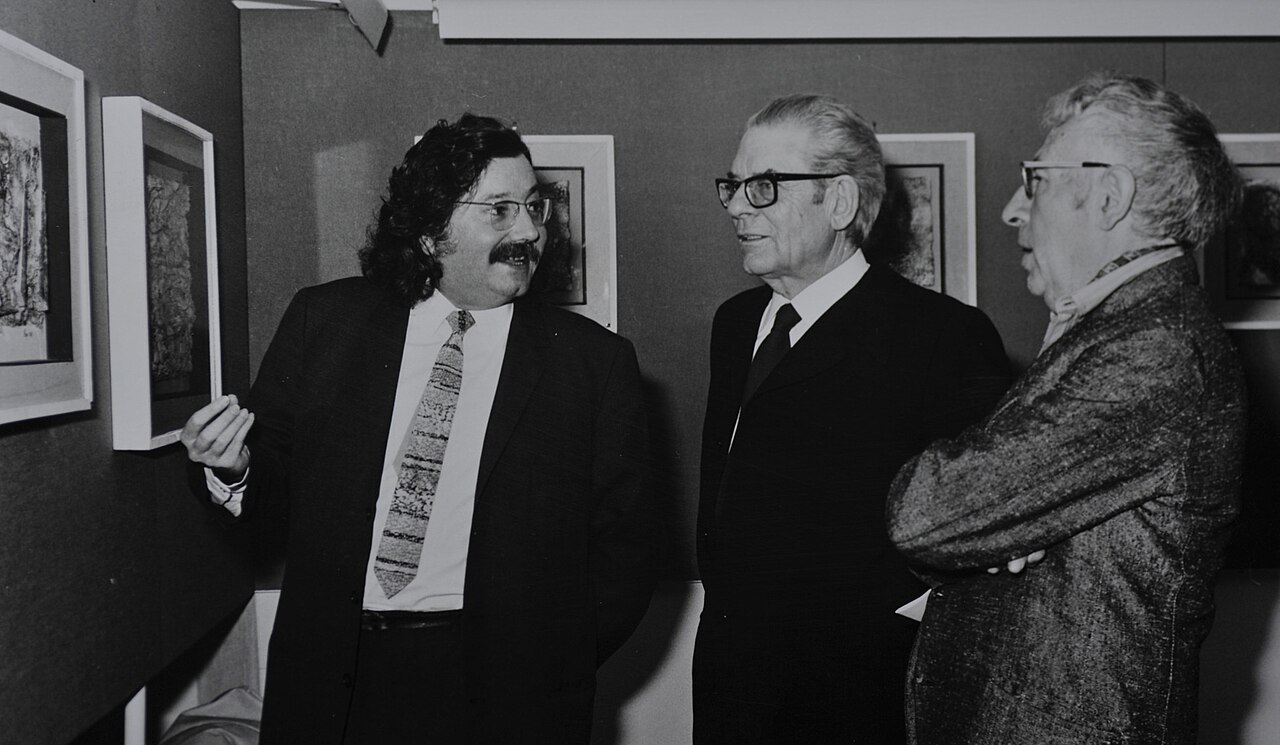
Brajo Fuso (centre) with Pierre Restany (left) & André Verdet (right). Photo: Gianmaria Fontana di Sacculmino · CC0 · Wikimedia Commons
Yves Klein
The Void · The Leap · IKB
The star turn: patented International Klein Blue, exhibited empty rooms as "the Void," and leapt into it. Died suddenly, 1962 — and the coalition began to disperse.
Why it spread
A scandalous shortcut past painting
Declaring the discarded stuff of consumer society to be art was a thrilling, scandalous shortcut past painting.
Klein's showmanship and Restany's manifesto gave the loose group a brand.
A European answer to American Pop lent competitive urgency.
The Engines
What held it together — and tore it apart
Convergent
Restany's manifesto and theorizing
Klein's charismatic events — the Void, the Leap
A Paris–Nice network of makers
Divergent
Wildly divergent practices under one label — from Klein's mysticism to Arman's trash
Klein's sudden death in 1962
The pull of the international Pop market
Internal Dynamics & Impact
Between Dada and Pop
Internal Dynamics
A critic-branded coalition of strong individualists more than a school. Restany named it, Klein starred in it, and its heterogeneity meant it cohered only briefly.
Society Impact
Bridged Dada and Pop, expanded the readymade into accumulation and performance, and shaped installation, happenings, and the European postwar market.
Fate
Dispersed after Klein's death and market individuation; absorbed into Pop, kinetic, and installation art.
Scenius Signature
A critic's manifesto binding a handful of loners just long enough to seize the consumer object for art.
Image Credits & Licences
Credits
Every portrait on this page is a Creative Commons or public-domain image, reproduced here under its licence with attribution to the photographer.
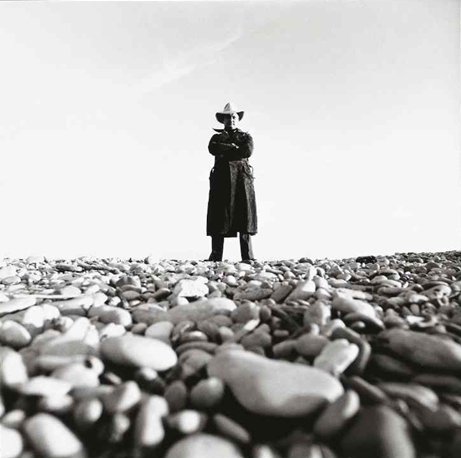
Arman — photograph by Lothar Wolleh. CC BY-SA 3.0. Source
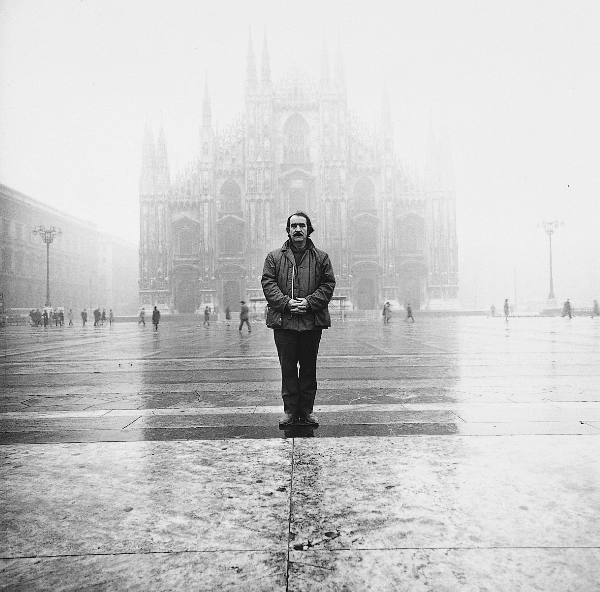
Jean Tinguely, Milan 1970 — photograph by Lothar Wolleh. CC BY-SA 3.0. Source
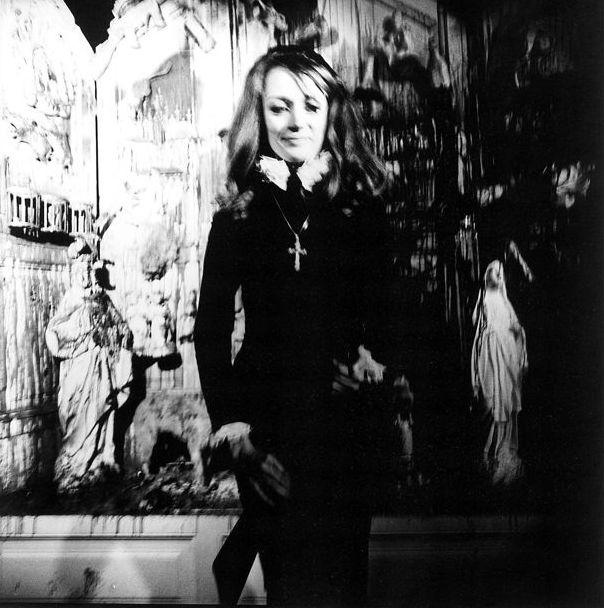
Niki de Saint Phalle — photograph by Lothar Wolleh. CC BY-SA 3.0. Source
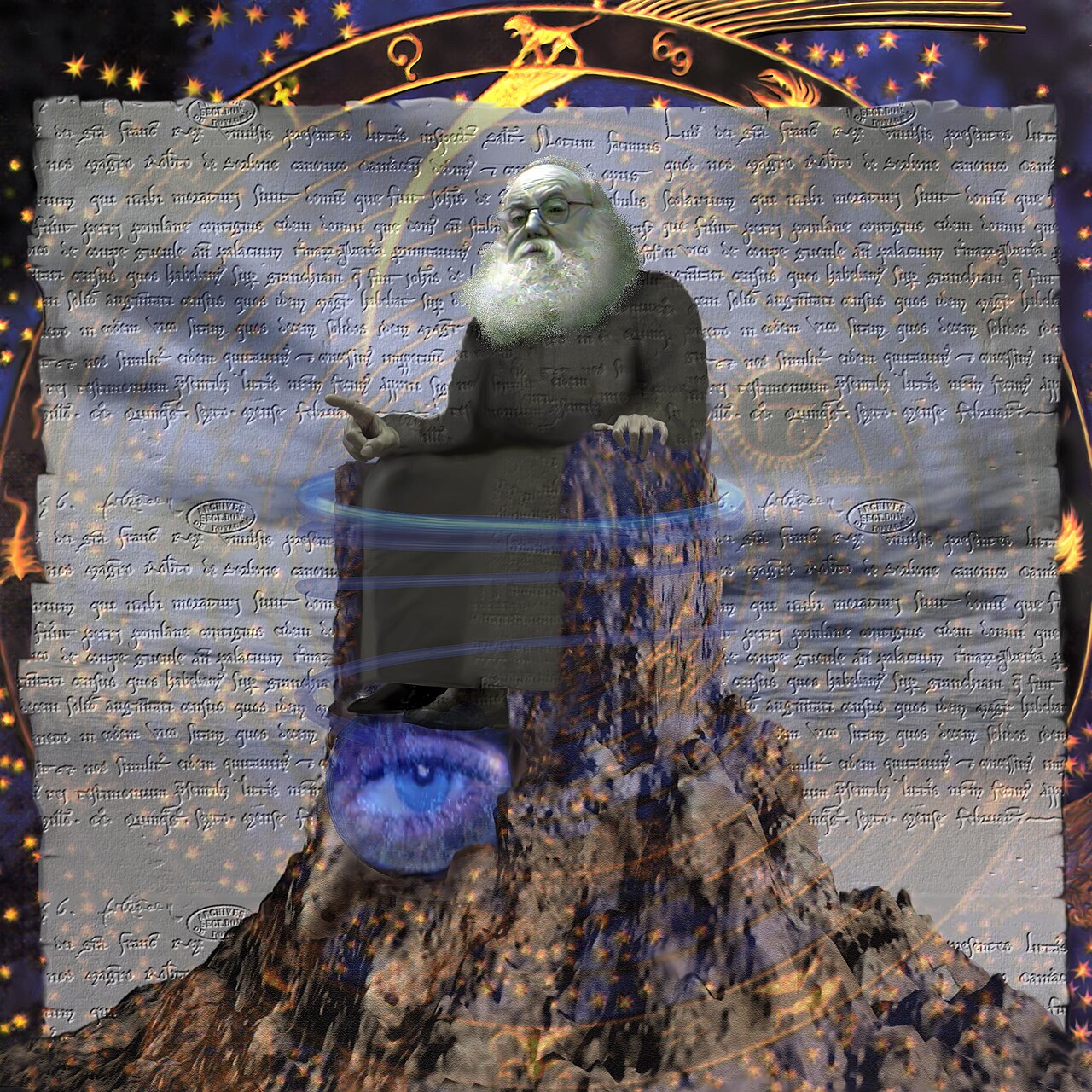
Pierre Restany, Rome 1997 — portrait by Lorenzo Paolini. CC0. Source
Brajo Fuso with Restany & Verdet, 1972 — photograph by Gianmaria Fontana di Sacculmino. CC0. Source
Keyed to the literature: Pierre Restany, Le Nouveau Réalisme (1968) · Jill Carrick, Nouveau Réalisme, 1960s France, and the Neo-avant-garde (2010). Representative, not exhaustive.