
Era
1937 – 1955
Chicago · 1937–1955
Moholy-Nagy's American transplant of the Bauhaus, bending it toward light, perception, and science.
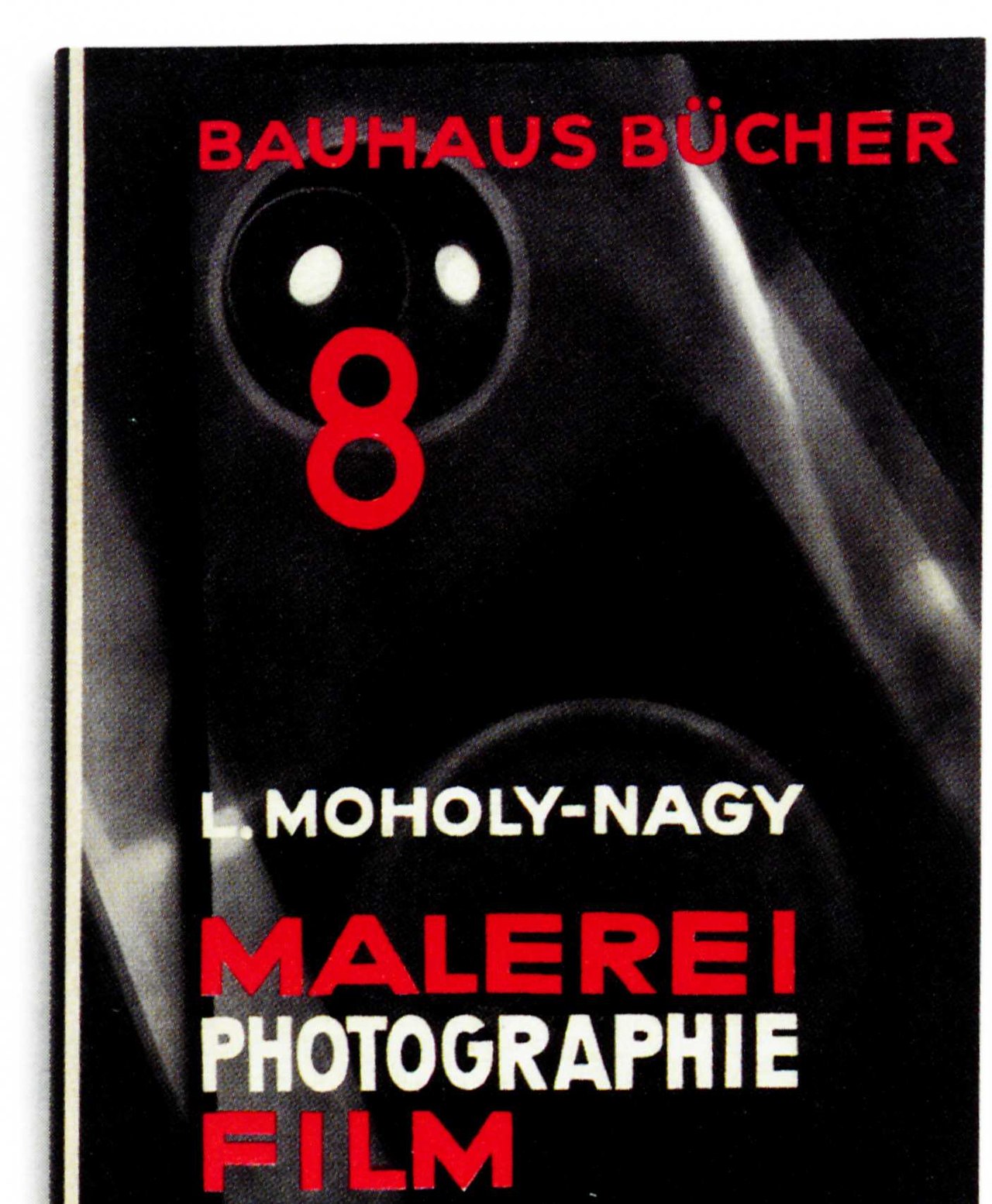
Malerei · Photographie · Film, Bauhausbücher 8, 1925 — cover by László Moholy-Nagy. Public domain. Source
The New Bauhaus was László Moholy-Nagy's American transplant of Bauhaus pedagogy, opened in Chicago in 1937 and evolving through the School of Design into the Institute of Design at IIT.
Fleeing Europe, Moholy-Nagy carried the Bauhaus preliminary course across the Atlantic but bent it toward light, photography, perception, and a closer alliance with science and industry — design reconceived as the integration of art and technology for modern life. Under Moholy-Nagy and later György Kepes, it trained influential designers and photographers and helped make design a university discipline in America. It is the crucial hinge by which Bauhaus ideas entered the postwar United States, feeding both design education and, through Kepes, the art-science experiments at MIT.
Design education should cultivate the whole sensorium through experiment with light, material, and space — fusing artistic and scientific method to remake how we see.
Unifying principle
Moholy-Nagy's utopian faith that design could remake perception itself was infectious.
Transplanting the Bauhaus to America carried an aura of exiled genius.
A curriculum bending art toward science attracted a technical-creative hybrid student.
A school living on Moholy's energy and Chicago backing; when he died it survived institutionally — as the IIT Institute of Design — but lost its utopian charge.
Seeded American design education and photographic experiment; carried Bauhaus method into US industry and the postwar design profession.
Institutionalized into IIT's Institute of Design; the prophetic ambition faded into a respected professional program.
One exile's conviction that training the eye could train the future — staged as a laboratory of light.
Keyed to the standard published literature on this scene — representative, not exhaustive; not independently re-verified against each edition.
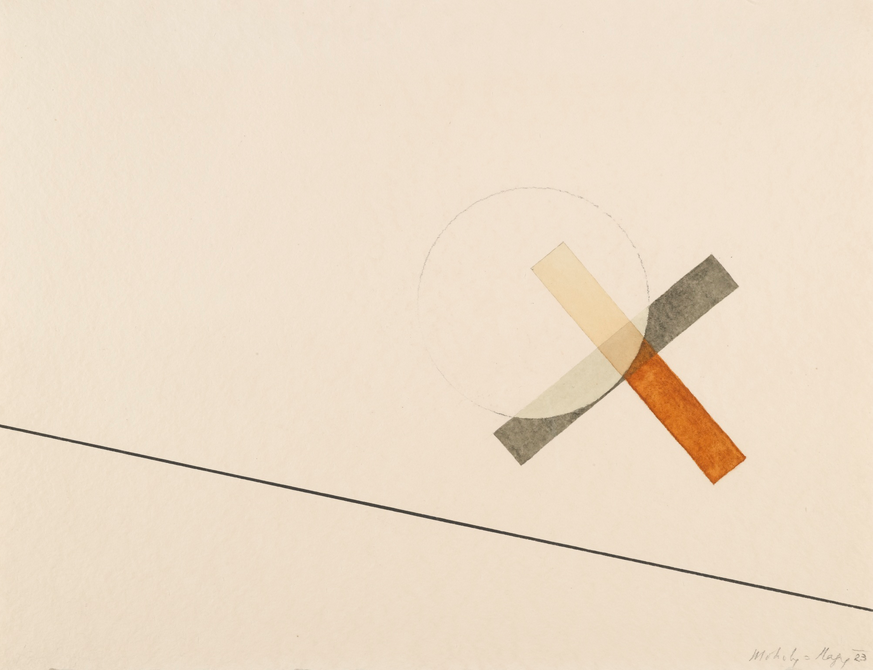
Images · Malerei Photographie Film cover (1925) and Untitled composition (c. 1923) by László Moholy-Nagy, public domain, via
Wikimedia Commons /
Wikimedia Commons.
The Scenic Garden · a deep map of generative subcultures.
