System & Signal · Invisible College

Macy
Conferences

1946 – 1953 New York Ten closed meetings · ~20 seats each Convened by Frank Fremont-Smith
Fig. I — Circular Causal & Feedback Mechanisms INPUT world / message SYSTEM animal · machine society OUTPUT action / control Σ Feedback — the loop that makes the whole a mind
Control & communication obey the same laws in the animal and the machine. after N. Wiener, 1948
Abstract

The interdisciplinary meetings that named cybernetics and forged feedback, information, and self-regulation into a universal science of mind and machine.

§01

The Controlled Collision

Proceedings

The Macy Conferences were not a school or a movement but a controlled collision: ten closed-door meetings, roughly twenty participants each, in which Warren McCulloch deliberately seated a mathematician of computation (von Neumann), a mathematician of communication (Wiener, Shannon), a logician of the neuron (Pitts), an anthropologist of culture (Mead), an ethnographer of mind and ecology (Bateson), and psychiatrists, physiologists, and engineers around the same table and made them explain themselves to one another until a shared vocabulary emerged.

That vocabulary — feedback, information, circular causality, homeostasis — became cybernetics, and the meetings themselves became the primal scene from which cognitive science, artificial intelligence, systems theory, family therapy, and much of the mid-century idea that life and machine obey the same laws can trace direct descent.

§02

The Round Table

Participants · partial roster
THE TABLE McCULLOCH WIENER SHANNON von NEUMANN BATESON MEAD von FOERSTER
  1. 01Norbert Wienermath of communication
  2. 02Warren McCullochchair · neuron logic
  3. 03Margaret Meadanthropology
  4. 04Gregory Batesonmind & ecology
  5. 05Claude Shannoninformation theory
  6. 06John von Neumanncomputation
  7. 07Heinz von Foerstereditor · 2nd-order
§03

One Law

Unifying principle

Principle —Control and communication in the animal and the machine obey the same laws; mind, life, and society are all feedback systems that can be modeled mathematically.

Method —Seat unrelated experts, force them to explain themselves, and hold the room until a single vocabulary emerges.

Signature —The purest case of cross-disciplinary scenius: a new shared language let unrelated experts fuse their fields in one room over a sustained period.

§04

Motifs

Recurring figures of thought
Motif 01 · loop

Feedback and the circular causal loop.

Motif 02 · bit

Information as a measurable quantity.

Motif 03 · analogy

The analogy between brain, machine, and society.

Motif 04 · homeostat

Self-regulation and homeostasis.

Motif 05 · table

The interdisciplinary round table itself.

§05

Memetic Forces

Why it spread
Force 01 · language

A single vocabulary — feedback, information, control — that suddenly let a neurophysiologist, an anthropologist, and an engineer talk to each other was electrifying.

Force 02 · prestige

The wartime prestige of the people involved gave the new science instant authority.

Force 03 · totality

The promise of one science of everything with a mind was irresistibly totalizing.

§06

Engines: Converge / Diverge

Held together · pulled apart

Convergent

Forces toward the center →
  • The closed invitational conference format across seven years
  • A shared new vocabulary
  • Frank Fremont-Smith and the Macy Foundation as convener
  • Charismatic hubs — Wiener, McCulloch, von Foerster

Divergent

Forces toward dispersal ⇄
  • Deep disciplinary differences — the humanists vs. the engineers
  • Personal feuds — Wiener's breaks
  • The ideas dispersing into a dozen new fields that each claimed a piece
§07

Internal Dynamics

The room's own physics

A closed, invitation-only salon-lab where an elite argued face-to-face for years; its power was the sustained, high-trust, cross-disciplinary contact that no single institution could have hosted.

§08

Plates & Publications

The self-documenting output
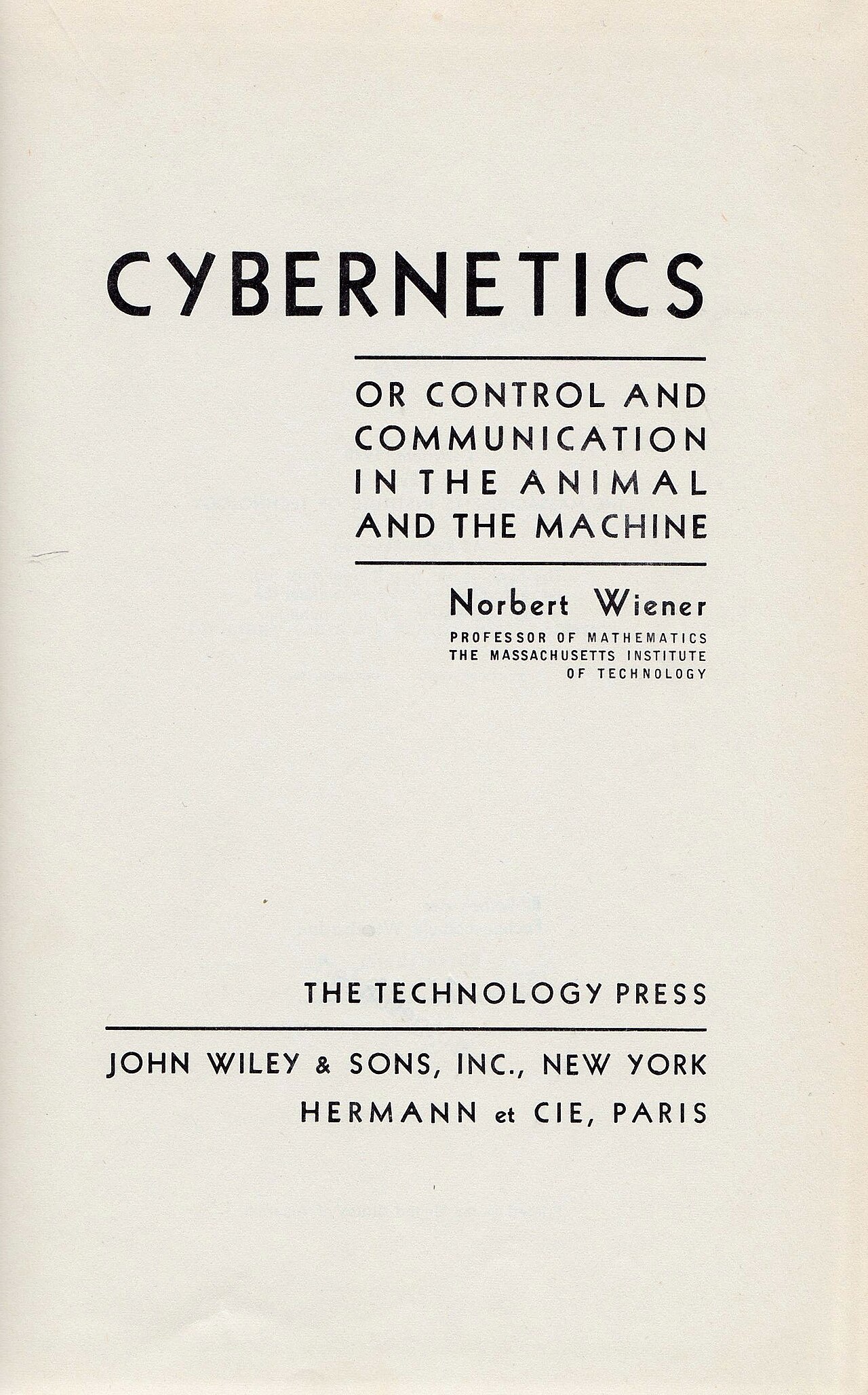
Title page of Norbert Wiener's 1948 book Cybernetics: or Control and Communication in the Animal and the Machine.
Norbert Wiener, Cybernetics: or Control and Communication in the Animal and the Machine, 1948 — title page. The book that gave the meetings their name. Repro. Gerd Küveler · Wikimedia Commons Public domain
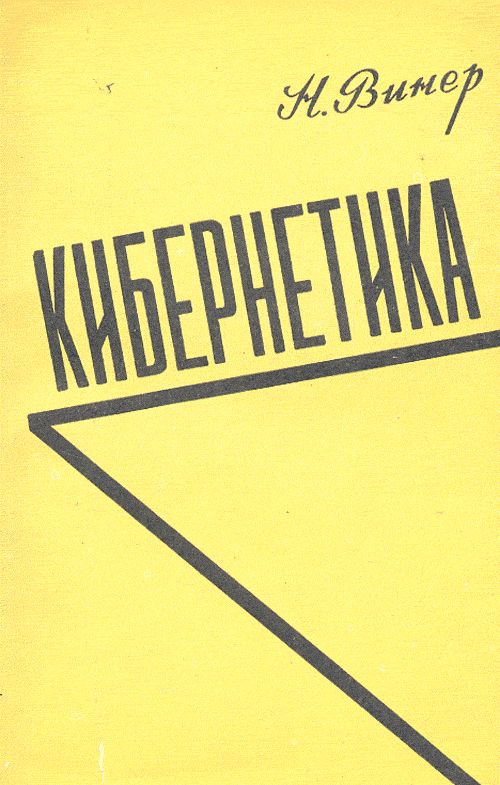
Cover of the 1958 first Russian edition of Wiener's Cybernetics.
The 1958 first Russian edition — Кибернетика — cybernetics crossing the Iron Curtain a decade on. Unknown author · Wikimedia Commons Public domain
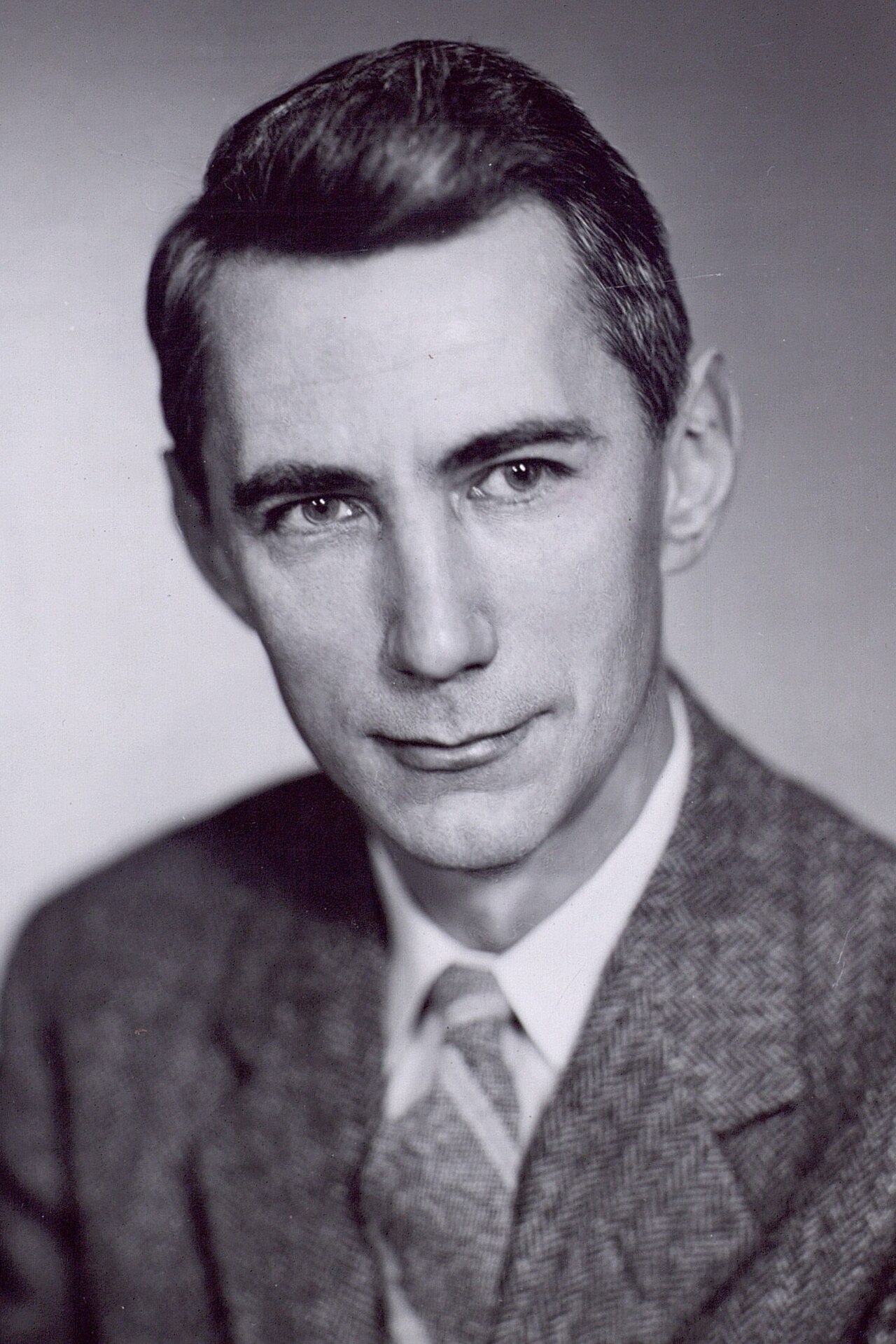
Portrait photograph of Claude Elwood Shannon, founder of information theory.
Claude Elwood Shannon — the mathematician of communication whose measure of information entered the room. Tekniska museet · Wikimedia Commons CC BY 2.0
Claude Shannon Centenary logo commemorating the founder of information theory.
Claude Shannon Centenary emblem — a later echo of the bit's afterlife. IEEE Information Theory Society · Wikimedia Commons CC BY-SA 3.0

Society Impact

Birthed cybernetics and, through it, cognitive science, artificial intelligence, family therapy, systems ecology, and the entire information-age self-understanding of humans as information-processing systems.

§09

Mediums & Archetypes

Form · myth

Mediums

the conference the transcript the diagram the model

Archetypes

The Laboratory The Noosphere / Great Mind The Invisible College

Scenius Signature

The purest case of cross-disciplinary scenius: a new shared language let unrelated experts fuse their fields in one room over a sustained period.

Fate

Dispersed as its ideas succeeded — cybernetics fragmented into the many fields it seeded, its integrative ambition surviving in General Systems, second-order cybernetics, and complexity science.