Recurring figures
- the full moon as a scheduling protocol (light to ride home by)
- the fusion of trade and philosophy at one table
- improvement as a moral duty
- the specimen and the prototype passed around
Birmingham, England · 1765 – 1813
the Lunaticks
Industrialists and natural philosophers who met by the full moon and quietly engineered the Industrial Revolution over dinner.
They dined on the Monday nearest the full moon — the better to ride home by her light.
A weather system of ideas
The Lunar Society was less a formal institution than a weather system of ideas centered on Matthew Boulton's Soho House: fourteen or so members over its productive decades — an engineer, a chemist, a potter, a physician-poet, a clockmaker-geologist, an educational reformer, a gun-maker — who dined together on the Monday nearest the full moon (so as to ride home by its light) and, far more consequentially, saw one another almost daily and wrote to one another constantly.
It had no charter, no published manifesto, and no dues; its business was whatever its members were building, curing, or theorizing that month, and its output was Boulton & Watt's steam engine, Wedgwood's Etruria works, Priestley's oxygen, Withering's digitalis, and Erasmus Darwin's evolutionary speculations — the working laboratory of the early Industrial Revolution disguised as a supper club.
The company at table
Power flowed not from title but from who could actually build the thing being discussed. Here, the principal Lunaticks and their trades.
Plate the First
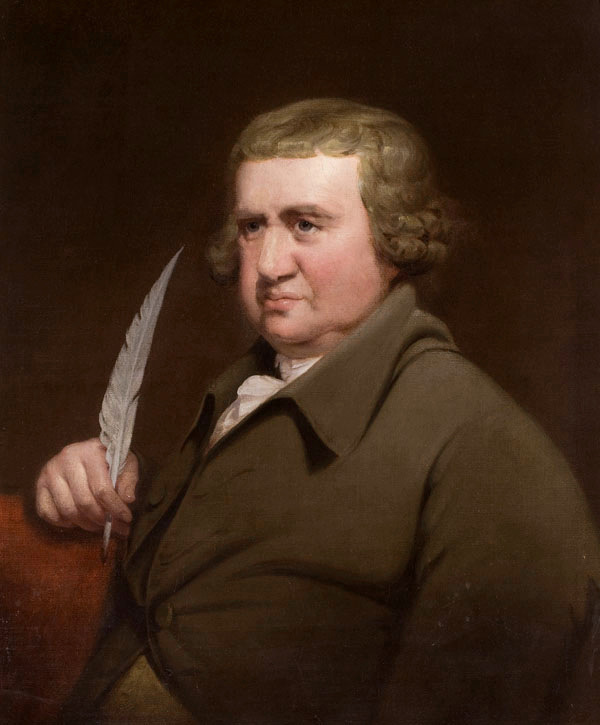
Fig. 1 — the light of the circle
Joseph Wright of Derby — painter to the industrial Midlands — lit his sitters and his air-pumps by the same candle. His Lunar friends sat for him out of the same darkness: reason as a small, warm flame against a very large night.
The proceedings
A dozen friends, no hierarchy, no dues; power flowed from who could actually build the thing being discussed. Boulton's Soho works was the shared laboratory and showroom.
Steam power, mass-produced ceramics, oxygen chemistry, and the very idea that science + capital + friendship could be a deliberate engine of progress — the template for the R&D culture that followed.
"Useful knowledge and moral progress are the same project; measure it, make it, sell it, and the world improves."
The complete loop from idea to instrument to market inside one room — Kevin Kelly's "network effects of tools" made flesh.
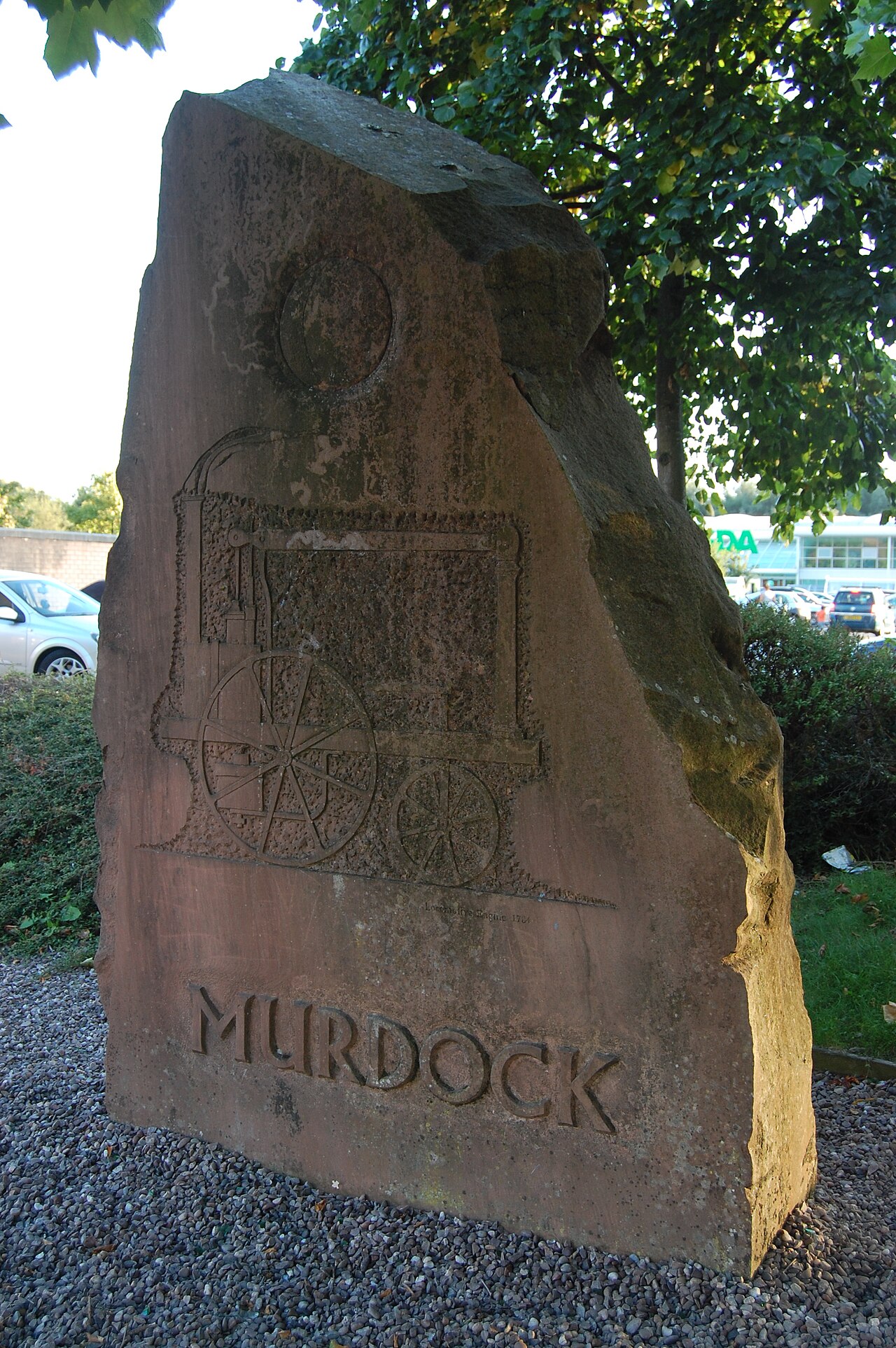
Plate the Second
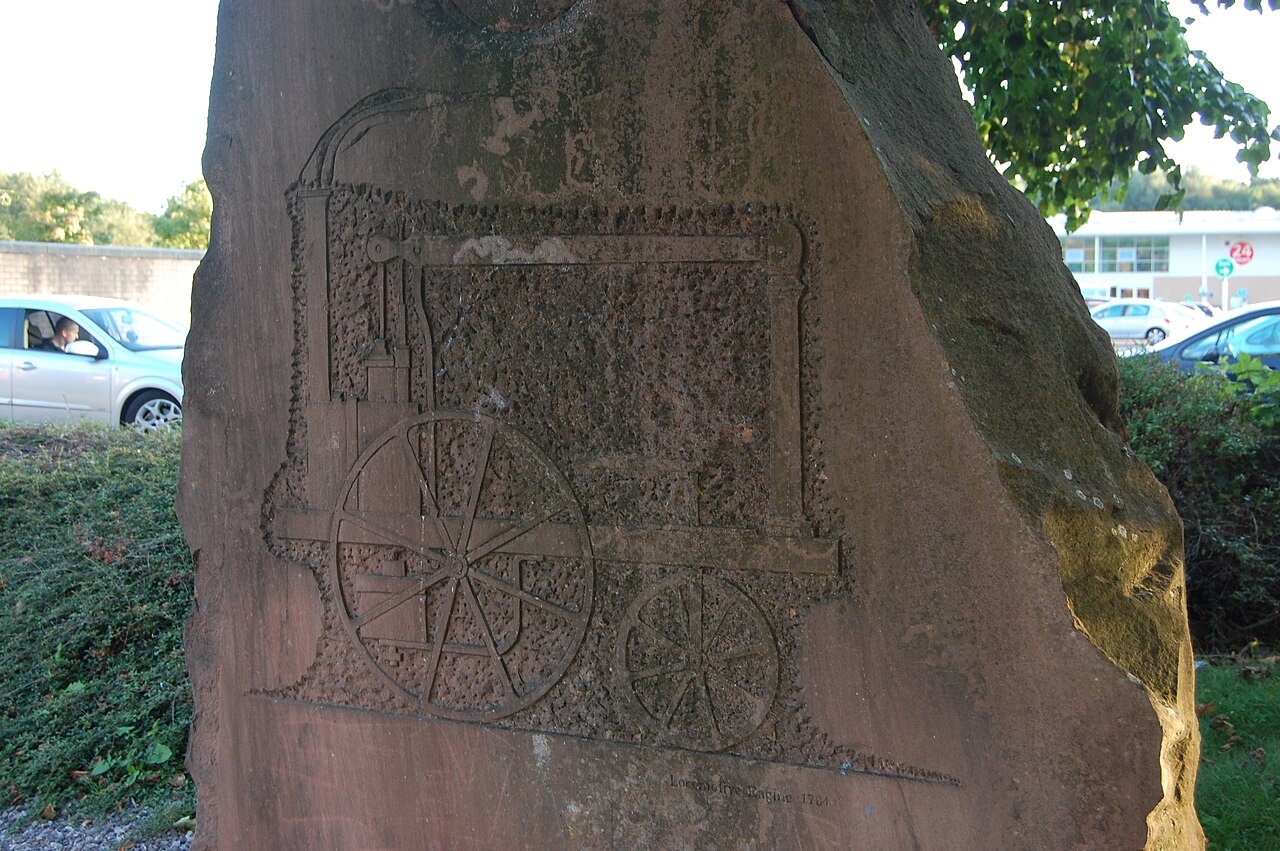
Carved red-sandstone monoliths at Great Barr, Birmingham, commemorate the Society — each face incised with the member's own science: a locomotive, a colour-wheel, the split disc of the moon. Reason set in stone, weathering in a car park.
The mediums
The archetypes
The fate
Dissolved by death and politics; composted directly into industrial capitalism and the model of the private scientific society.
Colophon & plates
This page is set in Baskerville — the type cut by John Baskerville, printer of Birmingham and contemporary of the circle. Every plate below is a licensed Creative-Commons or public-domain image and is credited to its maker.
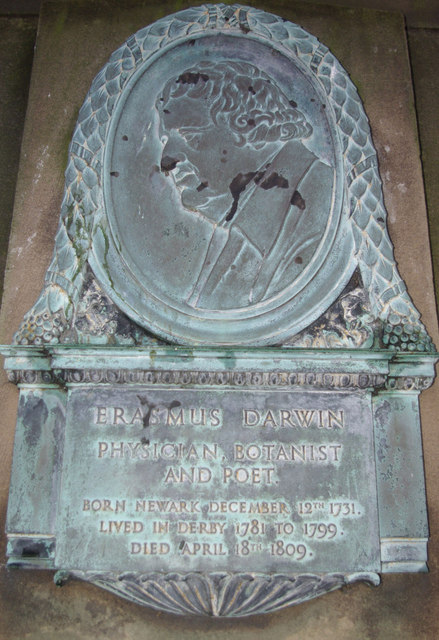
Text compressed from public sources (Wikipedia-led; Archives of Soho, Birmingham City Council; Hektoen International; Historic UK). Coded high-confidence, not yet independently verified — part of the Scenic Garden's living survey of scenius.
← Return to the scenic garden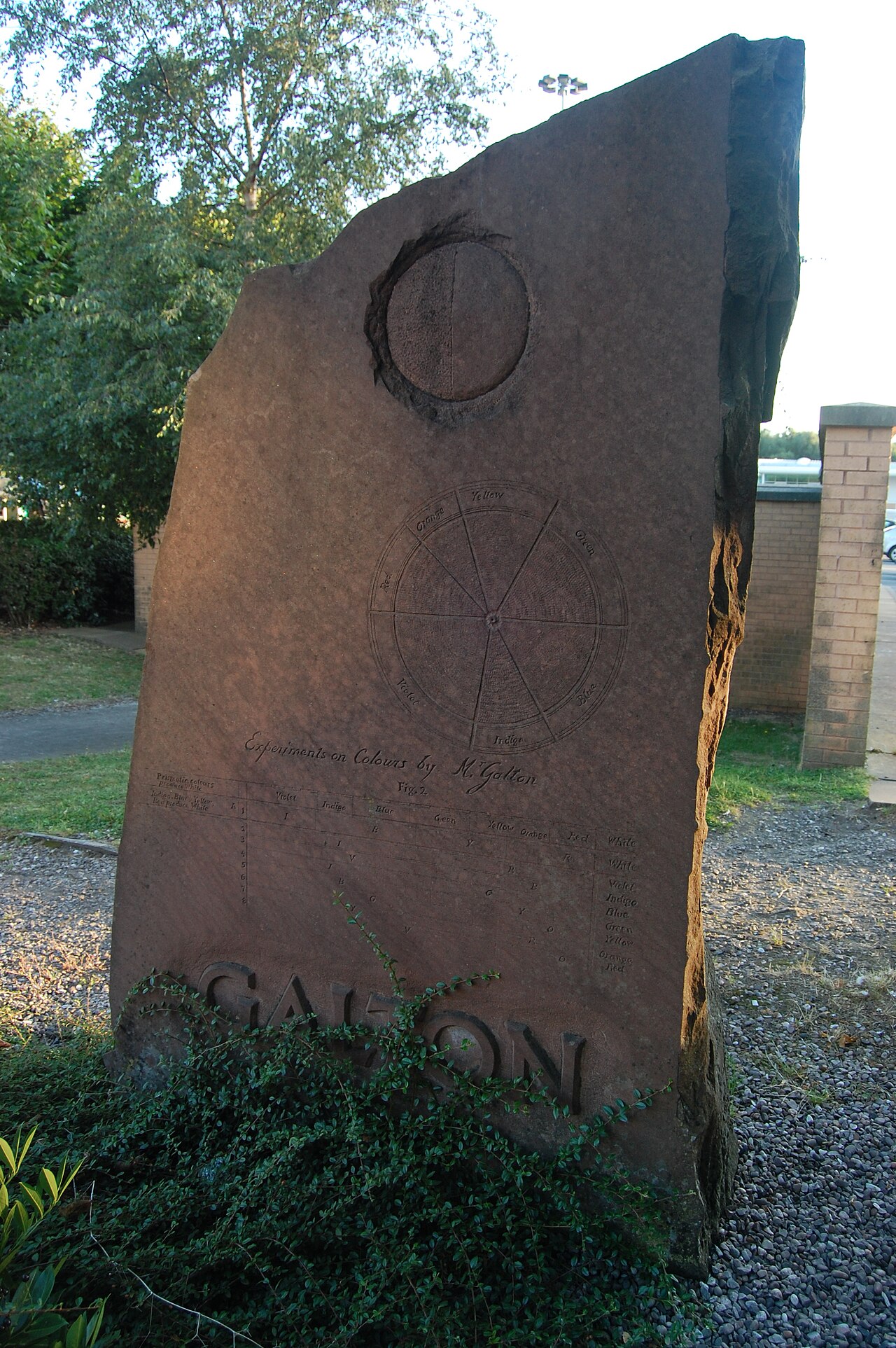
.jpg)


