TheLiving Theatre

Julian Beck  ·  Judith Malina  ·  the oldest experimental company in the United States

The essence

An anarchist-pacifist theatre commune that tore down the fourth wall to fuse performance with revolution and communal life.

Theatre
and its
Double

The record

Years
1947 – 1985
(and after)
Place
New York, then itinerant / Europe
Biome
Stage & Street
Form
The Colony / Commune · The Autonomous Zone

The company

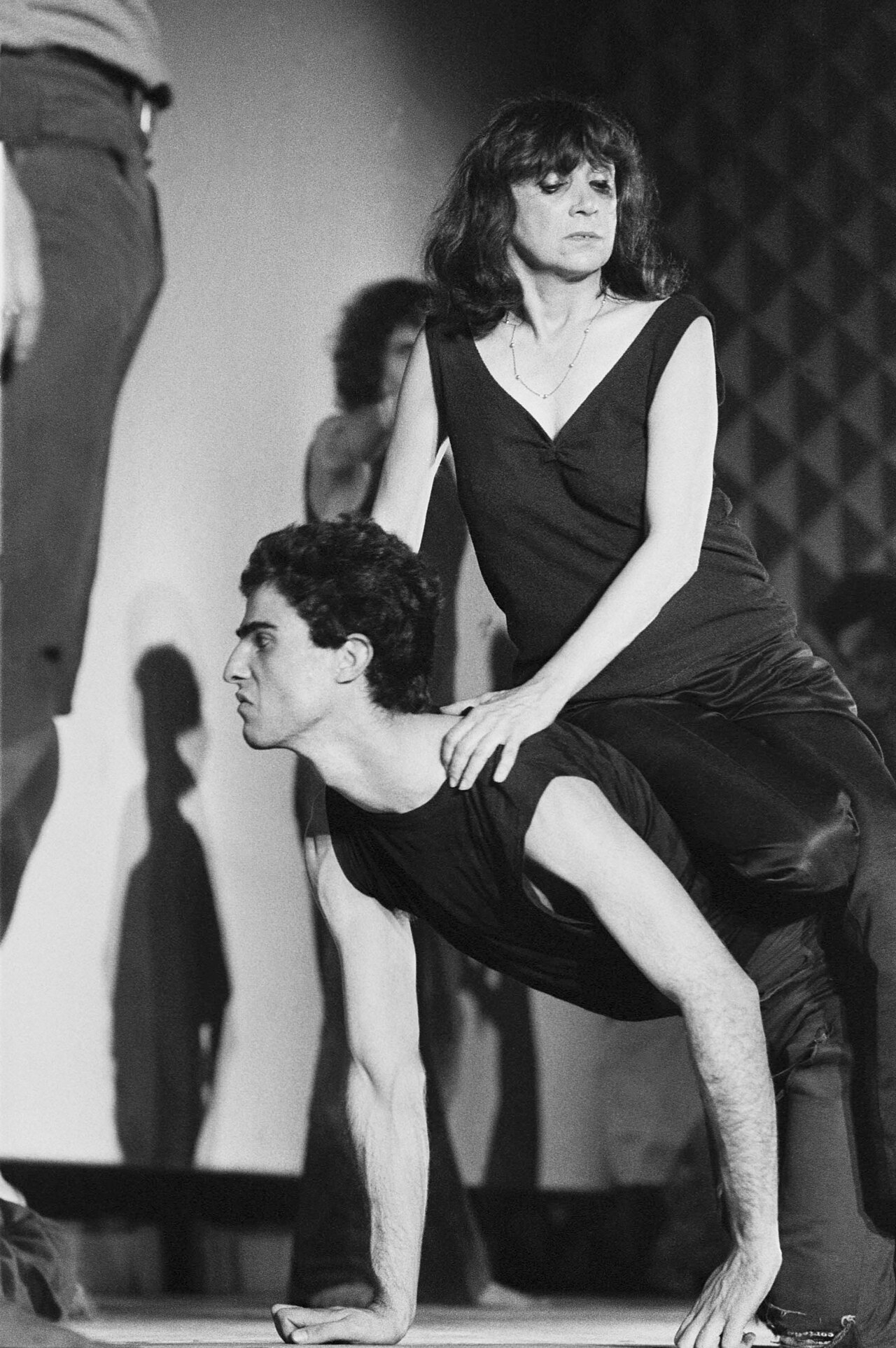
Black-and-white performance photograph: Judith Malina, co-founder of the Living Theatre, astride a crouching male actor mid-scene, the ensemble's physical, confrontational body-work in motion.
Judith Malina, co-founder of the Living Theatre, in performance, New York. Photograph by Gorupdebesanez, licensed CC BY-SA 3.0. Source: Wikimedia Commons.

Theatre and life should be one revolutionary, anarchist-pacifist act — performance dissolving the barrier between actor and spectator to rehearse a freer, non-violent society.

An anarchist theatre commune led by Beck and Malina that lived, traveled, and created collectively for decades — under persistent legal and financial pressure.

The origin

Founded in 1947 in a New York City apartment by Judith Malina — a student of Erwin Piscator's political epic theatre at the New School — and Julian Beck, an abstract-expressionist painter and poet, the Living Theatre set out to dissolve the boundary between stage and street, art and anarchism. Married in 1948, the pair built what is credited as the oldest experimental theatre company in the United States, moving from Cherry Lane storefronts (Gertrude Stein's Dr. Faustus Lights the Lights, 1951) through Off-Broadway breakthroughs, European exile, and free performances in prisons and steel mills — always insisting, via Antonin Artaud's The Theatre and Its Double, their governing text, that performance should be a total, transformative act rather than a mere representation of one.

Instruments of the work

the collective performance the commune audience confrontation The Colony / Commune The Autonomous Zone

The rungs — a dossier, ascending

How it lived, held together, and came apart

  1. I

    Motifs

    • the abolition of the fourth wall
    • theatre as anarchist-pacifist life
    • collective creation and communal living
    • confrontation and audience participation
  2. II

    Memetic forces — what pulled people in

    • fusing art, politics, and a shared life gave members a total, all-consuming commitment
    • the promise that theatre could directly enact revolution and freedom was galvanizing
    • itinerant, embattled communal existence forged intense solidarity
  3. III

    The unifying principle

    Theatre and life should be one revolutionary, anarchist-pacifist act; performance dissolves the barrier between actor and spectator to rehearse a freer, non-violent society.

  4. IV

    Convergent engines — what held it together

    • Beck and Malina's founding partnership and vision
    • communal living as the group's substance
    • signature confrontational productions (Paradise Now)
  5. V

    Divergent engines — what pulled it apart

    • exile, arrests, and constant financial precarity
    • the strain of decades of communal life
    • fragmentation into cells across countries
  6. VI

    Internal dynamics

    An anarchist theatre commune led by Beck and Malina that lived, traveled, and created collectively for decades under persistent legal and financial pressure.

  7. VII

    Impact on the world

    A cornerstone of experimental and political theatre — pioneering audience participation, collective creation, and the fusion of performance with radical living that shaped the 1960s stage.

  8. VIII

    The fate

    Beck's death (1985) and chronic precarity thinned it, but it persisted — and its methods became foundational to experimental theatre.

The scenius signature

A theatre that was also a commune — art, politics, and daily life fused into a single decades-long experiment.

Credits & sources

Image Portrait of Judith Malina, co-founder of the Living Theatre — photograph by Gorupdebesanez, licensed CC BY-SA 3.0, via Wikimedia Commons.
Part of The Scenic Garden — a deep map of the ecology of generative subcultures.
← Return to the scenic garden

Tear down the fourth wall