die neue zeit · the new age of the body
lebensreform
A sprawling German life-reform culture — vegetarianism, nudism, nature-cure, dress reform — rebelling against industrial modernity through the body.
the diagnosis
less a movement than a weather system
Lebensreform was a loose, self-multiplying network of hundreds of leagues, colonies, and periodicals across Germany, Austria, and Switzerland that treated the industrial city, the corseted body, the meat-eating table, and the vaccinated child as symptoms of the same civilizational sickness — and proposed nudity, raw food, hydrotherapy, and sun-facing communal life as the cure.
Its coherence lay not in doctrine but in a shared diagnosis — that materialism and urbanization had severed modern Germans from nature, body, and spirit — which let vegetarians, nudists, garden-city planners, anti-vaccinationists, and nature-mystics recognize each other as fellow travelers even without agreeing on remedies.
the unifying principle
Industrial-bourgeois civilization has sickened body and spirit; health and renewal come from returning to nature — reforming diet, dress, movement, and daily life toward the natural.
the three medicines
sonne · luft · boden
Where the modern doctor reached for the pharmacy, the reformer reached for the elements. Sunlight, air, and soil were not metaphors but prescriptions — taken daily, on one's own body, without a physician's leave.
plate i · freikörperkultur
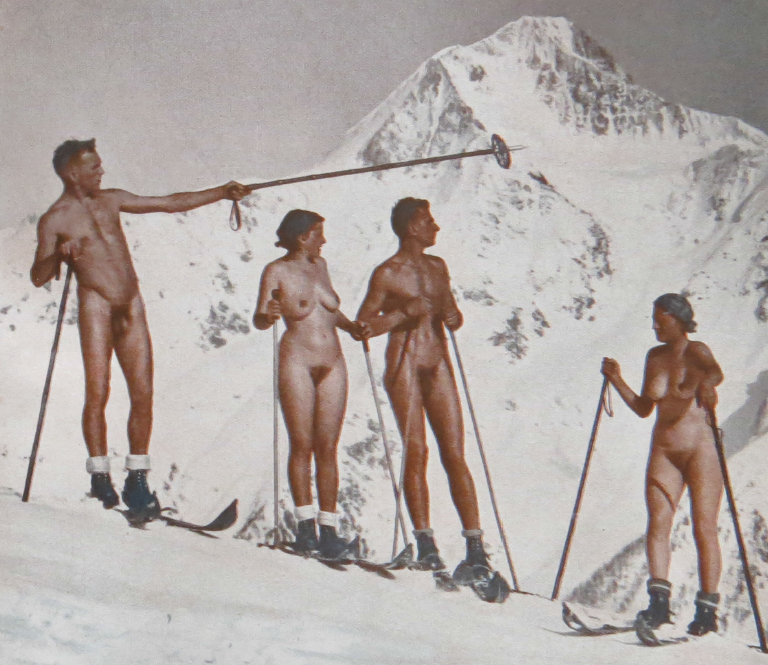
the bared body
Freikörperkultur — "free body culture" — took the reform logic to its skin. If clothing, shame, and the city were the disease, then the sun on naked skin, even at altitude in winter, was the medicine in its purest dose.
Nudism bound together the movement's threads: the health of the sun-bath, the honesty of the natural body, the communal rite of the colony. It was earnest, not erotic — a bodily politics of light.
recurring motifs
the shape of the sensibility
memetic forces
why it spread
- Industrial urban misery made a bodily "return to nature" feel like personal salvation, drawing a broad middle-class following.
- Its practices were participatory and self-improving — you enacted the reform on your own body, daily, without permission or priesthood.
- A sprawling ecosystem of magazines, clubs, and colonies let the movement propagate without central control.
plate ii · the nature-apostle
gusto gräser & monte verità
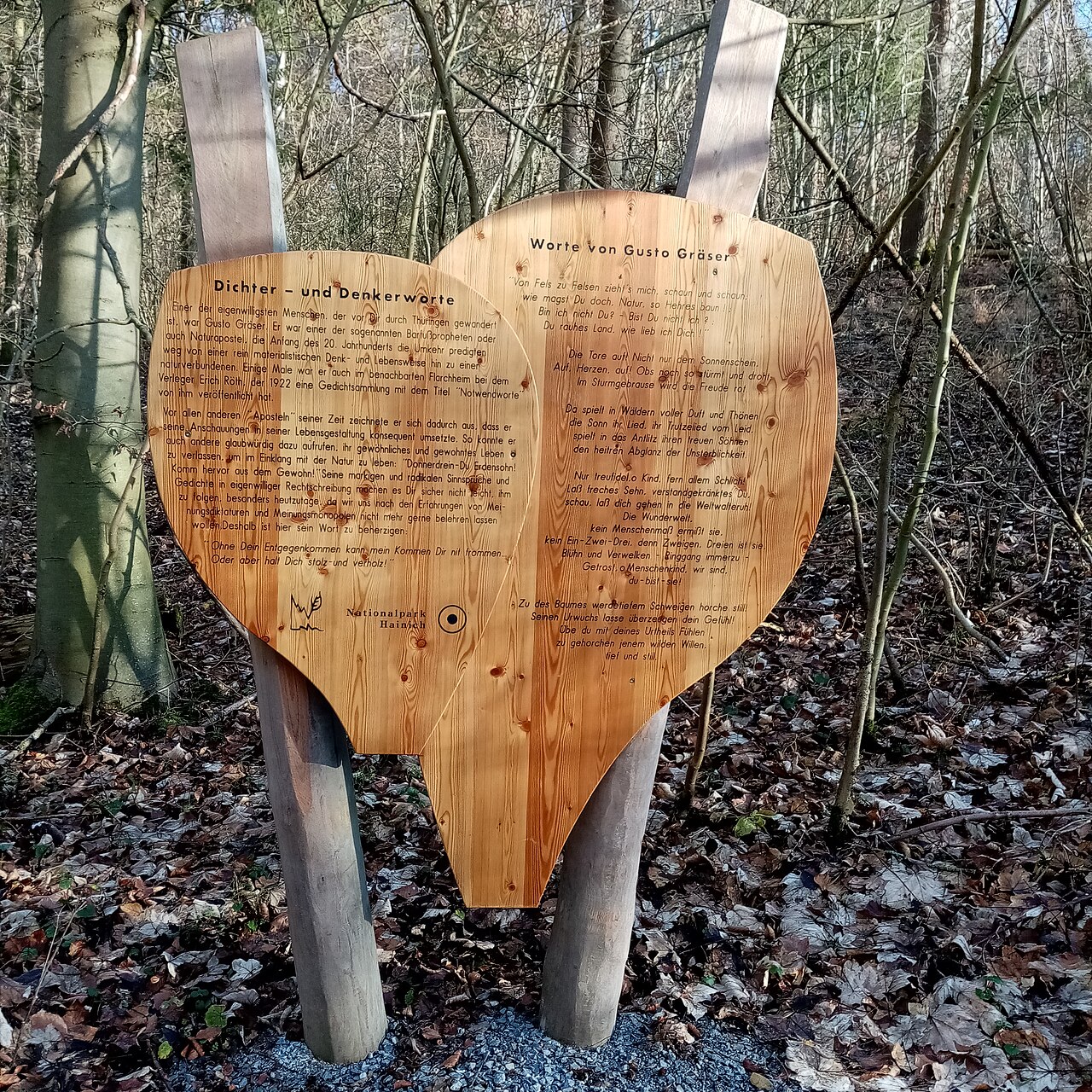
The wandering poet-prophet Gusto Gräser embodied the movement's mystic wing — a barefoot "nature-apostle" who preached the turn away from a purely materialist life. From the reform colony of Monte Verità above Ascona, that impulse would compost, decades later, into the twentieth-century commune and counterculture.
His verses, carved and set into the forest itself, are Lebensreform in its purest key: not a manifesto in a hall, but words returned to the trees, to be read by whoever wanders past.
convergent & divergent engines
what held it together — and pulled it apart
- Shared practices — vegetarianism, nature-cure, hiking, nudism.
- Health magazines and reform publishers as connective tissue.
- Colonies and sanatoria as gathering nodes.
- Extreme heterogeneity — hundreds of overlapping single-issue reforms.
- Political ambivalence, with strands feeding both the left and völkisch nationalism.
- Absorption into mainstream commerce and, darkly, into Nazi body-culture.
Internal dynamics: a diffuse, decentralized German-speaking movement of clubs, colonies, magazines, and enthusiasts sharing a sensibility rather than an organization or creed.
the milieu
society & impact
it prefigured the whole alternative
Lebensreform seeded the twentieth-century alternative — organic food, naturism, wellness, alternative medicine, modern hiking and youth culture — and, by way of Monte Verità, the counterculture commune itself.
scenius signature
A decentralized sensibility propagated through practice, print, and colonies — scenius as a whole reform milieu rather than a single scene.
fate
Fragmented and partly co-opted — some strands absorbed by Nazism — but its practices composted into wellness, organic, and naturist cultures worldwide. The weather system dispersed; its rain fell everywhere.
credits & sources
images
- FKK skiing in the Swiss Alps (media/img0.png) — from the Swiss FKK-magazine die neue zeit, 1930. Uploaded by Lebensreformer987, Public domain. Wikimedia Commons.
- Words by Gusto Gräser, Nationalpark Hainich (media/img1.jpg) — photograph by Jwollbold, licensed CC BY-SA 4.0. Wikimedia Commons.


textual sources
- ‘Lebensreform,’ Wikipedia — scope, constituent practices, key figures, and the link to Monte Verità.
- ‘Reforming Lifestyle, Transforming Society’ (review), H-Net Reviews — framing as both proto-modern reform and anti-modern reaction, and the bifurcated left / völkisch legacy.
- ‘History of Naturism (FKK) in Germany,’ Naturism Lifestyle — the Freikörperkultur wing and its bodily politics.
Provenance: imported · confidence medium. Coded from public web sources (Wikipedia-led); not yet independently verified.