← the scenic garden
Sound & Signal ▸ tape counter 00:00 West Germany · Jahr null

Kraut
rock.

A generation refusing both American pop and their parents' Nazi past, building a wholly new sound from the rubble — repetition as liberation, the machine as the voice of the future.

Duration1968 — 1978
LocationWest Germany
Morphologynetwork / commune-band
Generativity4 / 5

A West German rejection of Anglo-American rock that built hypnotic, machine-pulsed music — the taproot of electronic pop and techno.

The brief · a shared refusal

Not a scene — a refusal

Krautrock is the loose label for a wave of visionary West German bands around 1968–77 — Can, Neu!, Kraftwerk, Cluster, Faust, Tangerine Dream — who rejected Anglo-American blues-rock to build something new from the rubble of a nation remaking itself.

Out of communes, studios, and the influence of Stockhausen's electronics came hypnotic, repetitive "motorik" rhythms, tape experiments, and, in Kraftwerk, an embrace of the machine and the synthesizer as the voice of the future.

Never a unified scene so much as a shared refusal, Krautrock became one of the most fertile taproots in modern music: without it there is no Detroit techno, no synth-pop, no ambient, and much less of post-punk and electronica.
The motifs · the pulse pattern

Five machine motifs

01The motorik pulse
02Rejection of Anglo-American rock and the German past
03The studio as compositional tool
04Man-machine and repetition
05The commune-band

The unifying principle

Build a new German music from scratch — repetitive, electronic, hypnotic, rooted in neither blues nor the tainted national past — using the studio and the machine as instruments.

Memetic forces · what drove it

The charge in the wire

F1

A generation refusing both American pop and their parents' Nazi past needed a wholly new sound — Year Zero as liberation.

F2

Communal living and shared studios bonded bands and pooled experiment.

F3

Producer-auteurs (Conny Plank) and studio play made each record a discovery.

The engines · two channels

Convergent / divergent

Convergent — what held it together

  • Shared studios and producers (Conny Plank)
  • Communal band-houses
  • A common impulse to escape rock cliché and history

Divergent — what broke it open

  • The sheer diversity under one (foreign-coined) label
  • Kraftwerk's pop turn versus others' improvisation
  • Commercial pressures and band breakups

Internal dynamics

A loose net of refuseniks

A loose scene of commune-bands and studio experimenters more than a unified movement, linked by producers, geography, and a shared refusal. "Krautrock" was a British label the artists mostly disliked — the coherence was imposed from outside, by listeners who heard a common nerve the makers never signed a manifesto to.

Society impact · the taproot

The future it seeded

The taproot of electronic pop, techno, ambient, and post-punk; Kraftwerk in particular seeded hip-hop, synth-pop, and Detroit techno directly. Bands that answered a poisoned past with a machine pulse, inventing much of electronic music's future.

Detroit techno Synth-pop Ambient Post-punk Hip-hop Electronica

The makers · commune-bands

Four groups

Can
Köln · improvisation
Neu!
Düsseldorf · motorik
Kraftwerk
Düsseldorf · man-machine
Cluster
Berlin · electronics
the studio album the motorik groove the commune-band archetype · the new man

Plates · period West German rock

Documents

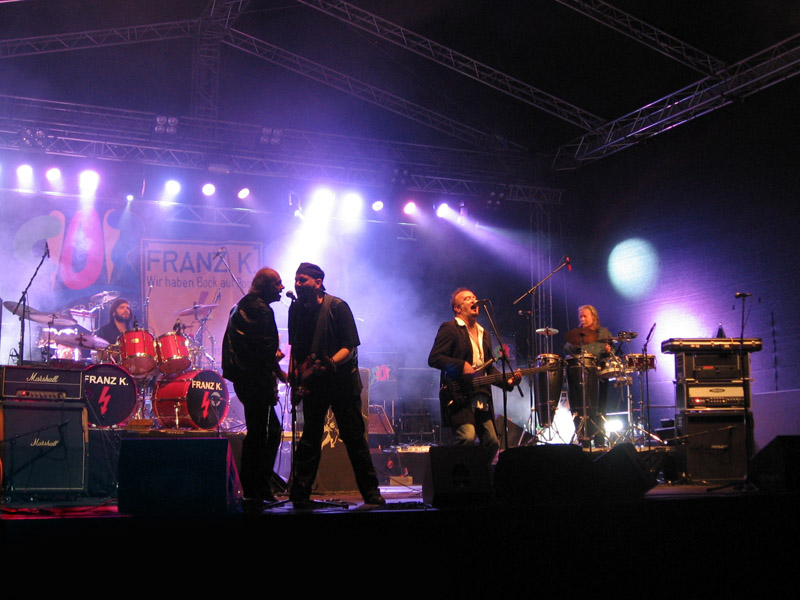
The West German rock band Franz K. performing live in Bottrop
Franz K., live in Bottrop · JuergenHellwig · Public domain
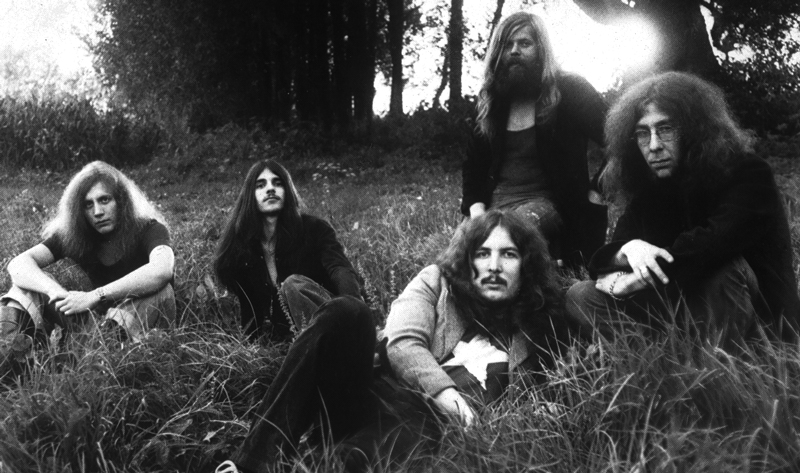
The German rock group Gift performing in 1971, featuring Nick Woodland
Gift, 1971, feat. Nick Woodland · Uwep49 · CC BY 3.0
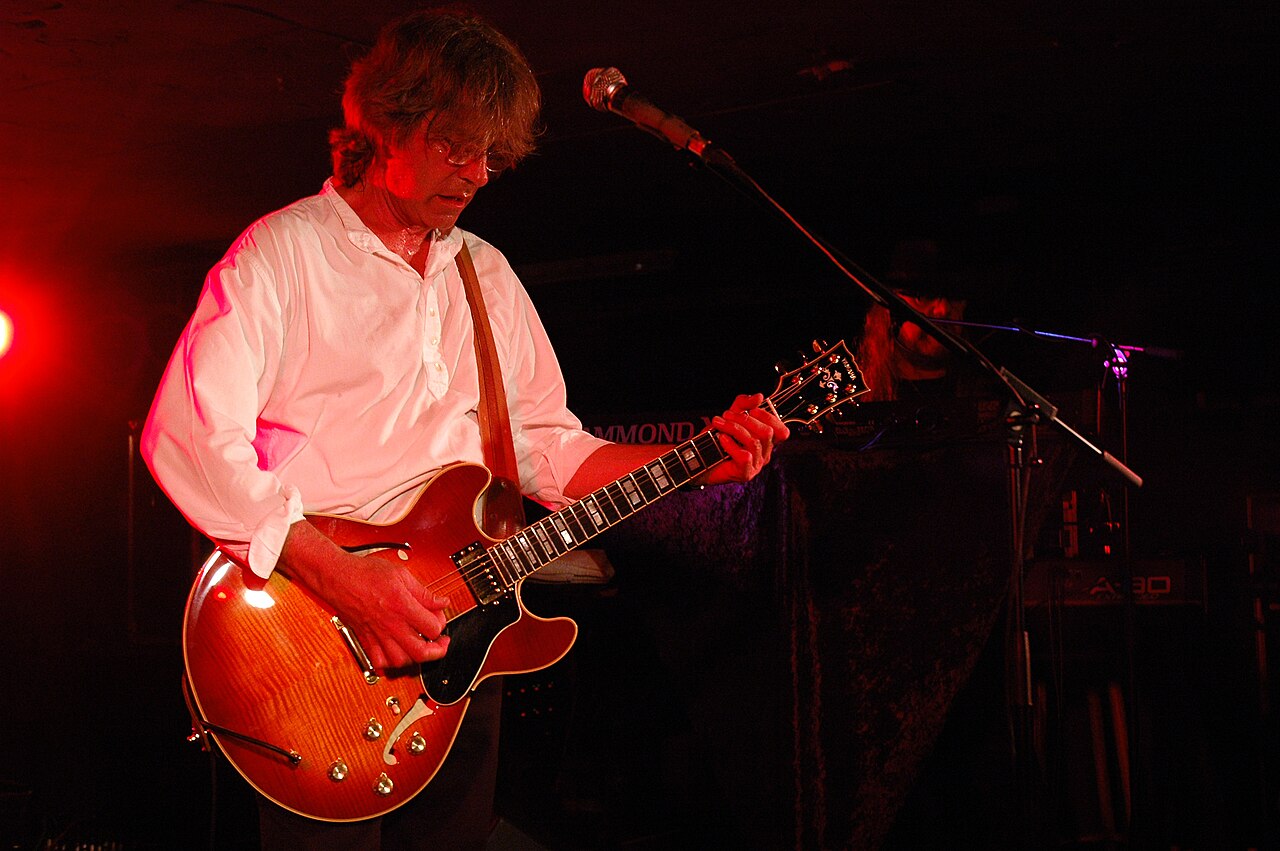
Roye Albrighton performing with the band Nektar in Karlsruhe, Germany
Roye Albrighton with Nektar, Karlsruhe · BlueBreezeWiki · CC BY-SA 3.0
Images via Wikimedia Commons, reused under their stated licenses. · Franz K. (JuergenHellwig at de.wikipedia, Public domain) · Gift (Uwep49, CC BY 3.0) · Nektar (BlueBreezeWiki, CC BY-SA 3.0)

Colophon · scenius signature

Signature: bands that answered a poisoned past with a machine pulse, inventing much of electronic music's future.
Keyed to the standard published literature (representative, not exhaustive):
— David Stubbs, Future Days: Krautrock and the Building of Modern Germany (2014)
— Julian Cope, Krautrocksampler (1995)
— Ulrich Adelt, Krautrock: German Music in the Seventies (2016)