The fragment — thought that refuses to finish —
Frühromantik — the birth of the Romantic, in a small university town
A young commune of poet-philosophers who invented Romanticism — and the fragment as a way of thinking that never finishes.
a six-year experiment in thinking together
The Jena circle was less a school than a six-year experiment in thinking together: a dozen or so poets, critics, and philosophers who ate, argued, translated, and slept in one another's houses in a small Thuringian university town, and who decided, self-consciously, that poetry and philosophy should stop pretending to be separate disciplines.
Around the Schlegel brothers, Novalis, Tieck, and Caroline Schlegel's salon — and catalyzed by Fichte's electrifying lectures and Schelling's emerging Naturphilosophie — the group treated the fragment, the letter, and the collaboratively authored journal essay as vehicles for a single ongoing act of collective creation.
They called it symphilosophie and sympoesie — philosophizing and poeticizing as one indivisible, unfinishable activity.
the motifs, in the form the circle loved best
A fragment, Friedrich Schlegel wrote, ought to be complete in itself like a hedgehog — and yet open, unfinished, a striving. Four of theirs —
The fragment — thought that refuses to finish —
Symphilosophy and sympoetry: thinking and writing together —
Romanticism as an infinite, progressive project —
Irony, longing, and the union of poetry and philosophy …
the one striving beneath them all
Art, philosophy, and life should be fused into one endless creative project; the Romantic work is deliberately unfinished, ironic, and open — a striving toward the infinite rather than a closed system.
❧ collective, unfinished thinking — a few entangled young minds generating a whole worldview faster than any could alone ❧
what drew the circle together, and what pulled it apart
a single organism of feeling and thought
A tiny commune of friends, lovers, and in-laws who philosophized and wrote collectively, treating conversation and the fragment as the highest forms — held together by intimacy more than doctrine.
Its charge was youth and intoxicating ambition: a handful of people in their twenties believing they were founding a new age of the spirit. The dense romantic entanglement made them one organism — and the journal gave that organism an organ, a way to declare a movement into being.
the dozen or so
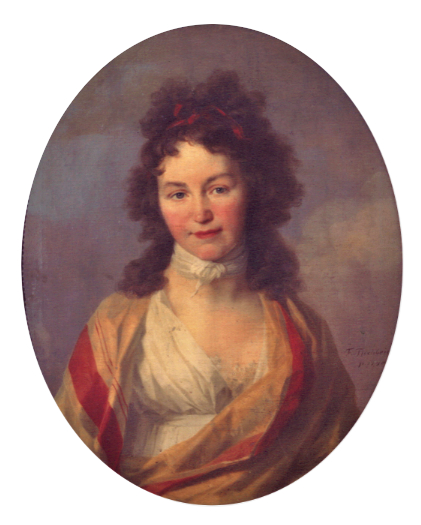
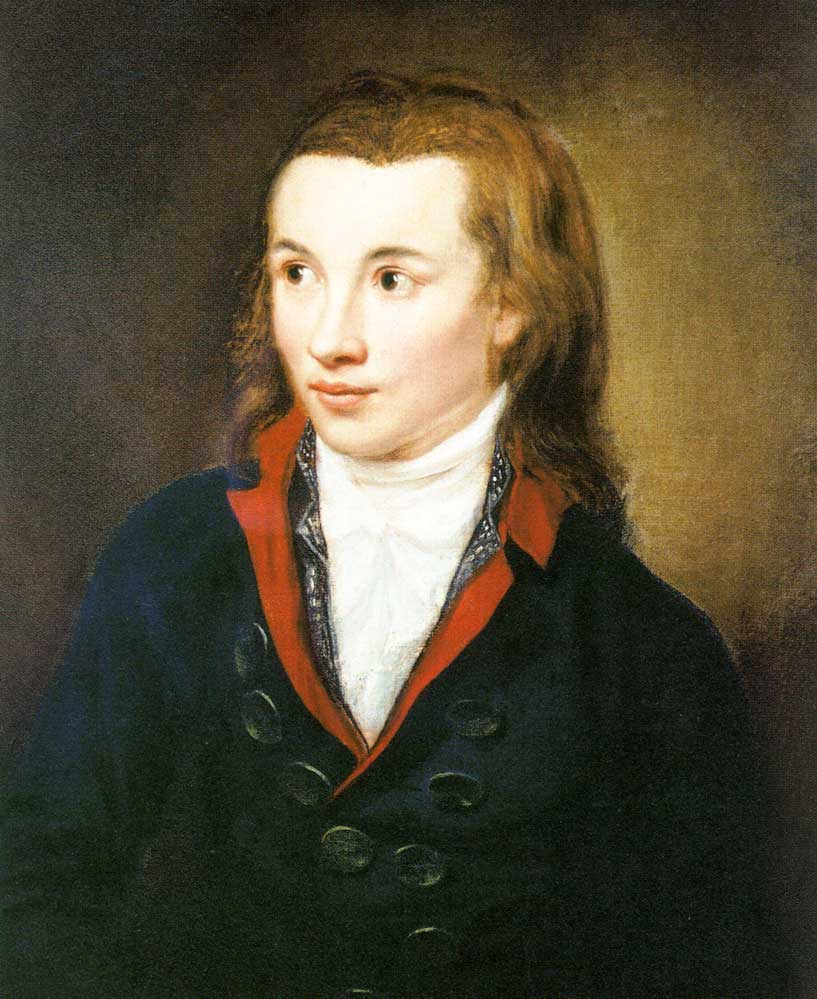
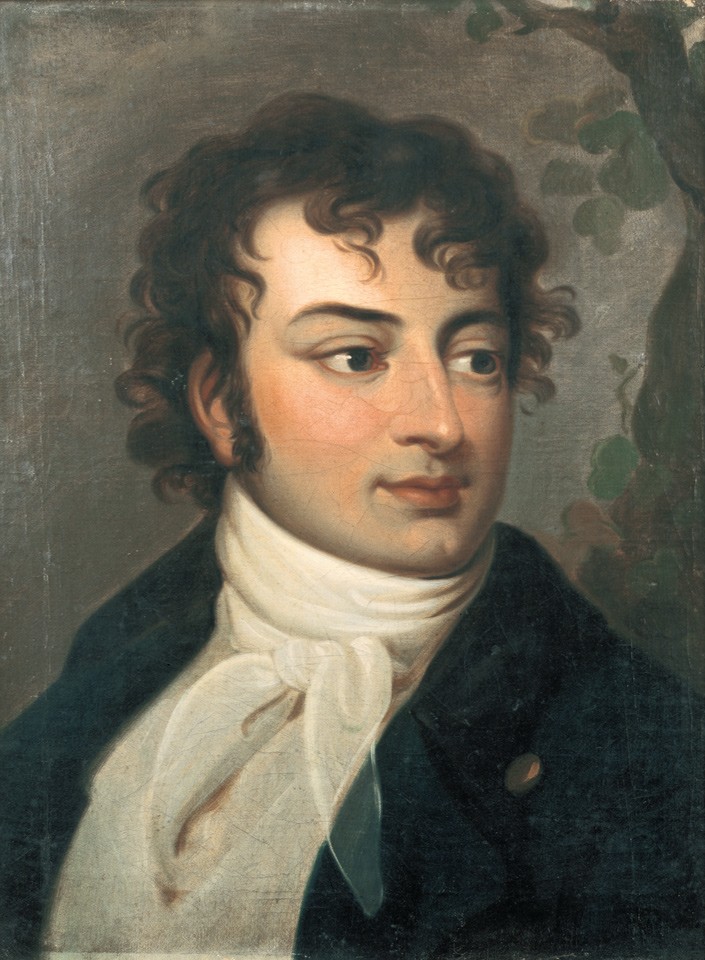
three of the entangled, from life
Portraits via Wikimedia Commons, reused under their stated licenses — Caroline Schlegel by Johann Friedrich August Tischbein, 1798 (CC0); Novalis by Franz Gareis (public domain); August Wilhelm Schlegel attributed to Friedrich Bury, c. 1800 (public domain). Original captions preserve their German titling.
how a six-year moment outran its own century
It invented Romanticism as a self-conscious movement — and much of modern literary theory, criticism, and the very idea of the fragment. Its influence runs on through Symbolism, Surrealism, and modern aesthetics: the notion that a work might be deliberately open, ironic, forever becoming, was theirs first.
Dissolved within a few years by death, marriage, and drift — yet canonized as the birthplace of Romanticism, and a permanent model of the generative intellectual circle.