iGEM & DIYbio
2004 — present · Global · figures: (student teams) · Drew Endy · Meredith Patterson
A student competition and a garage-biology movement that reframed life as engineerable parts — the hacker ethic applied to cells.
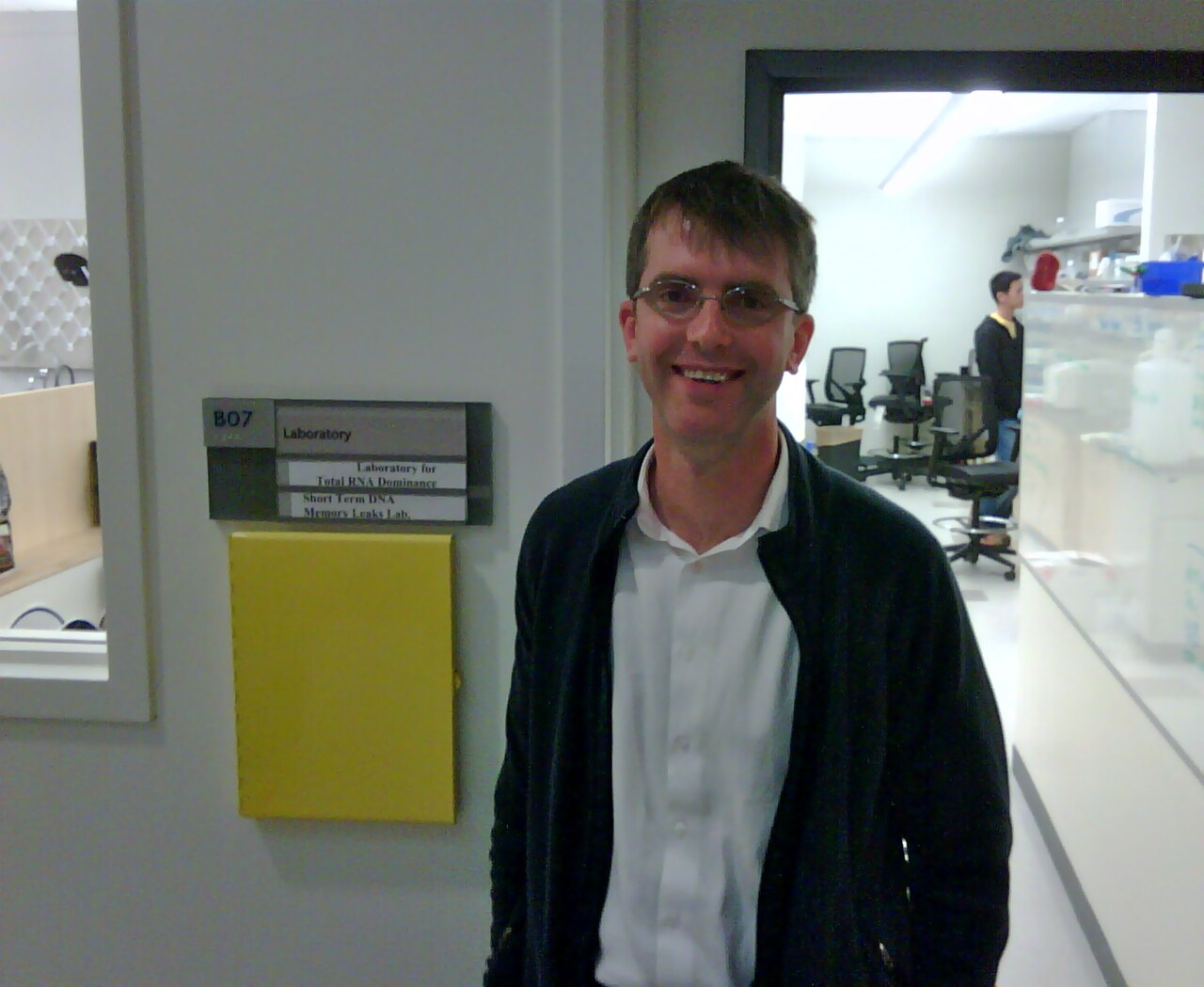
One of the architects of the standard-parts idea: engineer biology the way you engineer anything else, from characterised, shareable components.
Photo by Steve Jurvetson from Menlo Park, USA · licensed CC BY 2.0 (via Wikimedia Commons).

Abstract
iGEM and DIYbio together reframed biology as something to be engineered and democratized. The International Genetically Engineered Machine competition, begun at MIT in 2004, sends student teams to build novel biological systems from standardized, shareable genetic parts (‘BioBricks’) — biology reimagined on the model of open-source engineering. DIYbio, from around 2008, took the same spirit outside the university into community labs and garages, insisting that biotechnology belongs to citizens, not just credentialed institutions. Together they carry the hacker ethic — openness, tinkering, distributed innovation — into the life sciences, seeding synthetic biology and biohacking while raising, and trying to self-govern, real questions of safety and access.
Motifs, as catalogued parts
| # | glyph | component |
|---|---|---|
| 01 | life as engineerable parts (BioBricks) | |
| 02 | the student competition as engine | |
| 03 | the community / garage lab | |
| 04 | the registry of standard parts | |
| 05 | the hacker ethic applied to biology |
Memetic forces
Reframing biology as programmable engineering thrilled a generation raised on code and open source.
A global student competition gamified and propagated the field yearly.
The DIY/garage ethos promised to democratize biotechnology and outflank institutions.
Unifying principle
Biology can be engineered like software from standardized, shareable parts; open competition and community labs should democratize the power to build with life.
Expression & repression
Every construct has a promoter and a terminator. So does a scene: forces that drive it together, forces that shut it down.
Convergent engines — promoters
- the annual iGEM competition and parts registry
- open protocols and community (DIYbio) labs
- the software-and-hacker analogy
Divergent engines — terminators
- biosafety and biosecurity anxieties constraining openness
- the gap between the engineering ideal and biology’s messiness
- professionalization vs. the garage ethic
Mediums — the four dishes
Internal dynamics
Protocol · culture conditions
A youthful, competition-and-community-driven movement blending university teams with garage biohackers; its open, gamified structure propagates it, while safety debates bound it.
Archetypal layers
- The Guild / Workshop
- Prometheus
Societal impact
Built the synthetic-biology community and its standard-parts paradigm; trained a generation, popularized biohacking, and forced new conversations on democratized biotech governance.
Named contributors on this entry
- (student teams)
- Drew Endy
- Meredith Patterson