_Gutai.jpg)

Founder · Mentor
Jiro Yoshihara
具体
Tool + Body · concreteness ● Ashiya & Osaka, Japan ● Avant & Anti-Art
A postwar Japanese group that put the body in raw contact with matter, pre-inventing performance and action art.
The Concrete
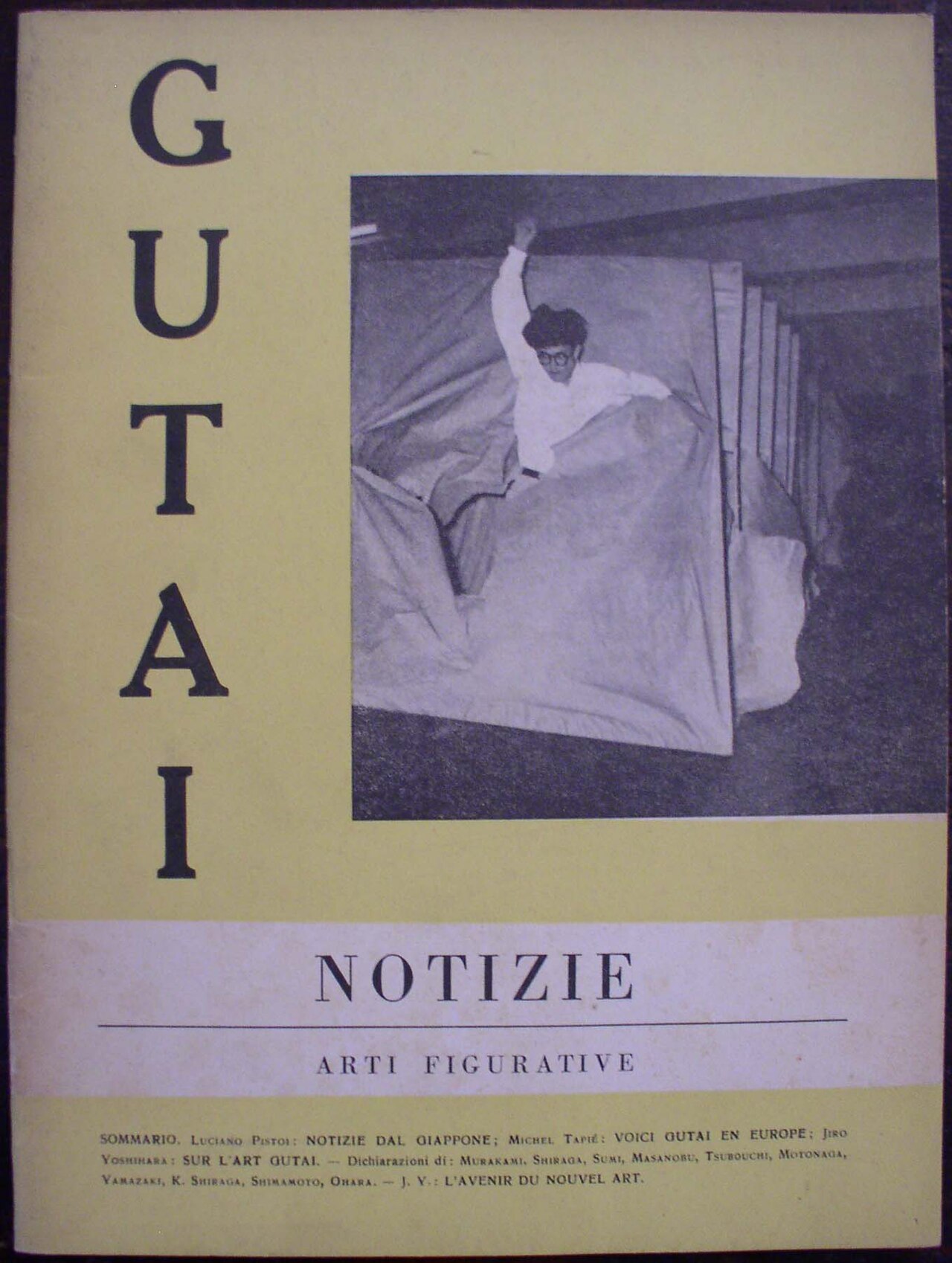
Gutai was less a style than a discipline of refusal: refuse imitation, refuse the brush's habitual gestures, refuse the idea that art must "represent" anything at all. Founded in August 1954 in Ashiya by the businessman-painter Jirō Yoshihara, the group of roughly seventeen founding artists — eventually some fifty-nine over eighteen years — took its name, gutai, concreteness, from gu (tool) and tai (body), as a working method: matter and body brought into direct, unretouched contact.
Yoshihara's terse directive, "Do something no one has ever done before," functioned as both koan and law, producing a body of work — Kazuo Shiraga painting with his feet while suspended on a rope, or wrestling a ton of mud in Challenging Mud (1955); Atsuko Tanaka wiring herself into the blinking, buzzing Electric Dress (1956); Shozo Shimamoto firing paint from a cannon or punching through paper screens; Saburo Murakami leaping through stretched paper — that anticipated happenings, performance art, environmental art, and conceptualism by a decade, largely independent of and prior to their Euro-American articulations.
The Unifying Principle
Art must be the direct, unmediated encounter between the human body and spirit and raw matter — the trace of a real action, never before done, freed from representation.
Recurring Motifs
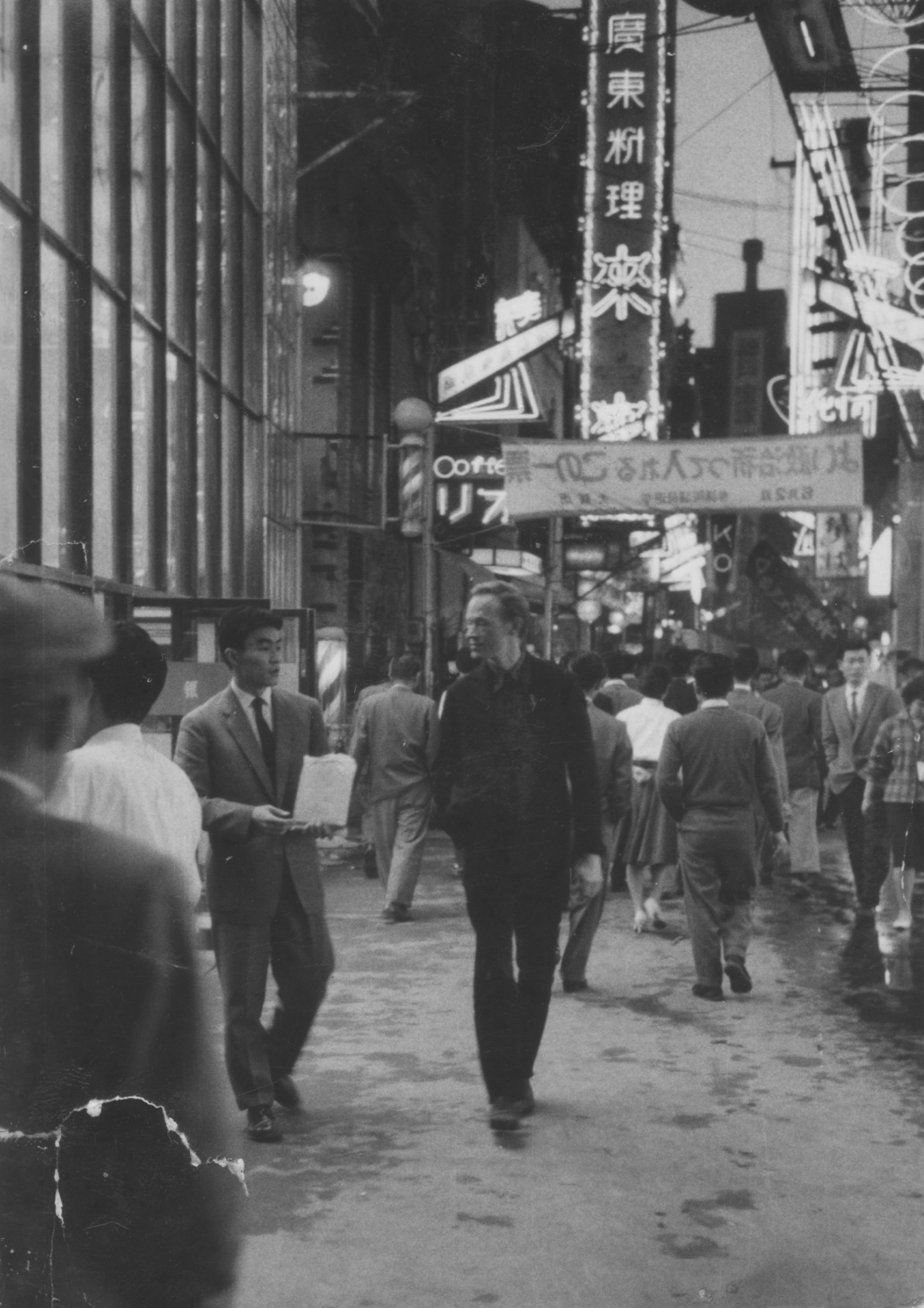
Osaka at night, 1959 — the city that grew a global avant-garde independent of, and prior to, the West.
Christo Coetzee and Michio Yoshihara (son of Jirō Yoshihara), Osaka, 1959 — from a diary of Christo & Ferrie Binge-Coetzee. Photo: Ferrie Binge-Coetzee, CC BY-SA 3.0.
Memetic Forces — what made it spread
Engines of the Scene
Internal dynamics — A mentored group in Osaka gathered around Yoshihara's demanding vision, publishing internationally while working at the physical edge of paint and performance.
The Hands
Impact on the World
Gutai pre-invented performance, action, and installation art independent of the West —
later recognized as a pioneer of the global postwar avant-garde and a precursor to Happenings. Its scenius signature: a mentor's imperative to absolute originality driving a group to put the body in raw contact with matter years ahead of the West.
Fate
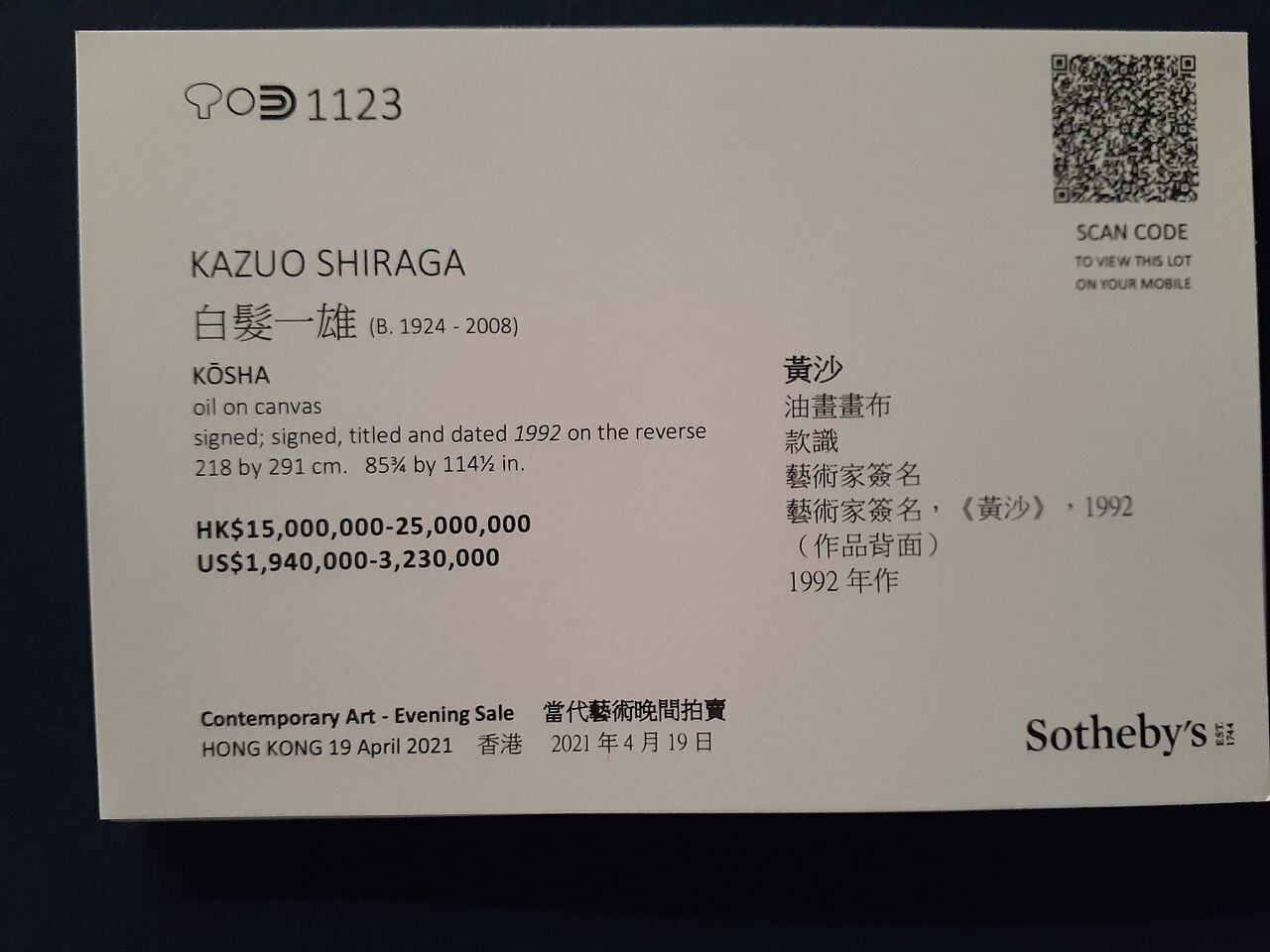
The association disbanded on Yoshihara's death in 1972. Long overlooked, Gutai is now canonized as a founding node of global performance and material art — its foot-paintings and paper-ruptures reappraised, retrospected, and, as the label at right records, priced in the millions.