Freedom to run, study, share, and modify — a community that hacked copyright itself into a guarantee of openness, then built the digital world's foundations for free.
The free software movement began in 1983, when MIT hacker Richard Stallman — watching the culture of shared code die around him — launched the GNU project to build a completely free operating system, and founded the Free Software Foundation.
His decisive invention was legal, not technical: the copyleft GPL license, which uses copyright to guarantee that software and its derivatives stay free. When Linus Torvalds's Linux kernel arrived in 1991, a complete free system existed — built by a global volunteer commons.
Reframed as "open source" for business, this model now underpins most of the internet and much of modern software. Free software also seeded Creative Commons, Wikipedia, and the whole ethic of peer production — and a permanent argument about freedom, property, and the commons.
run
Run the program as you wish, for any purpose — no permission, no restriction.
study & change
Study how the program works and adapt it. Access to the source code is the precondition.
redistribute
Redistribute copies so you can help your neighbour. Sharing is not theft.
improve & release
Distribute copies of your modified versions, so the whole community benefits.
COPYLEFT — all rights reversed
The copyleft license was a viral legal hack: it uses copyright — the very instrument of lock-in — to guarantee openness, self-spreading through every derivative. Take the code, and you inherit the obligation to keep it free.
Free as in freedom, not free as in beer. The point was never price; it was the right to run, study, share, and modify. Reframing software sharing as a moral right gave hackers a cause worth sacrificing for.
- copyleft/ & the GPL
- source-code/ as speech and freedom
- the-four-freedoms/
- the-bazaar/ of distributed developers
- free-as-in-freedom/ not beer
Reframing software sharing as a moral right — freedom — gave hackers a cause worth sacrificing for.
The copyleft license was a viral legal hack: using copyright to guarantee openness, self-spreading through every derivative.
The gift-and-reputation economy of contribution rewarded and bonded developers globally.
A movement founded on one uncompromising ethicist (Stallman) plus a pragmatic mass (Torvalds, Raymond). It runs on licenses, maintainers, and reputation — and split over ideology vs. pragmatism.
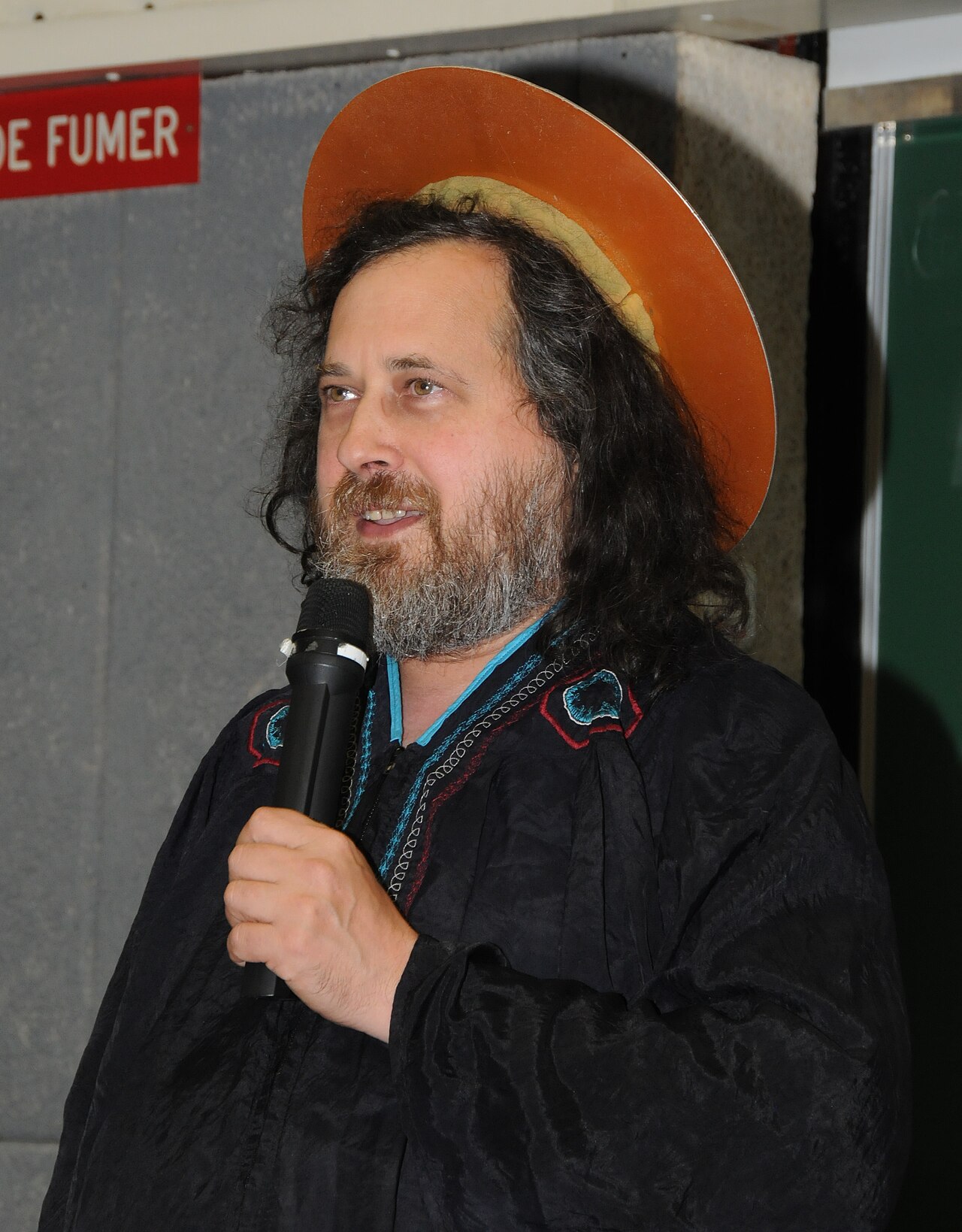
Photo: Thomas Bresson · CC BY-SA 2.0 · Wikimedia Commons
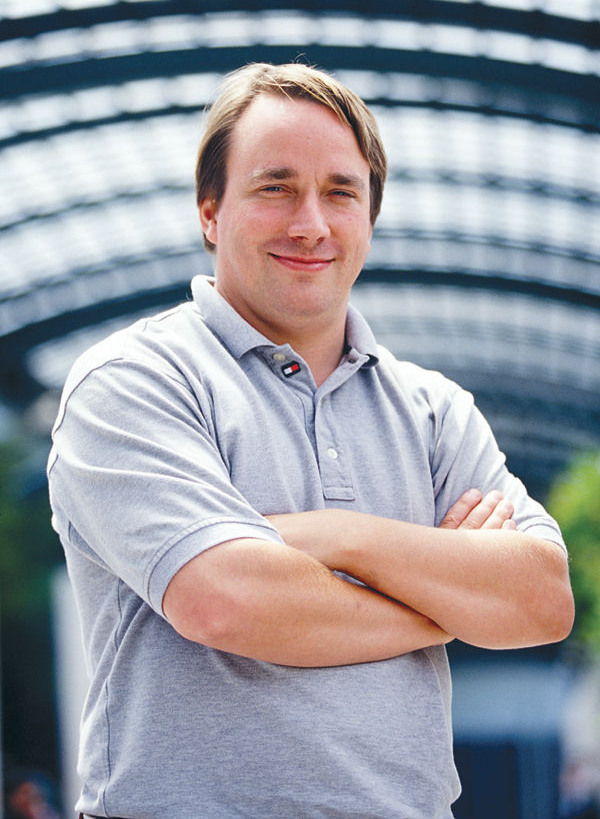
Photo: unknown author · CC BY-SA 3.0 · Wikimedia Commons
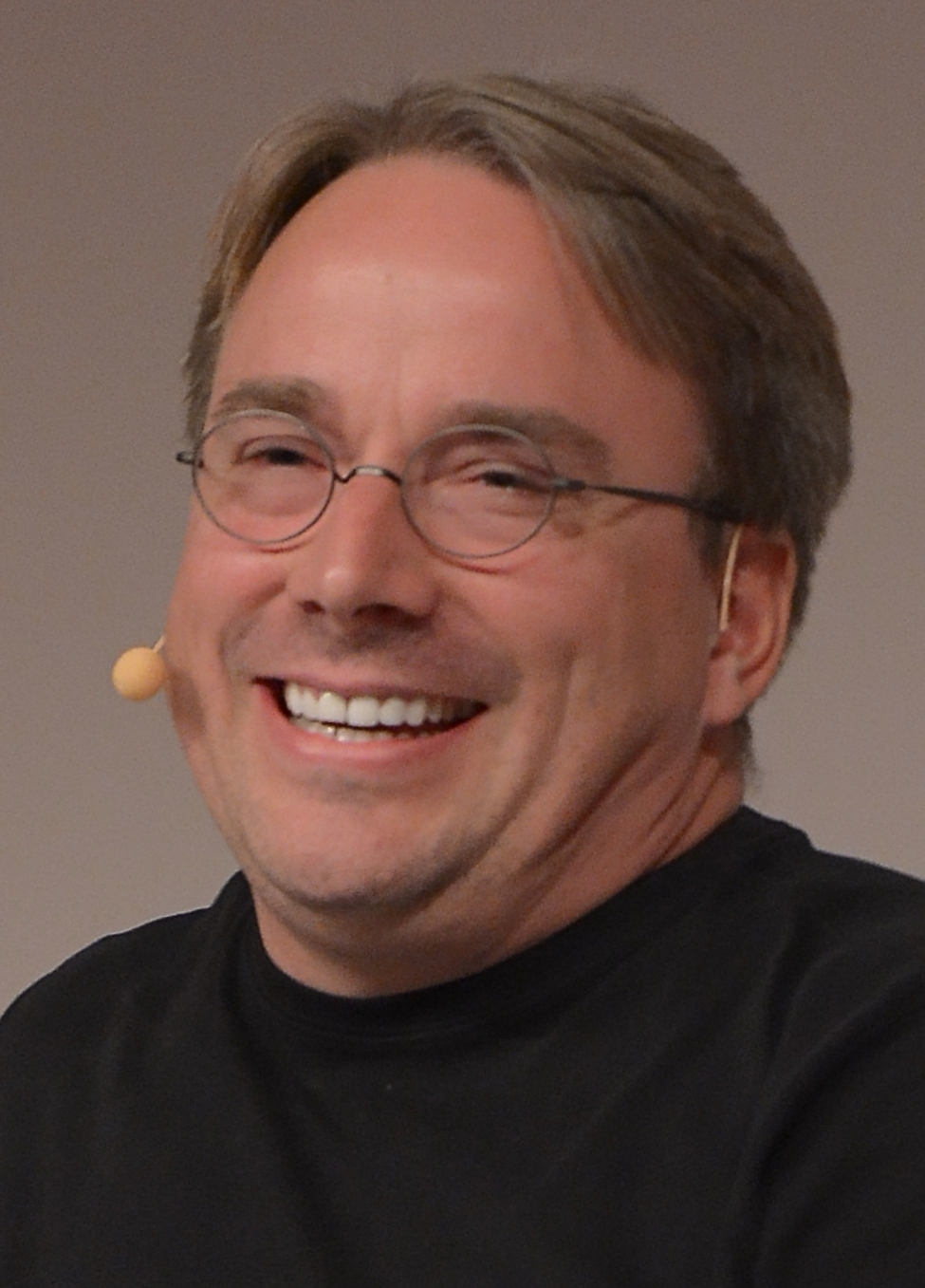
Photo: Krd; crop by Von Sprat · CC BY-SA 4.0 · Wikimedia Commons
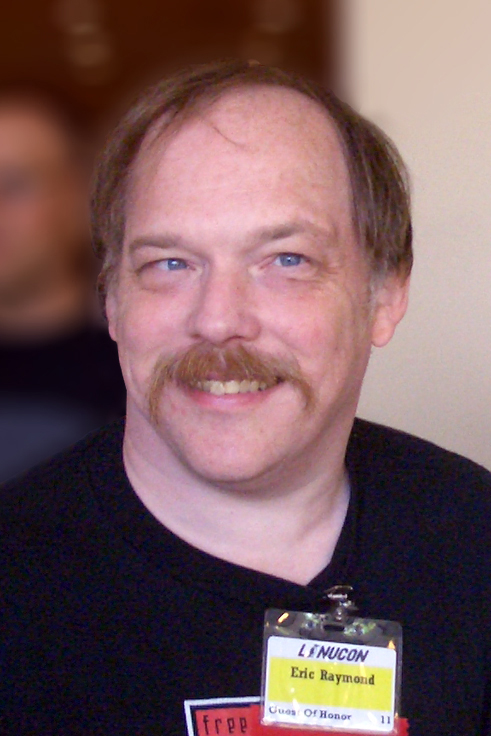
Photo: jerone2, derivative by Bilby · CC BY-SA 2.0 · Wikimedia Commons
Built the software commons the internet runs on — Linux, GNU, countless tools — inspired Creative Commons and Wikipedia, and made openness a durable economic force.
A community that hacked copyright itself into a guarantee of freedom, then built the digital world's foundations for free.
Triumphant and absorbed: open source is now industry standard — even as Stallman's stricter freedom-ethic is honoured more than followed.
Image credits
- Richard Stallman, Belfort — photo Thomas Bresson, CC BY-SA 2.0 · source
- Linus Torvalds (portrait) — unknown author, CC BY-SA 3.0 · source
- Linus Torvalds, LinuxCon Europe 2014 — photo Krd, crop by Von Sprat, CC BY-SA 4.0 · source
- Eric S. Raymond (portrait) — jerone2, derivative by Bilby, CC BY-SA 2.0 · source
Sources keyed to the standard literature: Sam Williams, Free as in Freedom (2002) · Eric S. Raymond, The Cathedral and the Bazaar (1999) · Christopher M. Kelty, Two Bits (2008).