← the scenic garden Fluxus Ed. · not for sale / for anyone · price: whatever
An International Network for the Total Event · Est. 1961

Fluxus

New York · Wiesbaden · Tokyo — global  //  1961–1978  //  Avant & Anti-Art  //  morphology: the network  //  generativity 5 / 5
Flux·us ˈflʌk-səs, n.
1. a flowing · 2. anti-art in continuous motion · 3. the anti-institution as institution

An international network that dissolved art into everyday events, scores, and jokes — the anti-institution as institution.


The News in Brief

Fluxus was less a style than a distribution system for an attitude: that art should be as cheap, ordinary, and replicable as a rubber stamp or a mail-order catalog, and that the gap between an artwork and a joke, a recipe, or a gesture should be closed rather than policed.

Assembled and named by the Lithuanian-American designer George Maciunas in 1961 and launched at the Wiesbaden festivals of 1962, it strung together composers, poets, and visual artists from New York, Western Europe, and Japan into a network held together less by shared technique than by shared publishing infrastructure, in-jokes, and Maciunas’s own combative editorial hand.
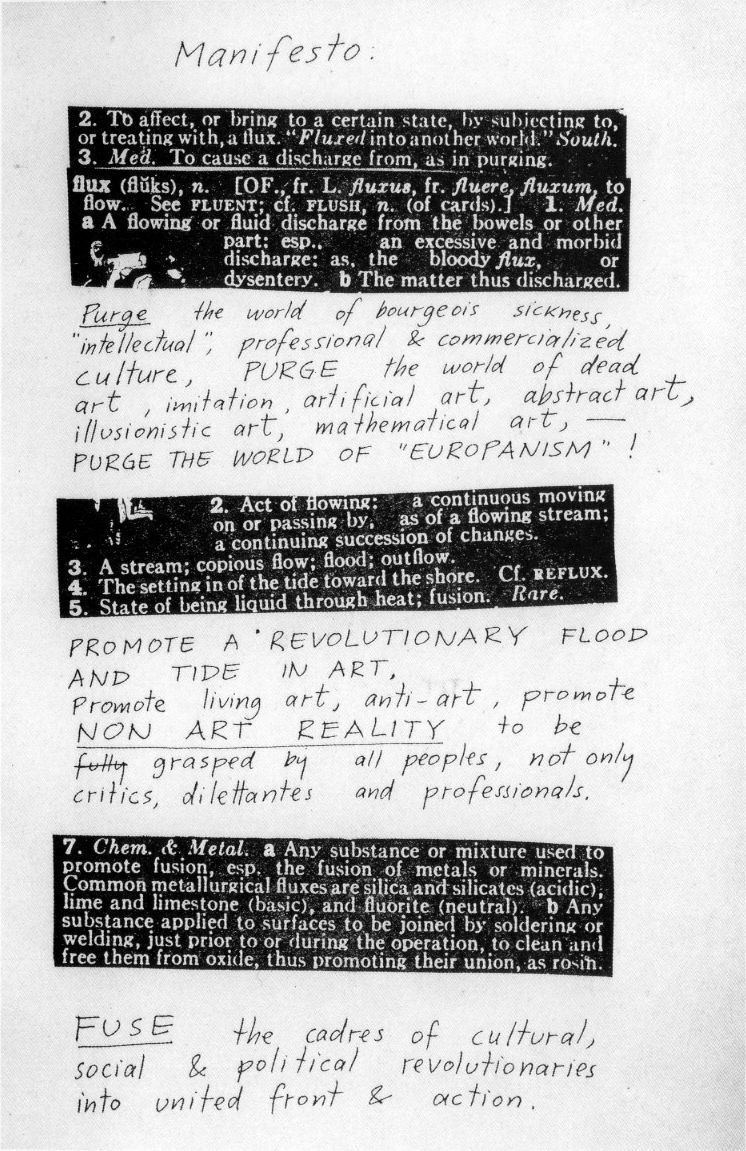
Purge · Promote · Fuse
The Fluxus Manifesto: dictionary clippings defining the word flux interleaved with handwritten slogans commanding to PURGE the world of bourgeois sickness and PROMOTE a revolutionary flood and tide in art.
Fluxus Manifesto (George Maciunas, 1963). Public domainCredited to “fluxus.” Source: Wikimedia Commons.

The score matters more than the object. Art should be simple, playful, ephemeral, and available to everyone.

The manifesto did what Fluxus always did: it lifted found language — a dictionary’s cold definitions of flux — and set it next to a handwritten command. Purge the world of “dead art, imitation, artificial art.” Promote non-art reality. Fuse the cadres.

Unifying principle. The boundary between art and life should be erased; art should be simple, playful, ephemeral, and available to everyone; the score matters more than the object.


Event Scores — perform at will

The motif is a one-line instruction. Anyone can play it.

Score No. 1
The event score — an artwork as a one-line instruction.
to be realized by anyone
Score No. 2
The readymade action and the everyday gesture.
to be realized by anyone
Score No. 3
The multiple / the box — democratizing the art object.
to be realized by anyone
Score No. 4
Humor and play as method.
to be realized by anyone
Score No. 5
“Anything can be art and anyone can do it.”
to be realized by anyone
The Fluxkit — open the box

Portable formats. Cheap to make, cheaper to mail.

01
The Event Score
02
The Multiple
03
Mail Art
04
The Concert / Performance
05
The Box

Why It Spread

A viral artwork format, before the word existed.

Memetic forces  ⧉

  • The event score is radically copyable and performable by anyone, anywhere — a viral artwork format.
  • An international, anti-commercial community offered belonging outside the gallery system.
  • Cage’s permission — “everything we do is music” — was liberating and infinitely extensible.

Scenius signature

A shared, ultra-portable format — the score — plus a global mail network. Scenius distributed across continents rather than concentrated in one room.

Society & Impact

The score and the ephemeral event became legitimate art.

Fluxus seeded conceptual art, performance art, video art — through Nam June Paik — and mail art; it normalized the instruction/score and the ephemeral event as legitimate artistic forms.
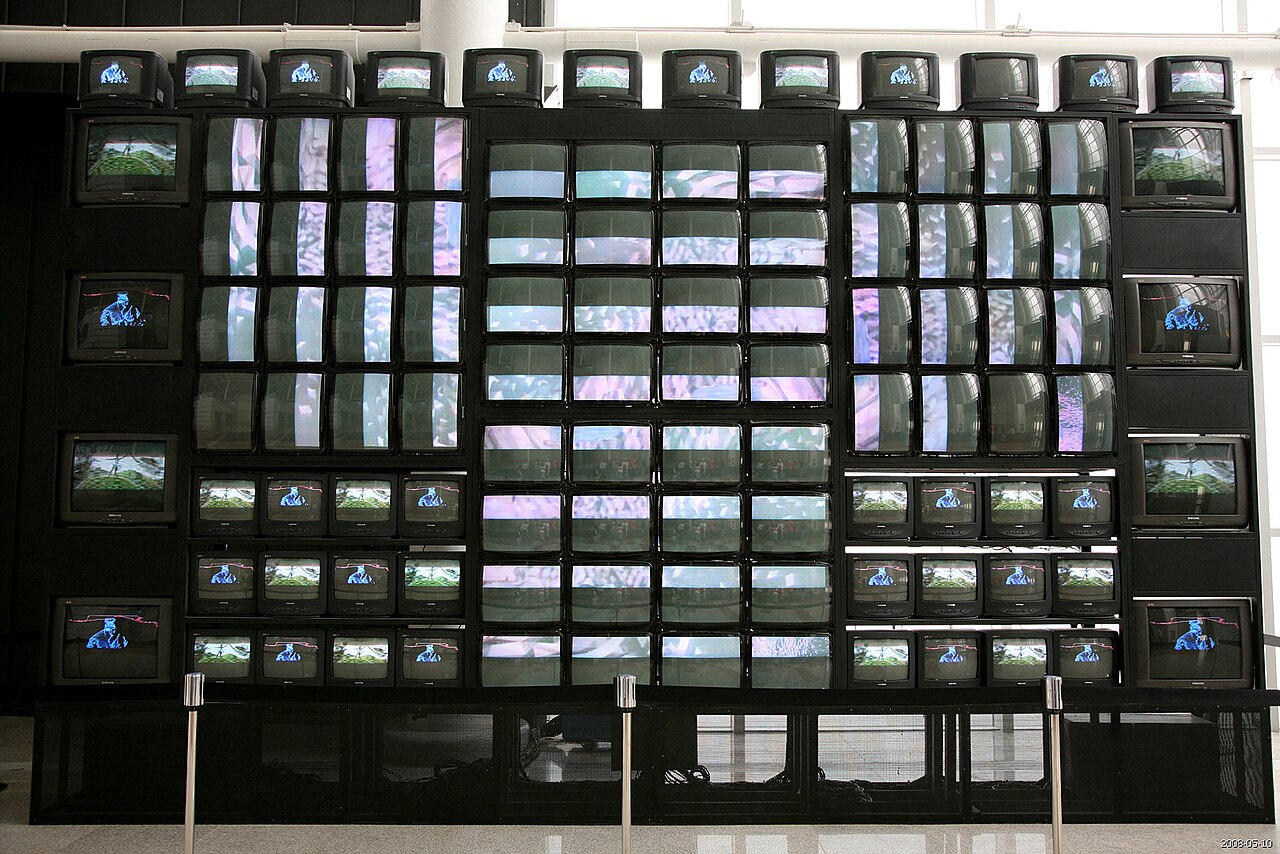
A towering wall of stacked cathode-ray televisions by Nam June Paik, each screen playing shifting video, installed in Gyeongju, South Korea.
Nam June Paik, video-wall installation (Gyeongju, South Korea). CC BY 3.0Photograph by Junho Jung. Source: Wikimedia Commons.
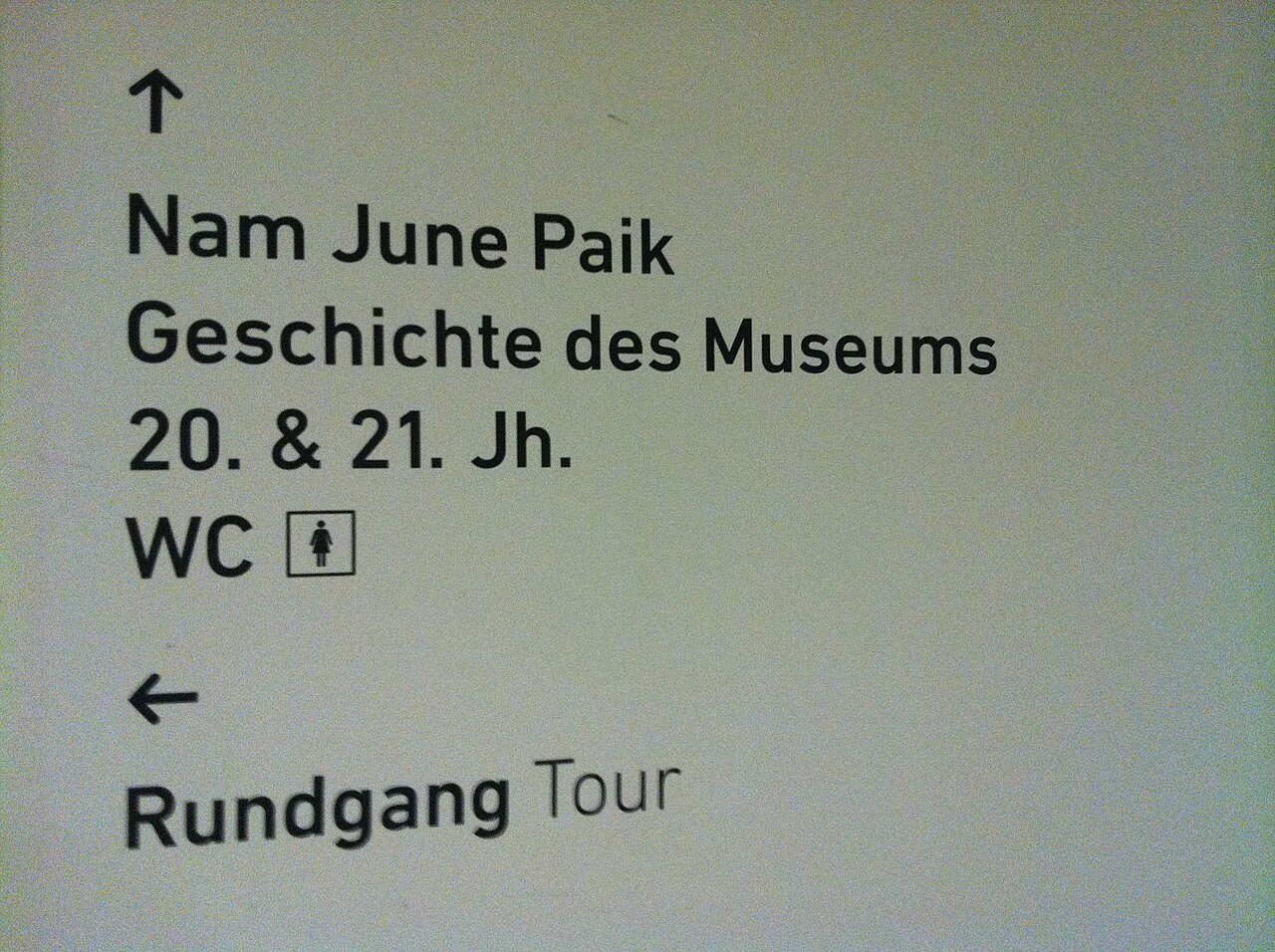
A museum wayfinding sign at Museum Kunstpalast, Dusseldorf, pointing toward the Nam June Paik collection and the history of the museum in the 20th and 21st centuries.
Nam June Paik in the museum: signage at Museum Kunstpalast, Düsseldorf. CC BY-SA 3.0Photograph by Kippelboy. Source: Wikimedia Commons.

An Anti-Organization With a Chairman

The paradox that ran the network — and tore at it.

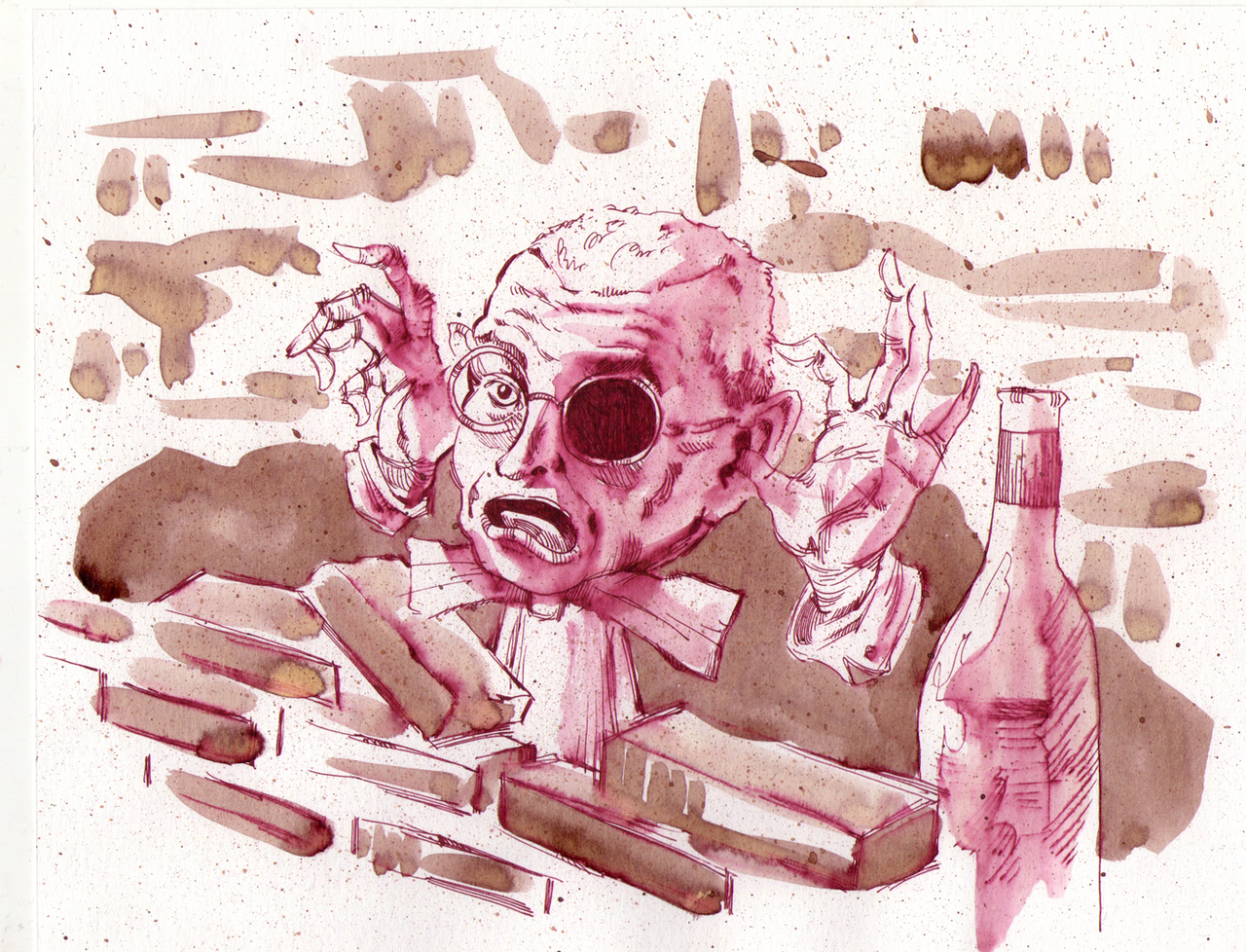
A wine-and-sepia ink illustration recreating an artistic action by George Maciunas: a bald, monocled figure with raised, exaggerated hands amid scattered boxes and a bottle, splattered with stains.
Recreation of an artistic action by George Maciunas, founder of the Fluxus network. CC BY-SA 3.0Illustration by Oriol Tuca. Source: Wikimedia Commons.

A paradox: an anti-organization with a chairman. Maciunas tried to run a decentralized network like a party cell, producing constant friction between his control and Fluxus’s own dispersive nature.

Convergent engines  ⧉

  • Maciunas as impresario, designer, and self-appointed chairman.
  • The shared format of the event score.
  • The festival and the mailed multiple as connective tissue.

Divergent engines  ✕

  • Maciunas’s own attempts to excommunicate members who got too famous or commercial.
  • A genuinely global, decentralized membership that no one could fully control.
  • Individual stars (Ono, Paik) outgrowing the collective.
The Invisible College — dramatis personae

Composers, poets, and visual artists on one mailing list.

A sheet of Lithuanian postage stamps portraying George Maciunas (1931 to 1978), his face rendered in typographic patterns spelling FLUXUS, the letters F L U X U S arrayed around the sheet's border in mixed typefaces.
George Maciunas (1931–1978) on a Lithuanian postage stamp — Fluxus returned to the mail. Public domainIssued by Post of Lithuania. Source: Wikimedia Commons.
George Maciunas chairman · designer
Yoko Ono scores · performance
Nam June Paik video · music
George Brecht event scores
Alison Knowles multiples · books
La Monte Young composition
Filed Under
The Tricksterhumor as method
Gesamtkunstwerkthe total artwork
The Invisible Collegea network, not a room
The Scenius Signature

A shared, ultra-portable format — the score — plus a global mail network. Scenius distributed across continents rather than concentrated in one room.

Fate

Faded as its members were absorbed into the museum and the academy; its forms became so standard they are now taught as the origin of contemporary art.