Era
1943 – 1960
CLOSED MEETING · JOSIAH MACY JR. FOUNDATION · 1943 — 1960 · USA / UK
The intellectual movement crystallized at Macy that spread cybernetics as a world-picture across the sciences.
00 Readout
Era
1943 – 1960
Place
USA / UK
Biome
System & Signal
Morphology
Network
Meetings
10 · closed
Chair
W. McCulloch
01 The Salon on the Record
The Cybernetics Group was not a school or a manifesto-issuing avant-garde but a recurring salon of roughly twenty scientists—mathematicians, neurophysiologists, engineers, anthropologists, and psychiatrists—assembled twice yearly under Josiah Macy Jr. Foundation patronage to test whether the concepts Norbert Wiener had just named "cybernetics" (feedback, circular causality, information) could unify the study of machines, nervous systems, and human societies.
Chaired by Warren McCulloch and administered by Frank Fremont-Smith, the group's ten closed meetings (1946–1953) took wartime servomechanism theory and neural-net logic and pushed them outward into anthropology (Mead, Bateson), psychiatry (Kubie), and sociology (Lewin), producing a body of transcribed dialogue—later edited by Heinz von Foerster—that is now read as the founding text of postwar systems thought.
02 The Governing Law
◵ one science of mind, life, and machine
Control and communication in animals, machines, and societies obey the same mathematical laws of feedback and information — mind and life are cybernetic systems that can be modeled and built.
03 Recurring Signals
Feedback and circular causality
The analogy of brain, machine, and society
Information and control as universal principles
The self-regulating system
04 Why the Signal Carried
A single vocabulary that let a neurophysiologist, engineer, and anthropologist finally talk was electrifying and totalizing.
Wartime prestige of the founders gave the new science instant authority.
The promise of one science of mind, life, and machine was irresistibly ambitious.
05 The Two Feedbacks
Read as the movement's own physics: negative feedback pulled the disciplines into a single system; positive feedback amplified the differences until it flew apart.
06 How It Cohered
An interdisciplinary movement crystallized at the Macy Conferences and spread by book and journal, held together by a shared vocabulary more than any single institution.
A shared language that fused disciplines — the purest case of a vocabulary functioning as a research program across fields.
07 The Signal Made Book
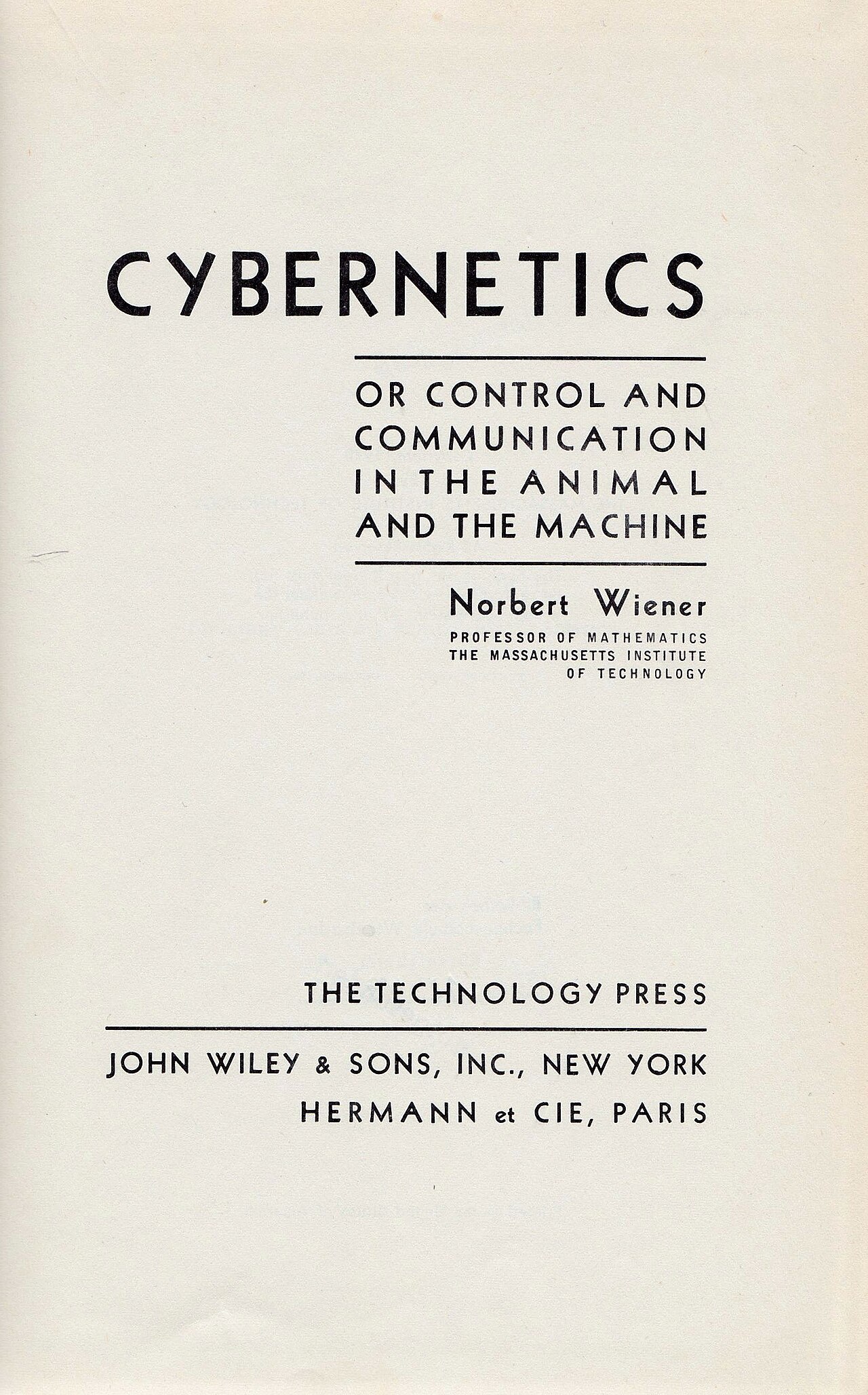
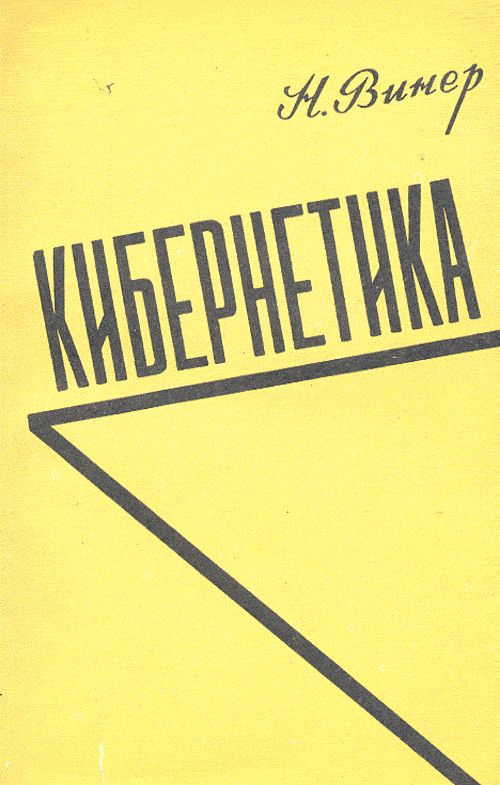
The medium was the book. Wiener's 1948 Cybernetics carried the vocabulary out of the closed meetings and around the world — including, a decade later, across the Iron Curtain.
08 The Nodes
Norbert Wiener
Mathematician; named cybernetics, wrote the banner book
Warren McCulloch
Neurophysiologist; chair of the Macy meetings
W. Ross Ashby
Psychiatrist; builder of the homeostat, theorist of self-regulation
Heinz von Foerster
Editor of the Transactions; herald of second-order cybernetics
09 Fan-Out
Founded cybernetics and, through it, cognitive science, AI, control engineering, systems ecology, and family therapy; installed the enduring picture of humans, machines, and societies as information systems.
10 Terminus
Dispersed as it succeeded, fragmenting into the many fields it seeded; its integrative ambition survived in General Systems, second-order cybernetics, and complexity science.
11 Instruments & Archetypes
.jpg)
