Community Memory
1973–1992 Berkeley, California Biome: Wire & Commons Morphology: network
FIND: WHAT THIS MACHINE IS FOR
PRINT: the record
Strangers leaving messages for strangers
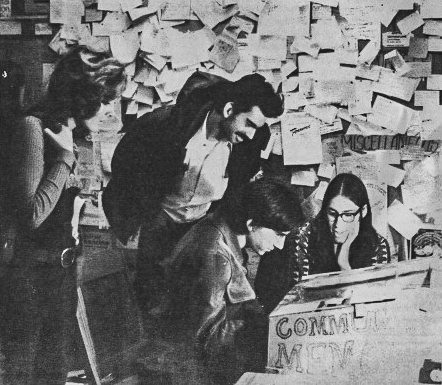
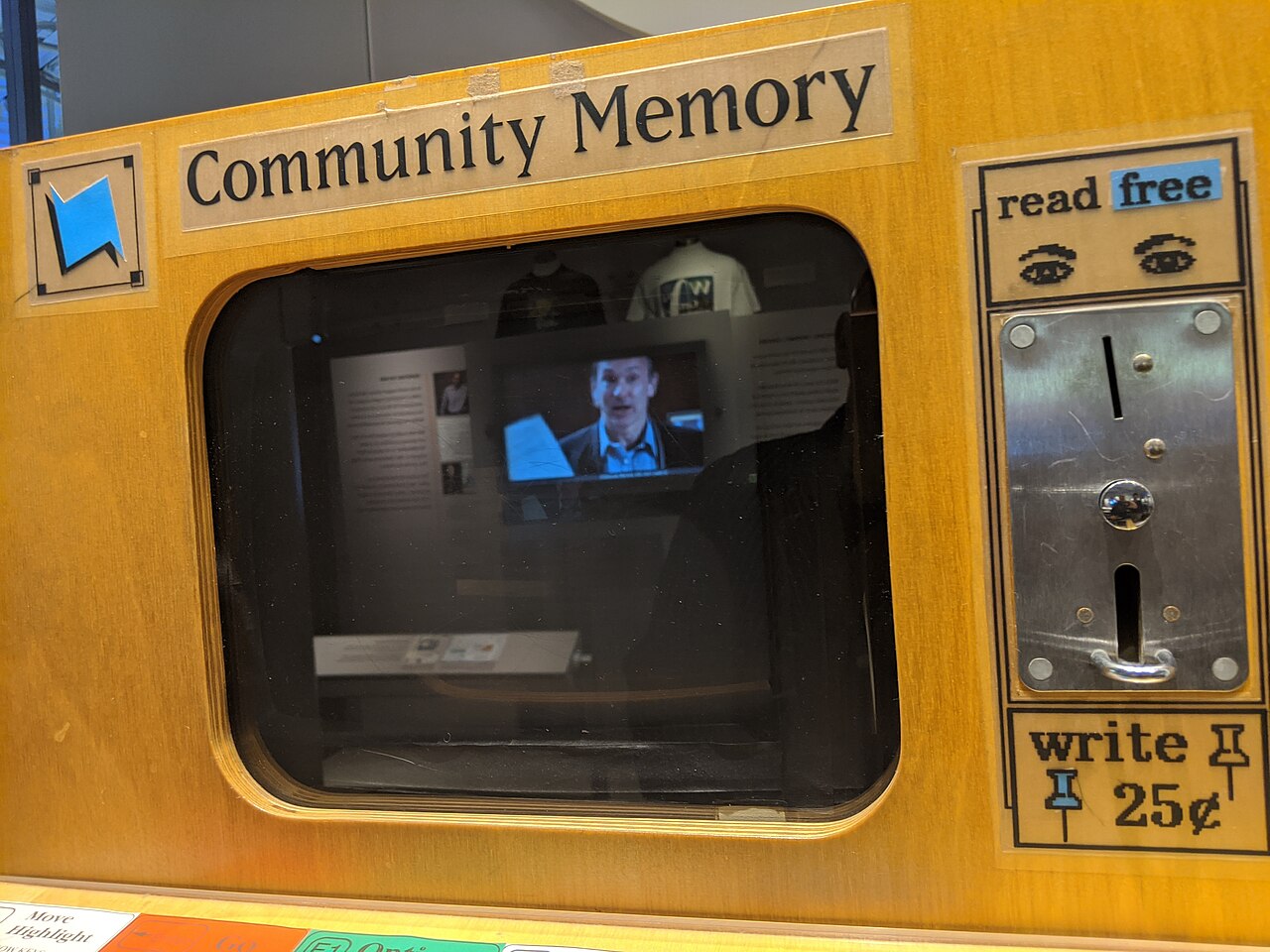
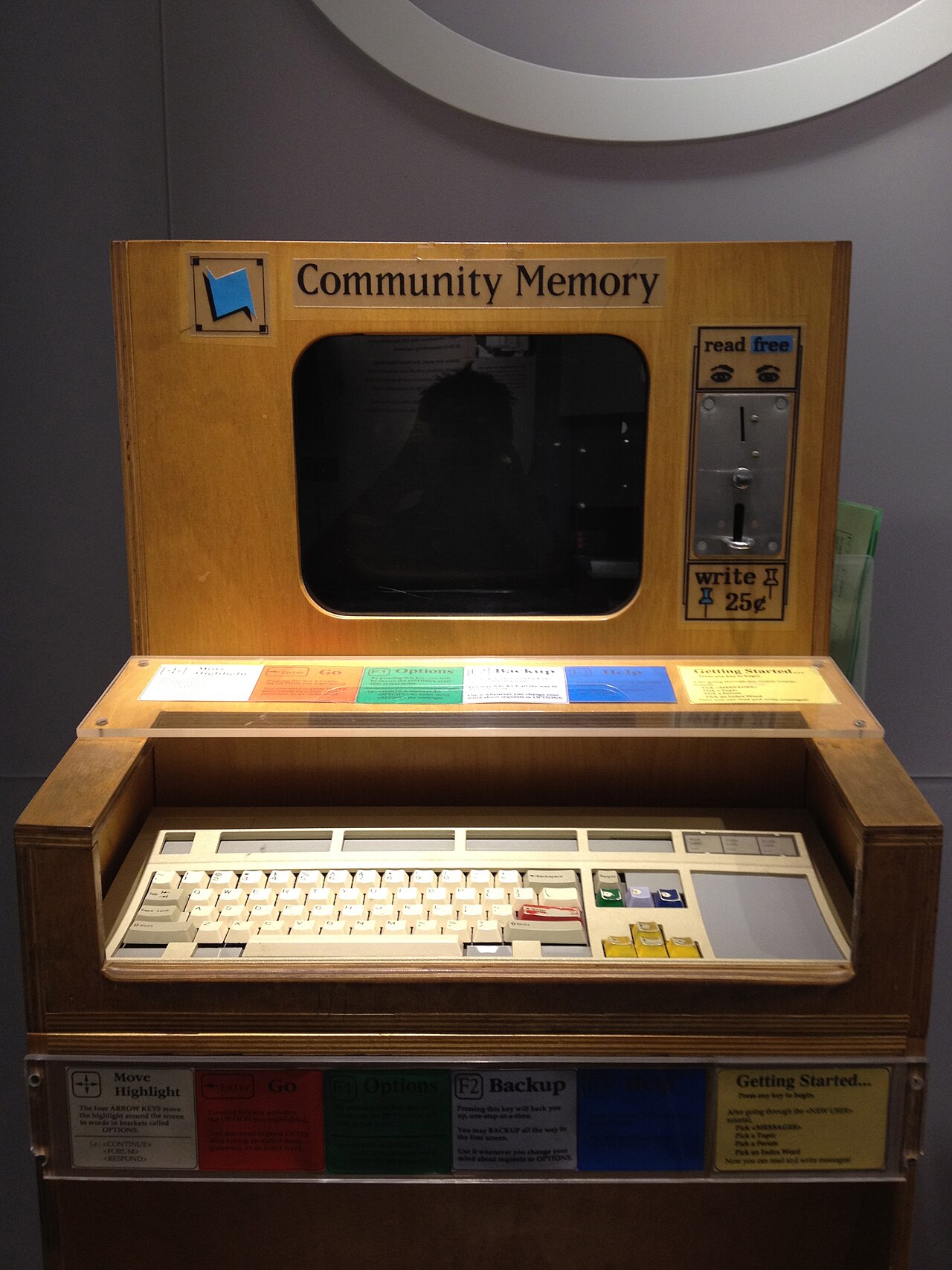
Community Memory, launched in Berkeley in 1973, was the first public computerized bulletin-board system — a coin-operated terminal set up in Leopold’s Records and a public library, wired to a mainframe, where anyone could post and read messages.
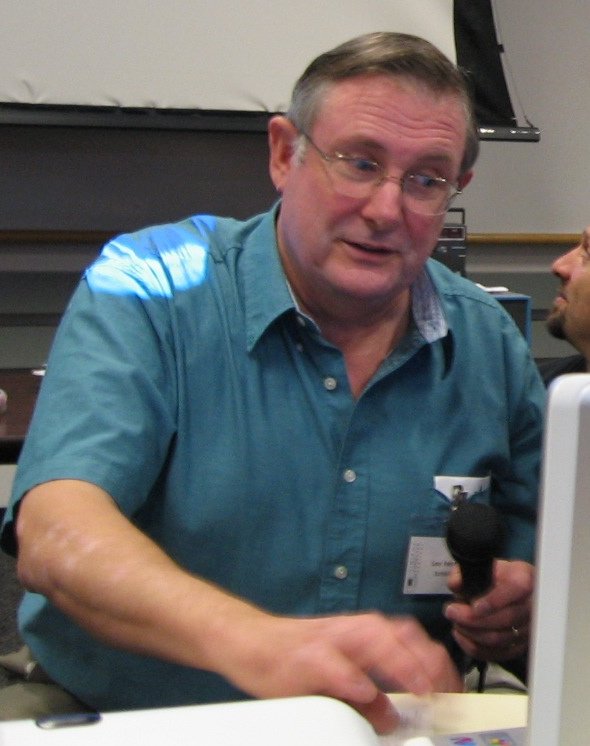
Built by activists including Lee Felsenstein, Efrem Lipkin, and Jude Milhon, it reframed the computer not as a calculating machine but as a communications medium and an information commons, open to all and shaped by its users’ own postings. Non-commercial and community-run, it was a direct experiment in the ideas the internet would later scale. Its lineage runs straight to the WELL, the bulletin-board era, and the whole notion of the network as a public square.

FIND: the operating premise
Unifying principle
Communication and information are a commons; put two-way computer terminals in public places so any citizen can share and find knowledge without gatekeepers.
— the premise, stated plainly
INDEX: keywords attached to this record
Keywords
- the public terminal in a record store
- the community bulletin board
- information as a commons
- the coin-op terminal (Leopold’s)
- non-hierarchical two-way media
- the public terminal
- the bulletin board
- the flyer
- The Invisible College
- The Noosphere / Great Mind
RUN: the interface itself
ADD / FIND
Community Memory had no menus and no owners of the index. You dropped a coin, typed ADD to leave a message with keywords of your own choosing, or typed FIND plus a keyword to pull back everything anyone had ever filed under it. Reading was free; writing cost a quarter. The whole database was whatever Berkeley had bothered to type. This is that interface, restaged over this record.
25¢ to add Reading is free Resource One · XDS-940
Ready. Type a keyword, or pick one on file.
FIND: who was at the keyboard
The collective
A small radical-technical collective enacting information democracy on borrowed hardware; visionary and chronically under-resourced.



FIND: why it spread
Memetic forces
A public computer terminal anyone could post to was a radical, tangible enactment of information democracy.
The countercultural mission of decentralizing media power gave the project moral urgency.
Its very novelty — strangers leaving messages for strangers — drew fascinated use.
FIND: what held it together / what pulled it apart
Engines
Convergent
- the public terminal sited in community spaces
- the Resource One / Community Memory collective
- a Berkeley countercultural-technical milieu
Divergent
- hardware and funding fragility
- the long gap between its 1970s vision and viable technology
- being overtaken by BBSes and the internet
.jpg)
FIND: what it left behind
Impact on society
The first public computerized bulletin board — direct conceptual ancestor of BBS culture, the WELL, and community networking; Felsenstein carried its ethos into Homebrew and the PC.
Scenius signature
Radicals who put a computer terminal in a record store to prove information could be a public utility.

PRINT: last entry
Fate
Repeatedly revived and outrun by technology; its idea of the public information commons became the template for community networks and the social web.
Terminal 1973 — last system 1992