a. Recurring Motifs
- the summer symposium and course
- jumping genes (McClintock)
- the phage course's home
- maize and model organisms
- the seasonal gathering of genetics
The Annual Symposium & Summer Course · Genetics Convened
A lab that worked as the field's meeting-house — where genetics gathered every summer to teach itself.
§ The Signature
A lab and summer-course hub — home to the Phage Group's meetings and McClintock's jumping genes — where genetics gathered every summer.
§ I The Crossroads on the Sound
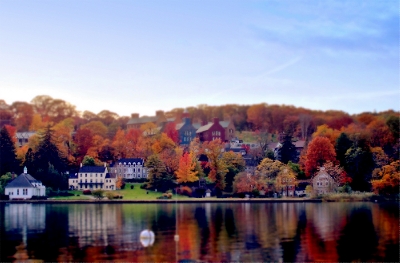
Cold Spring Harbor Laboratory, on Long Island since 1890, has served American biology as both a research institution and, crucially, a gathering place — its summer courses and annual Symposia bringing the field together year after year.
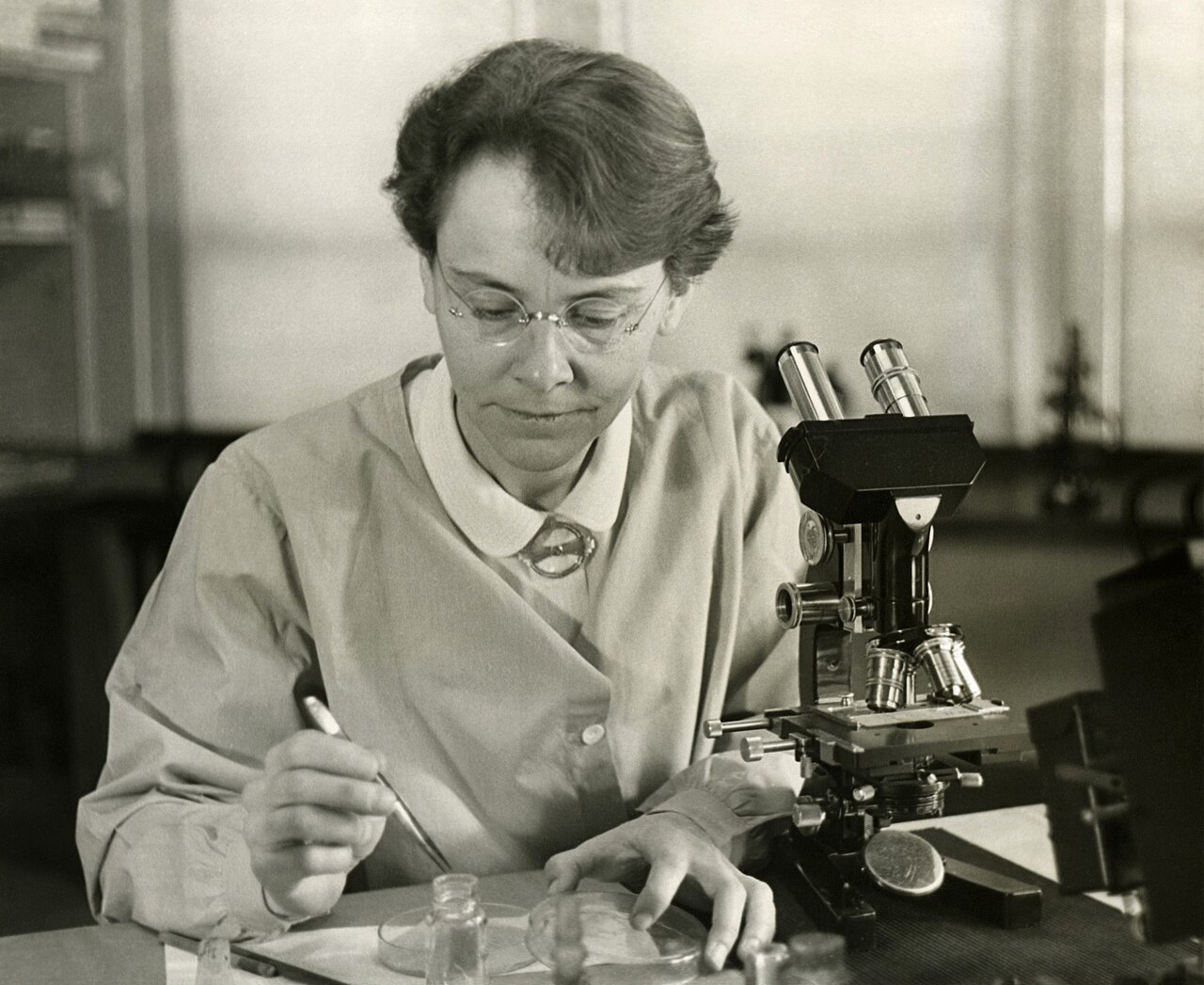
It hosted the Phage Group's formative meetings, was the long home of Barbara McClintock and her discovery of transposable "jumping genes," and later, under James Watson, became a powerhouse of cancer and genome research.
As a hub where genetics repeatedly convened, taught itself, and set its agenda, Cold Spring Harbor is one of the connective institutions of modern life science.
Its early-century involvement in the eugenics movement is a real and studied stain on its history.
§ II The Discovery That Wouldn't Sit Still
Working nearly alone with maize on this campus for decades, Barbara McClintock found that genetic elements could move — transposing along the chromosome, switching neighboring genes on and off. The proof was visible in the corn itself: the mottled, variegated kernels in the frieze above, each speckle a record of a controlling element leaping in and out. The field left the finding largely unrecognized for years before it grasped, at last, what she had seen.
Fig. — a controlling element (Ds) transposing between loci
§ III In Residence
Maize genetics · Nobel 1983
The lab's long-resident cytogeneticist. Her transposons — "jumping genes" — went unrecognized for decades before the field caught up.
Physicist turned phage biologist
A leader of the Phage Group, whose formative course and summer meetings here helped bring molecular biology into being.
Director, later era
Under his leadership the campus became a powerhouse of cancer research and, ultimately, genomics.
§ IV The Dossier
Be the gathering place of genetics: through summer courses and symposia, concentrate the field's people seasonally so methods, organisms, and ideas circulate and compound.
A lab that functions as the field's meeting-house; its seasonal courses and symposia mattered as much as its bench work, making it a hub more than a hierarchy.
Cradle and crossroads of 20th-century genetics — McClintock's transposons, the phage course, molecular biology, later genomics — and a central node in the field's social network.
A seasonal meeting-house that became the crossroads where genetics gathered, taught itself, and compounded.
§ V Plates
§ VI Register
§ VII Fate
Thriving as a genomics powerhouse and perennial gathering place; reckoning with its dark eugenics-era origins.

_shown_in_her_laboratory_in_1947.jpg)