An Invisible College · Est. Rome, April 1968
Club
of Rome
The World Problematique / A Report to Humanity
A think-circle that used system dynamics to model planetary ‘Limits to Growth,’ making the whole Earth a system in crisis.
The Machine Speaks
The Earth is a single finite system whose exponential trends in population, industry, and pollution will overshoot limits within a century — unless humanity deliberately steers toward equilibrium.
The Overshoot Curve
The Club’s defining act was commissioning The Limits to Growth (1972). Its World3 model plotted five interlocking variables to the year 2100. In the “standard run,” unchecked exponential growth on a finite planet produced the same verdict again and again: overshoot, then collapse.
Schematic evocation of the World3 “standard run” (Meadows et al., The Limits to Growth, 1972) — an interpretive redrawing, not the source data. The report’s thesis: exponential growth against fixed limits ends in overshoot and decline within a century.
An Invisible College
Founded in April 1968 when Aurelio Peccei and Alexander King convened roughly thirty scientists, economists, educators, industrialists and civil servants from ten countries at Rome’s Accademia dei Lincei, the Club of Rome constituted itself as a deliberately small “invisible college” dedicated to the “world problematique” — the conviction that population growth, industrialization, resource depletion, pollution and poverty were not separate problems but a single interlocking system no discipline or nation could grasp alone.
Its defining act was commissioning The Limits to Growth (1972), whose computer model argued that unchecked exponential growth on a finite planet would produce overshoot and collapse within a century — a thesis that made the Club, almost overnight, the most consequential vehicle through which cybernetic systems modeling entered global environmental and political consciousness.
Figures of Thought
- M-01The whole planet as one finite system.
- M-02“Limits to Growth” and the overshoot curve.
- M-03The computer world-model as oracle.
- M-04The “problematique” — the tangle of global crises.
Why It Spread
A computer model forecasting civilizational collapse carried a novel, data-backed authority that alarmed and mobilized.
The framing of a single interlinked “world problem” gave scattered anxieties one dramatic story.
Elite membership and a bestselling report guaranteed global attention.
Everything Feeds Everything
System dynamics, drawn from Jay Forrester (adjacent), refused to isolate variables. Population drives industry; industry drives pollution and depletes resources; scarcity and pollution feed back onto population. No node stands alone — that closed loop was the argument.
What Held / What Split
⊕ Convergent
- The commissioned World3 model and the Limits to Growth report.
- An elite, invitation-only membership.
- System-dynamics methodology as a shared tool.
⊗ Divergent
- Fierce economic and political backlash against the “limits” thesis.
- Internal disagreement over prescriptions.
- The report’s success spawning many successor movements that split its message.
Influence Without Organization
A small elite think-circle that commissioned modeling work and published reports, exercising influence through publication and convening rather than organization. Its mediums were few and deliberate:
Members of Record
Mythic Register
What It Changed
It put planetary limits and global modeling on the world agenda, catalyzed the sustainability and later degrowth and planetary-boundaries debates, and prefigured climate-system thinking. Limits to Growth remains a reference point.
The Signature
A circle that made the whole Earth its unit of analysis, using a computer model as a shared oracle to reframe the global situation.
Living but past its peak influence; vindicated and vilified in turns, its systemic framing absorbed into sustainability science and climate discourse.
Seal of the City
The Club took its name and its first meeting-place from Rome — convening at the Accademia dei Lincei, the sixteenth-century academy of the “lynx-eyed.” The she-wolf who suckled the city’s founders stands here as an emblem of an old civilization now measured against a finite Earth.
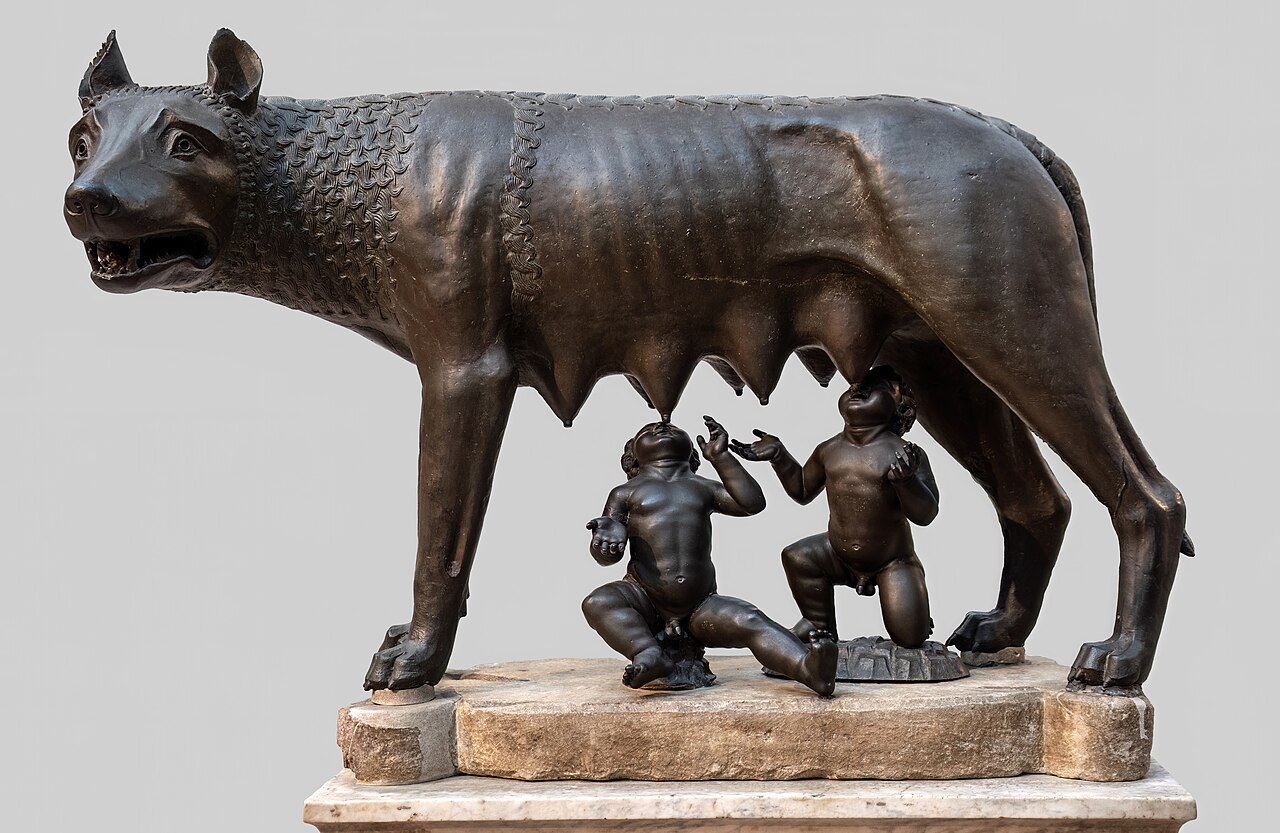
Artist: Unknown · License: CC0 (Public Domain) · Source: Wikimedia Commons.

Sources & Provenance
Coded from public web sources (Wikipedia-led); confidence: high; not yet independently verified.
- “History of the Club of Rome,” Club of Rome official — clubofrome.org
- “A short history of a ground-breaking publication: The Limits to Growth” (PDF), Club of Rome — clubofrome.org
- “Club of Rome Issues The Limits to Growth,” EBSCO Research Starters — ebsco.com
- “The Limits to Growth” (original report text), Donella Meadows collection, Dartmouth — dartmouth.edu
- Image: Lupa Capitolina, CC0, via Wikimedia Commons