Lab & Studio · Fellowship · 1967–2009
MIT Center for Advanced Visual Studies
Kepes's fellowship center pairing artists with MIT science to make large-scale environmental and light art.
00The Brief
CAVS was MIT's institutional answer to the question of what a Bauhaus would look like inside a Cold War engineering university: a rotating fellowship, founded in 1967 by György Kepes, that imported world-class artists — Nam June Paik, Charlotte Moorman, Aldo Tambellini, Krzysztof Wodiczko, Takis, Otto Piene — and set them to work in MIT's own laboratories and workshops beside physicists and engineers. Over 42 years and 200-plus fellows it produced kinetic and light sculpture, environmental and civic-scale works — culminating in Piene's Centerbeam, shown at documenta 6 in 1977 and on the National Mall in 1978 — MIT's first arts graduate degree, and a durable institutional argument that art and science were complementary rather than opposed, before folding, in 2009, into the Program in Art, Culture and Technology.
01The Fellows & Founders
F—01György KepesFounder; Moholy-Nagy's student, author of Language of Vision
F—02Otto PieneDirector; Group Zero co-founder, sky & light art, Centerbeam
F—03Muriel CooperAdjacent — MIT's design conscience, bridge to the Media Lab
02Light & Sky
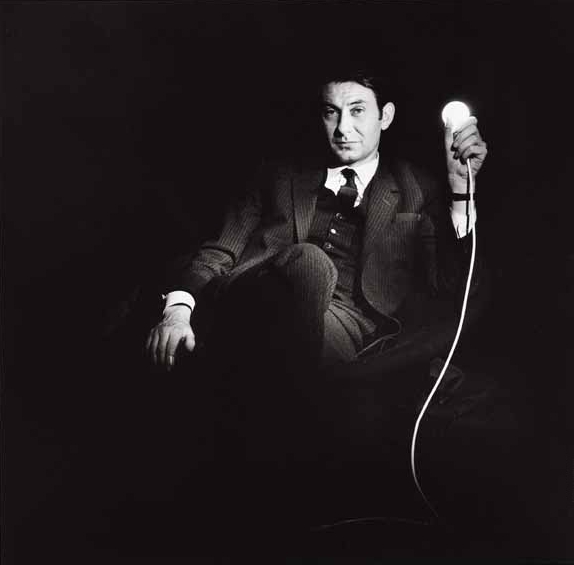

Piene brought Düsseldorf's Group Zero — its faith in light, movement and the sky as artistic media — into MIT's workshops. Under his long directorship the fellowship's promise crystallized: art made not on a canvas but at the scale of the environment itself, using the same instruments as the physicists next door.
03The Unifying Principle
Artists working as fellows alongside scientists and engineers can make art at civic and environmental scale — reuniting art, science, and technology in the service of a humane, perceptually enriched public realm.
04Motifs & Memetic Forces
Motifs
- the artist as fellow embedded in science
- environmental and civic-scale art
- light, sky, and kinetic works
- art-science collaboration institutionalized
Memetic Forces
- the promise of art made at the scale of the environment, with real scientific tools, drew ambitious artists
- MIT's resources and Kepes's Bauhaus prestige gave the vision credibility
- the fellowship model created a rotating, cross-pollinating community
05Convergent & Divergent Engines
Convergent — what pulled it together
- György Kepes's founding vision and Bauhaus lineage
- the MIT fellowship structure
- large-scale collaborative and environmental projects
Divergent — what pulled it apart
- the difficulty of realizing civic-scale art
- the shift from Kepes's harmony toward more critical media art
- its eventual merger into MIT's broader programs
06Internal Dynamics & Impact
Internal Dynamics
A fellowship center at MIT gathering artists to work with scientists on environmental-scale art, shaped by Kepes's integrative vision.
Society & Impact
Institutionalized the artist-in-lab and environmental-art models, bridging the Bauhaus to the Media Lab and shaping decades of art-science-technology practice.
07Mediums & Archetypes
Mediums
the fellowship
environmental art
light / sky art
the collaboration
Archetypes
The Laboratory
Gesamtkunstwerk
08Scenius Signature & Fate
Scenius Signature
A fellowship engineered to embed artists in science at MIT — art-science collaboration built into an institution.
Fate
Ran to 2009 before merging into MIT's programs — a key link in the lineage from Bauhaus to media art.