

.jpg)
Internal dynamics
Evolved from anarchic beach party to incorporated non-profit running a temporary city, in perpetual tension between its libertarian-communal roots and the administration required to keep 70,000 people alive.
Black Rock Desert · 1986 – present
A temporary desert city built yearly on radical self-expression, gifting, and a giant burning effigy — the Autonomous Zone at metropolitan scale.
Field report
Not a doctrine but an impulse — one wooden figure, one beach, one solstice — that grew into a purpose-built municipality dismantled without trace each September.
Burning Man began as an accident of biography rather than a doctrine: Larry Harvey and Jerry James burning a wooden effigy on Baker Beach at the summer solstice in 1986, an impulsive act Harvey retrospectively named "radical self-expression."
Its transformation into a fixed, recurring, and eventually enormous institution came only after San Francisco police forced the burn out of the city in 1990 and the Cacophony Society's prankster network carried it into the Black Rock Desert, where empty alkali flats let the effigy — and the surrounding encampment — grow without civic limit.
What resulted, Black Rock City, is less a festival than a purpose-built, week-long municipality — laid out on a radial street grid, populated by theme camps and mutant vehicles, and dismantled without trace each September — whose social contract is spelled out in Harvey's 2004 Ten Principles.
The event's core tension, present from its earliest desert years to its recent controversies over ticket prices and a Silicon Valley "plug-and-play" elite, is between an anti-market gift ethos and the money, infrastructure, and institutional scaffolding required to stage a mass ritual for tens of thousands of people annually.
Harvey's charter · 2004
Anyone may be a part of Burning Man. No prerequisites for participation.
Devoted to acts of gift-giving; the gift's value is unconditional.
An environment unmediated by commercial sponsorship, transaction, or advertising.
Each participant discovers, exercises, and relies on their own inner resources.
Gifts unique to the individual, offered as a gift to others.
Creative cooperation and collaboration; the making and sharing of the city.
Community members assume responsibility for public welfare.
We leave no physical trace of our activities wherever we gather.
A radically participatory ethic — no spectators, only participants.
Overcoming barriers between us and recognition of our inner selves.
Recurring marks
Why it spreads
The burn is a genuine rite of passage — costly, communal, transformative — which bonds participants for life.
The Ten Principles gave a portable ideology that could seed regional burns worldwide.
Scarcity and hardship — the desert — manufacture intense interdependence and belonging.
No spectators, only participants; gift rather than trade; radically express yourself and radically include others; leave no trace — a whole civilization rehearsed for a week.
Unifying principle · the social contract of Black Rock City
The ground it stands on
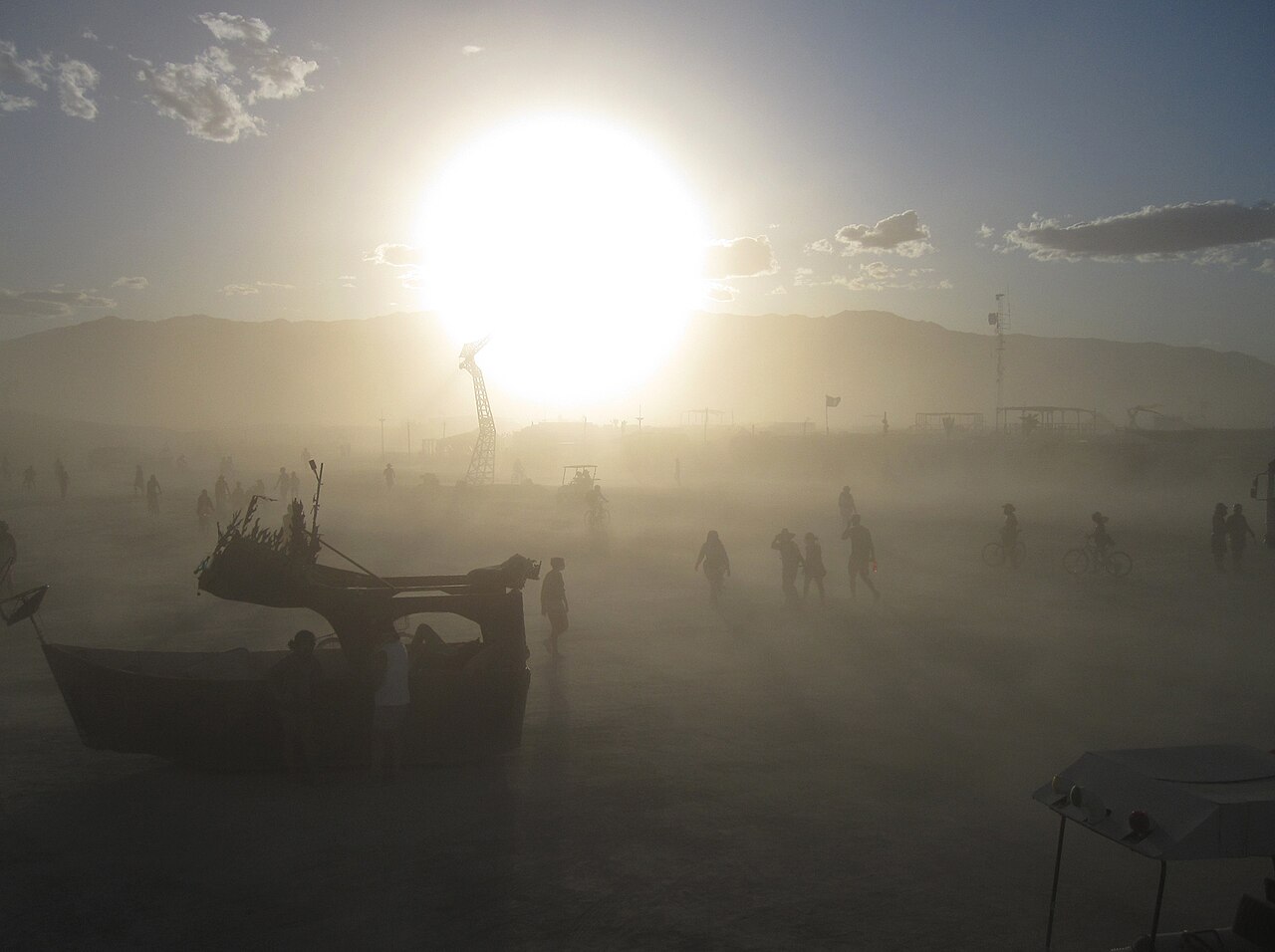
The engine room
On the playa
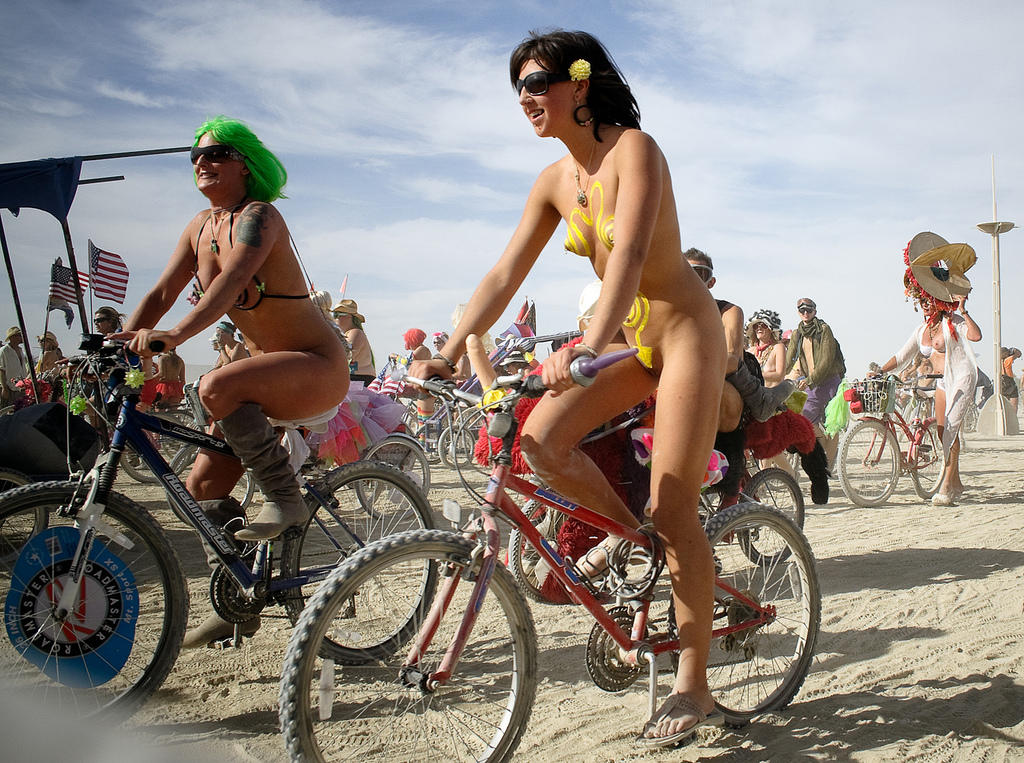
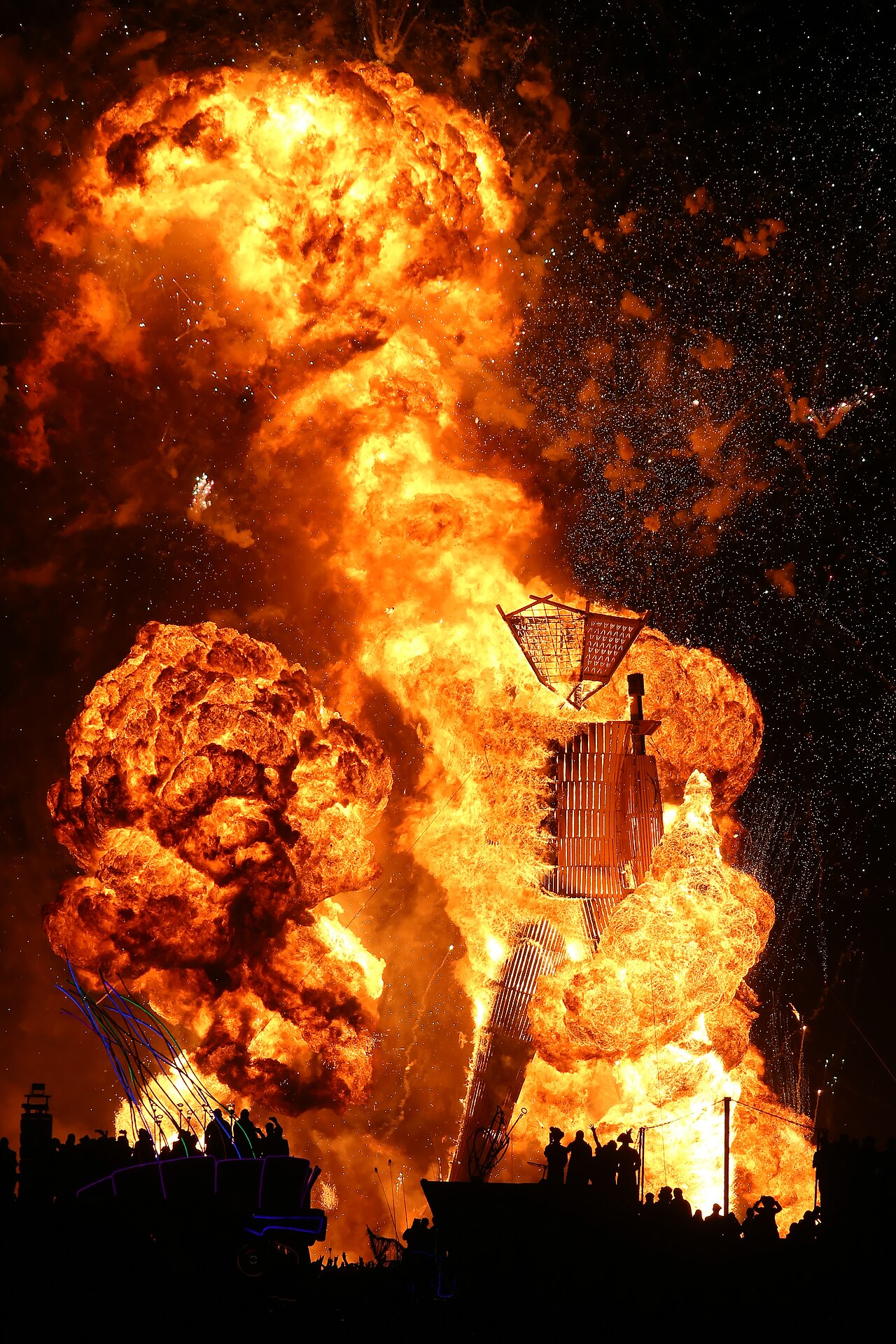
Internal weather
Evolved from anarchic beach party to incorporated non-profit running a temporary city, in perpetual tension between its libertarian-communal roots and the administration required to keep 70,000 people alive.
Became a ritual heart of Silicon Valley's ideology — gifting, radical expression, prototyping utopia — a global network of regional burns, and a mainstream reference for immersive art and temporary urbanism.
A temporary total environment where tens of thousands co-create a city — mutual appreciation and radical participation scaled to the size of a metropolis.
Founders & a city of participants
Fate
Living but institutionalized — a beloved global movement, a corporate retreat, and a contested symbol of the counterculture's absorption into capital.