Une société secrète de mathématiciens
N. Bourbaki
Éléments de mathématique
“A secret society of mathematicians who published a monumental rigorous canon under one invented name.”
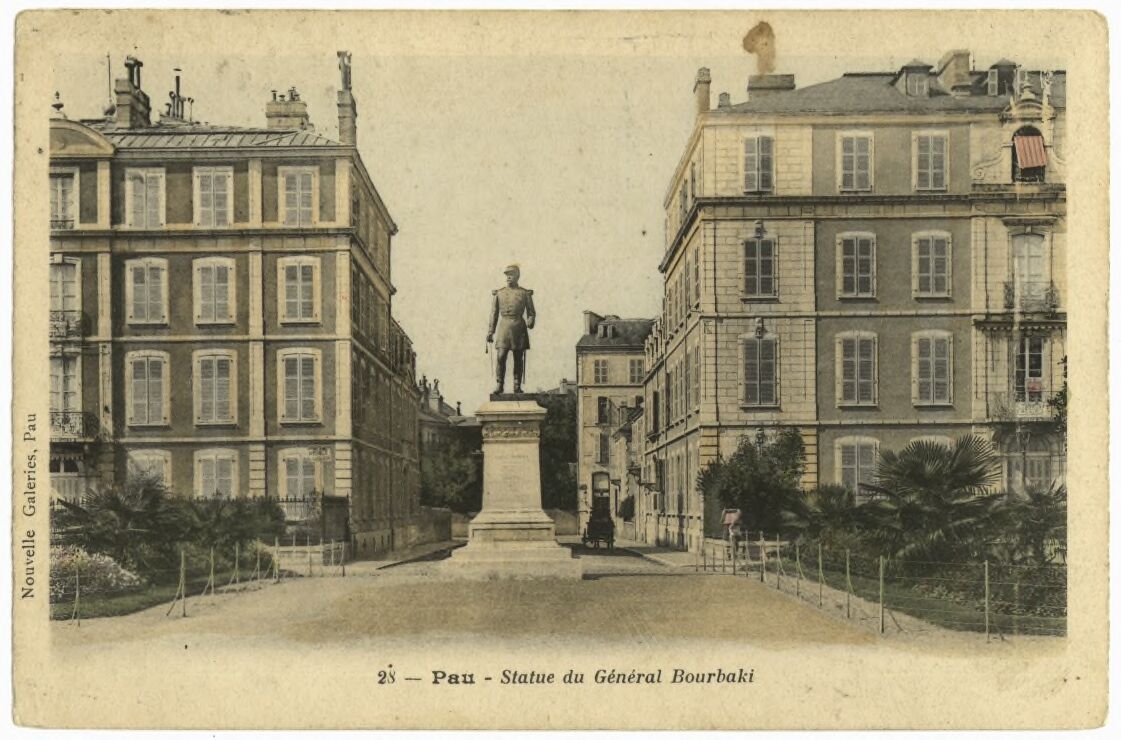
The undertakingl'entreprise
Nicolas Bourbaki never existed: he was the collective pseudonym of a secret society of mostly French mathematicians — Weil, Cartan, Dieudonné, and successors — who from 1934 set out to rewrite mathematics from rigorous, axiomatic first principles.
Meeting in raucous invitation-only congresses where drafts were read aloud and torn apart until unanimous, they published a monumental multi-volume treatise, Éléments de mathématique, under the single invented name. Their insistence on structure and abstraction reshaped how mathematics was taught and thought for a generation, feeding directly into structuralism across the human sciences and the disastrous “New Math” school reforms. The collective renewed its membership by forced retirement at fifty, a deliberate guard against ossification — a rare scene engineered to outlive its founders.
Recurring structuresles motifs
- Définitionthe anonymous collective author
- Définitionrigor and axiomatic foundations
- Définitionstructure as the object of mathematics
- Définitionthe purge of intuition and pictures
- Définitionthe congress as ritual
Memetic forcesles forces mémétiques
- A shared pseudonym dissolved ego and priority disputes, letting young mathematicians rebuild a whole field together.
- Generational revolt against the aging French analysts made total reconstruction feel necessary.
- Secrecy and in-jokes forged a fierce, flattering esprit de corps.
The unifying axiomle principe unificateur
Mathematics is the study of abstract structures; it must be rebuilt from the ground up in a single, uncompromisingly rigorous, self-contained architecture under one collective voice. ∎
From this axiom followed a whole vocabulary the world now takes for granted — structure, injective, surjective, and the empty-set symbol ∅ that Weil carried into the treatise from the Norwegian alphabet. Bourbaki did not merely prove theorems; it reset the language in which theorems are stated.
Convergent & divergent enginesce qui rassemble, ce qui disperse
Convergent
- The invented author, Nicolas Bourbaki.
- Brutal collective drafting congresses where every line was fought over.
- A mandatory-retirement rule keeping the group young.
Divergent
- The very rigor that excluded logic, probability, and applied math — and eventually dated the project.
- Later members' own towering individual careers.
- The structuralist dogma hardening into orthodoxy.
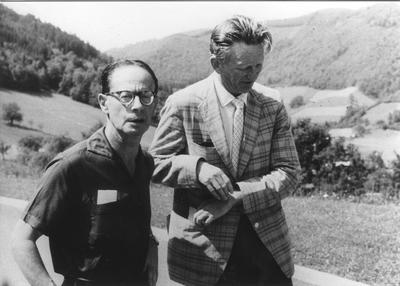
The dangerous bend — Bourbaki's own marginal sign for a perilous passage. The engines that unified the collective were the same ones that, taken to their limit, drove it aground.
Internal dynamicsla vie du congrès
A secret society governed by consensus and ritual mockery. Drafts were read aloud and torn apart until unanimous — a slow, punishing process that produced monumental consistency. No majority vote: a single dissent could send a chapter back for years. What looked like chaos from outside was, in fact, the discipline by which a group learned to think as one mind.
Impact on the worldl'onde de choc
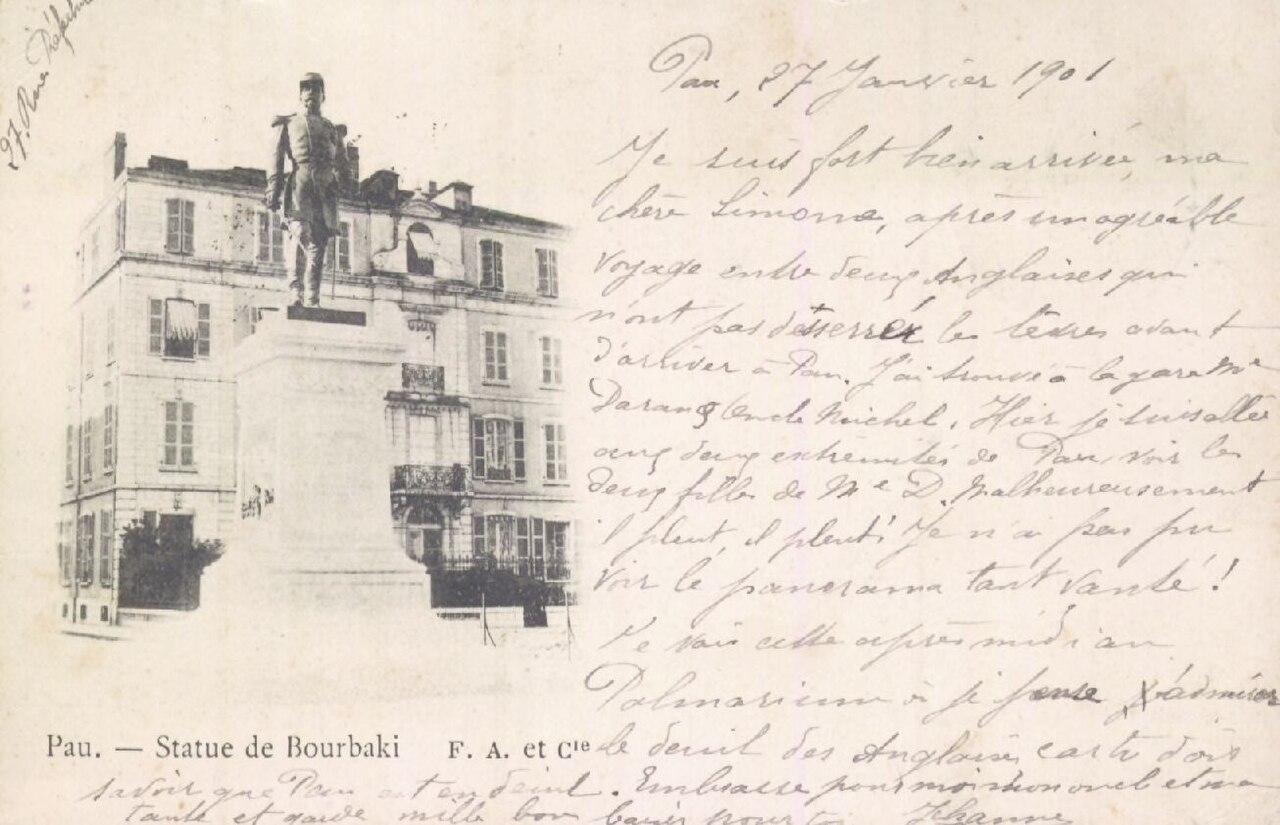
Bourbaki reset the standard of rigor and the language — structures, injective / surjective, the empty-set symbol ∅ — of twentieth-century mathematics. Its reach spilled the banks of the discipline: it shaped the New Math reforms that swept school curricula, and, through the very idea of structure, fed French structuralism itself — Lévi-Strauss, and the human sciences after him.
Scenius signaturela signature du génie collectif
Collective authorship as a technology: by killing the individual name, it let a group think as one mind across generations. ∎
Fatele destin
Still nominally alive but eclipsed. The encyclopedic project ran aground on its own austerity as mathematics turned back toward examples, computation, and the concrete — toward exactly the pictures and intuitions Bourbaki had purged. The invented author outlived his founders, as designed; the certainty that animated him did not.
The membershipfigures & mediums
- André Weil
- Henri Cartan
- Jean Dieudonné
- — all as “Nicolas Bourbaki”
- Medium · the collective treatise
- Medium · the congress
- Medium · the pseudonym
- Archetype · The Invisible College
- Archetype · The Cell / Vanguard
Further platesle reste du dossier


Achevé d'imprimer par N. Bourbaki — un seul nom, plusieurs mains.
Membre à cinquante ans : retraite obligatoire. So the collective stays young.
Sources
- Maurice Mashaal, Bourbaki: A Secret Society of Mathematicians (2006).
- Amir D. Aczel, The Artist and the Mathematician (2006).
- Leo Corry, Modern Algebra and the Rise of Mathematical Structures (1996).
Keyed to the standard published literature on this scene (representative, not exhaustive).