The grounds
Two buildings, one experiment

A twenty-four-year experiment · Form & Workshop
An experimental college with no grades and no boundaries, where art was the center of learning — and the postwar American avant-garde was incubated.
The account
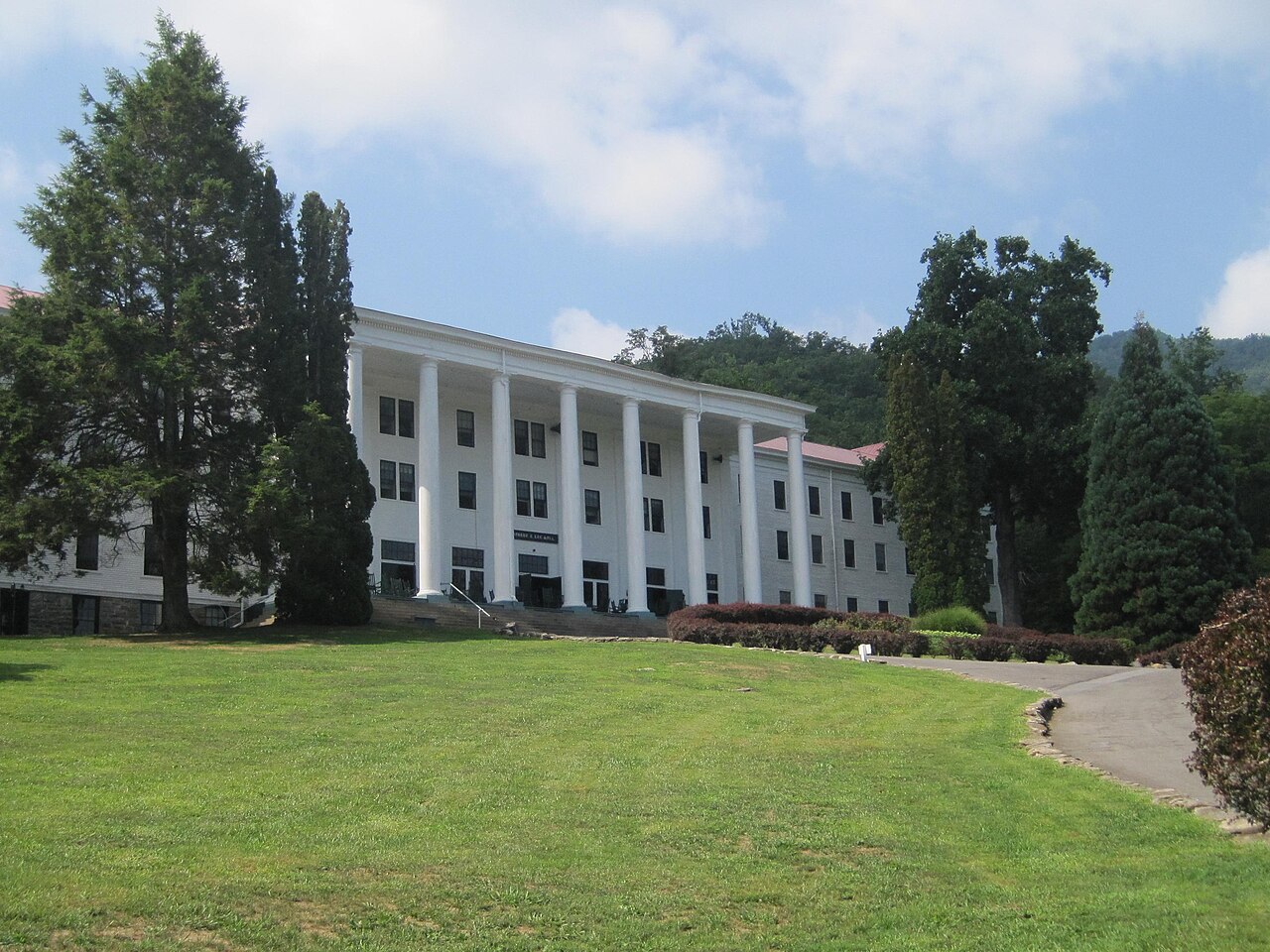
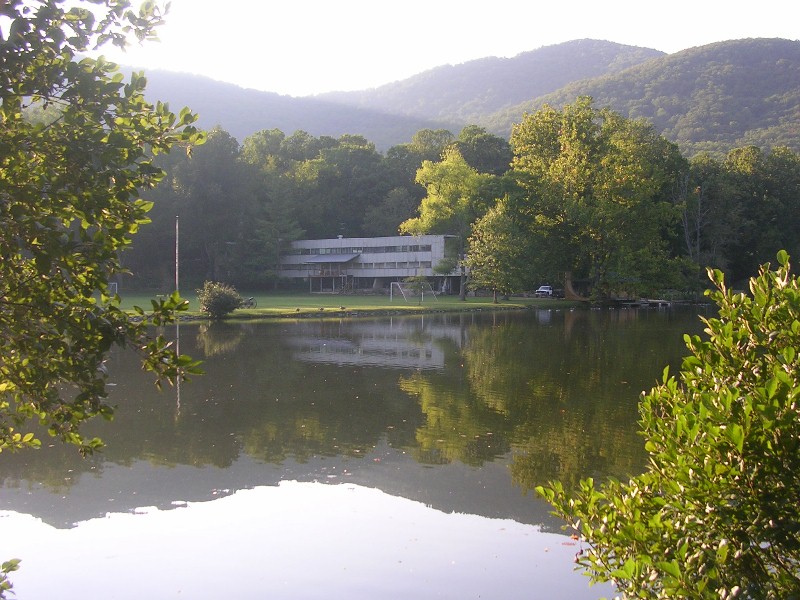
Black Mountain College was less a school than a twenty-four-year experiment in treating art-making as the organizing discipline of an entire community's life. Founded in 1933 in the Blue Ridge foothills by faculty who had just been expelled from Rollins College for insisting on shared governance, it fused John Dewey's progressive dictum that education happens through doing with the arrived Bauhaus conviction — carried personally by Josef and Anni Albers fleeing Hitler's Germany — that craft discipline was the royal road to perception and character alike.
There were no grades, no required curriculum beyond Albers's foundational materials course, and no separation between intellectual and manual labor: students built their own buildings, ran the farm and kitchen, and governed the institution alongside faculty. Over its life it hosted, almost accidentally, an extraordinary sequence of firsts — Fuller's first large geodesic dome, Cage's first “Happening,” the formation of the Cunningham company — before closing as an art school and reopening its final years as a literary hothouse under rector Charles Olson, who founded the Black Mountain Review and gathered the poets who would carry the college's name forward long after its 1957 bankruptcy.
The unifying principle
“Education is the cultivation of the whole person through direct experience; the arts are not decoration but the core discipline of learning to perceive and act.”
Recurring motifs
Learning by doing — art placed at the center of the curriculum.
The community governed by its own members.
The first “Happening” — Cage, 1952.
The geodesic dome raised — and collapsing — on the lawn.
Manual labor as part of education.
Memetic forces
Convergent & divergent engines
A scenius is a loom: forces that bind the threads together, and forces that pull them apart. Here both ran at maximum tension.
The grounds
Internal dynamics · scenius signature
A pure self-governing commune-college, chronically broke, run by its faculty. Power struggles were existential because the community was the institution. It voted itself out of existence in 1957.
Extreme density and cross-disciplinary collision under conditions of scarcity — a hothouse where a composer, a dancer, a poet, and an engineer shared one table.
What it seeded
Black Mountain directly incubated the postwar American avant-garde: the Happening, Cage's chance methods, Cunningham's dance, Rauschenberg and the New York School, projective verse, and Fuller's dome — an outsized share of what came next passed through this one failing farm-college.
Fate — Closed for lack of money; composted with astonishing efficiency into Fluxus, Judson, the New York School, and the whole idea of the experimental art school.
Who was at the table
Archetypal layer
Afterlife
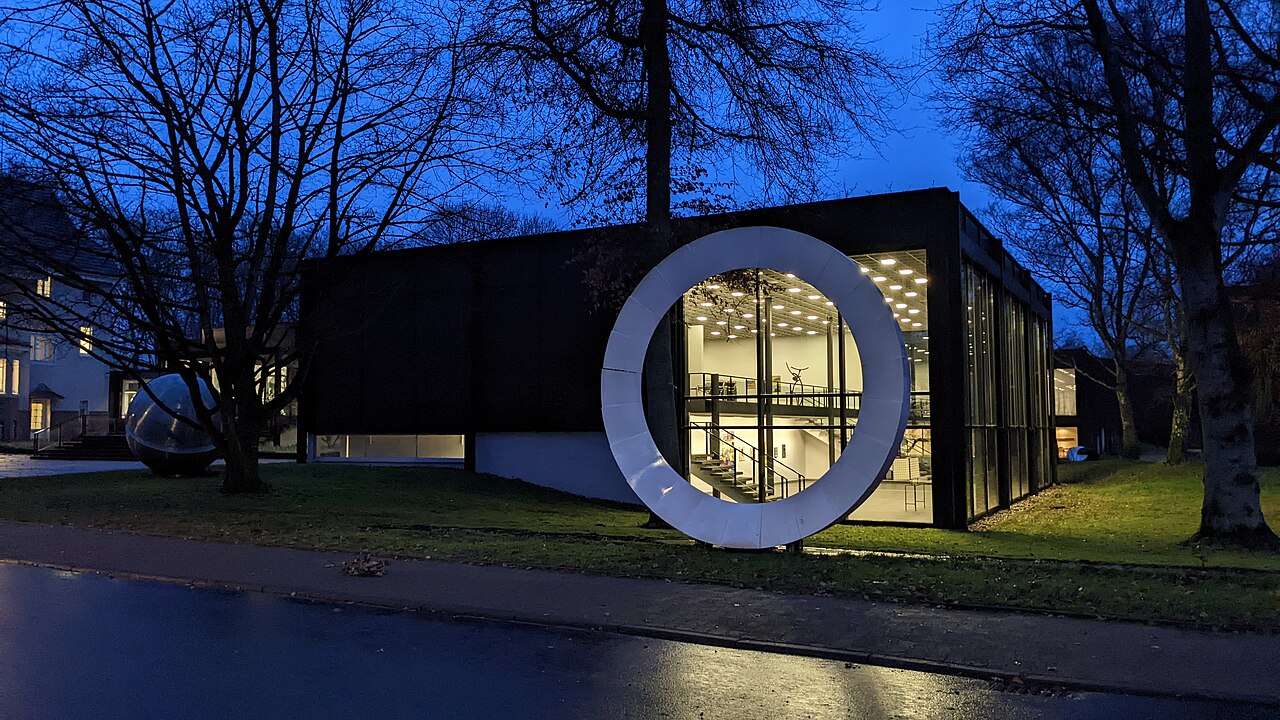
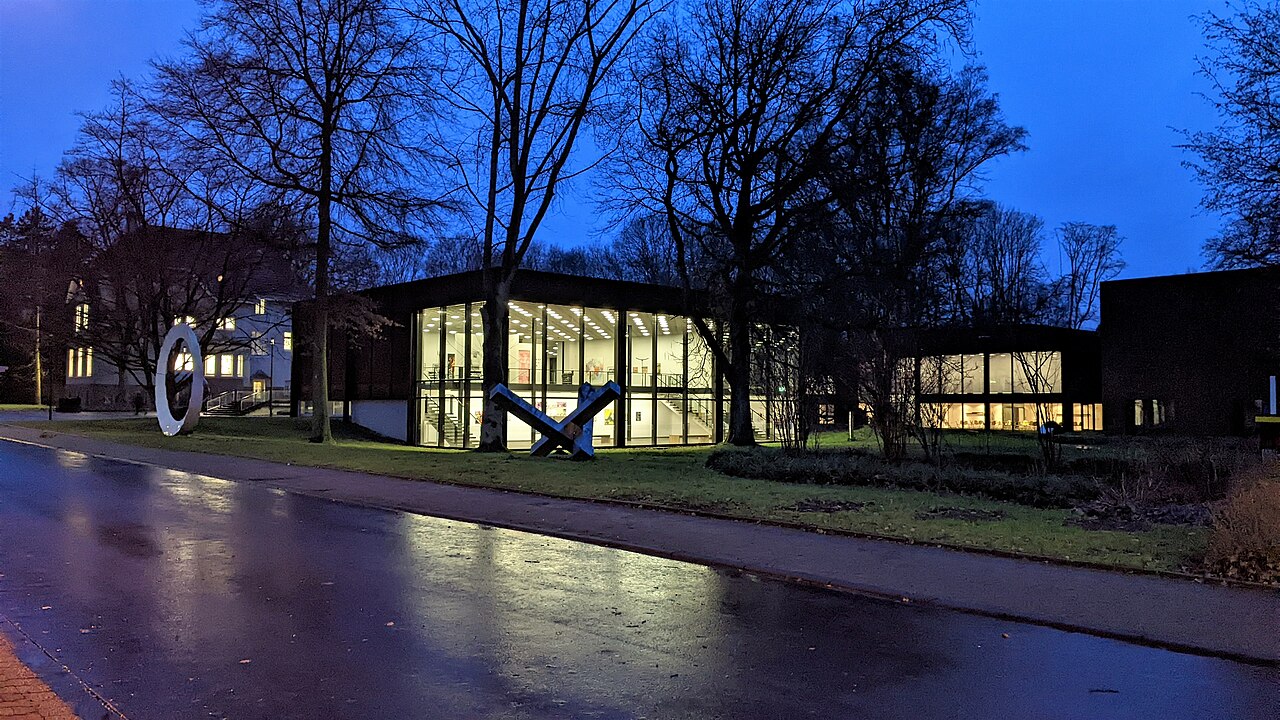
Josef Albers's foundational discipline — color set against color, square within square — outlived the college by decades. In Bottrop, his German birthplace, the Museum Quadrat gathers his work at Anni-Albers-Platz: the Bauhaus grammar that Black Mountain carried into the Appalachian woods, returned home.