01 Programme card
- Years
- 1958 — 1998
- Place
- London
- Biome
- Sound & Signal
- Morphology
- Lab
- Mediums
- the tape studiobroadcast sound designthe workshop
- Archetypes
- The LaboratoryThe Guild / Workshop
02 The brief
The BBC Radiophonic Workshop, opened in 1958 to make sound effects and music for radio and television, became an unlikely laboratory where broadcast technicians quietly invented electronic pop. Working with tape splicing, test oscillators, and found sound long before commercial synthesizers, members like Daphne Oram and Delia Derbyshire produced strikingly futuristic music — most famously Derbyshire's realisation of the Doctor Who theme, an electronic landmark heard in millions of homes. Constrained by the BBC's institutional anonymity yet astonishingly inventive, the Workshop seeded the British electronic and synth-pop imagination. Its influence echoes through ambient, electronica, and the enduring national affection for the strange sound of the future.
03 Motifs · spliced
sound design as covert composition
tape manipulation and test-tone sculpting
the anonymous BBC craftsperson
the Doctor Who theme
electronic sound for the masses via broadcast
04 Memetic forces
Osc. I — secret influence
Smuggling avant-garde electronic technique into mainstream television reached millions and thrilled its makers with secret influence.
Osc. II — constraint
The workshop's constraints (make sounds for programs, cheaply, fast) bred ingenious craft.
Osc. III — collegial anonymity
Collegial anonymity under the BBC umbrella fostered shared invention.
05 Unifying principle
Electronic and concrète techniques belong not only in the concert hall but in everyday broadcast sound; craft radical new sound for a mass audience, quietly.
06 Patch bay · what held, what pulled apart
Convergent — patched in
- the BBC's funded workshop and brief
- shared tape-studio craft and equipment
- a small collegial team (Derbyshire, Oram, Briscoe)
Divergent — dropped out
- BBC bureaucracy and denied individual credit (Derbyshire uncredited for years)
- the arrival of commercial synthesizers deskilling the craft
- institutional cost-cutting
07 Personnel
Delia DerbyshireRealisation — Doctor Who theme
Daphne OramFounder · Oramics
Desmond BriscoeFounder · organiser
Strips after Oram's Oramics — sound drawn by hand onto 35 mm film, read by photocells
Internal dynamics: a service unit inside a broadcaster, its members anonymous craftspeople whose radical work was hidden behind program titles; institutional constraint both enabled and effaced them.
08 The workshop, still sounding
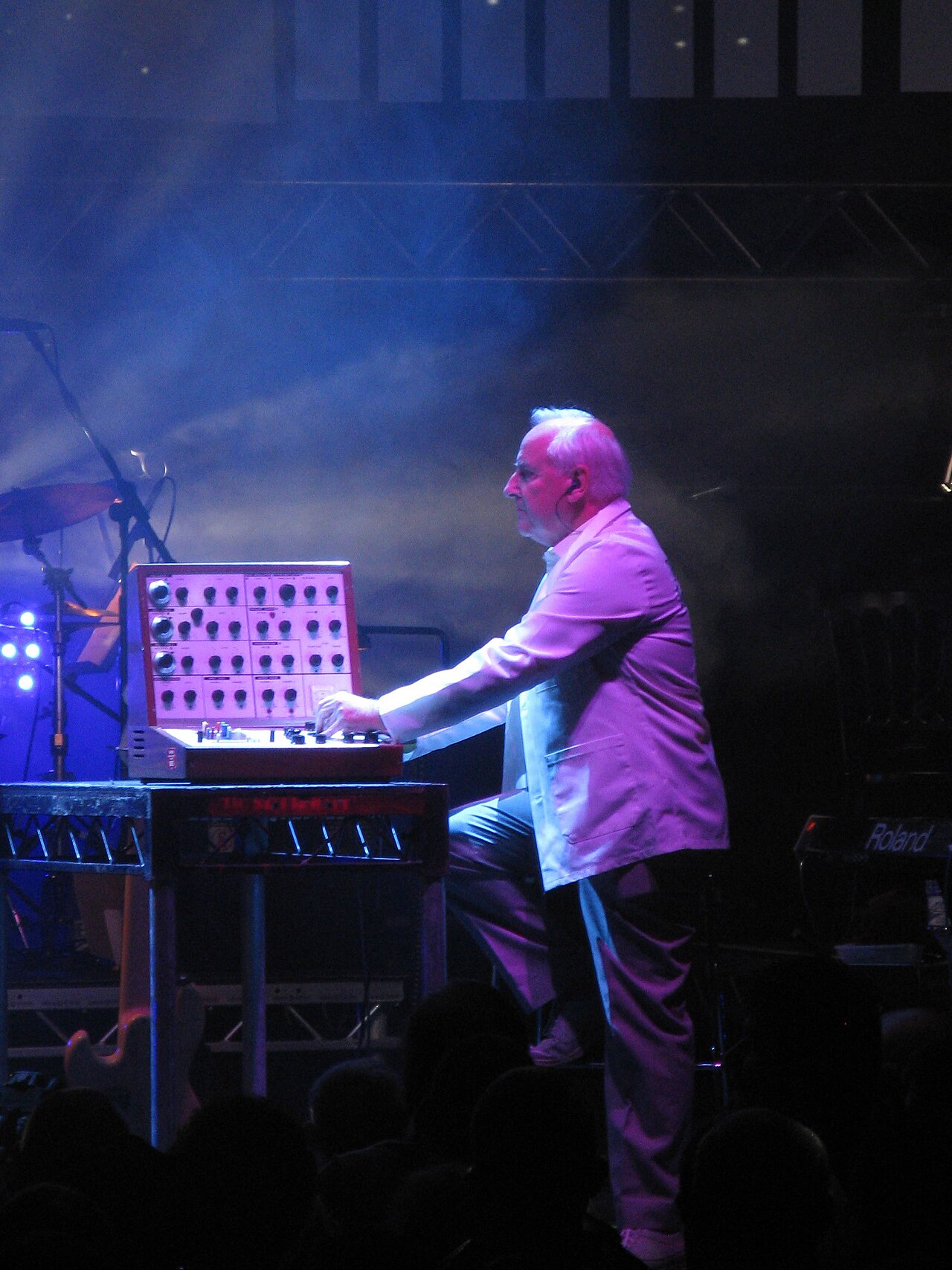

Signature
A broadcast workshop that hid the avant-garde inside the television, sculpting the future's sound for a mass audience.
09 Transmission
Impact
Brought electronic music into millions of homes, shaped the sound of British TV and sci-fi, and (via Derbyshire) became a touchstone for synth-pop, electronica, and hauntology.
Fate
Closed in 1998 as commercial synths and outsourcing made it redundant; rediscovered and revered as a foundation of electronic pop.