plates
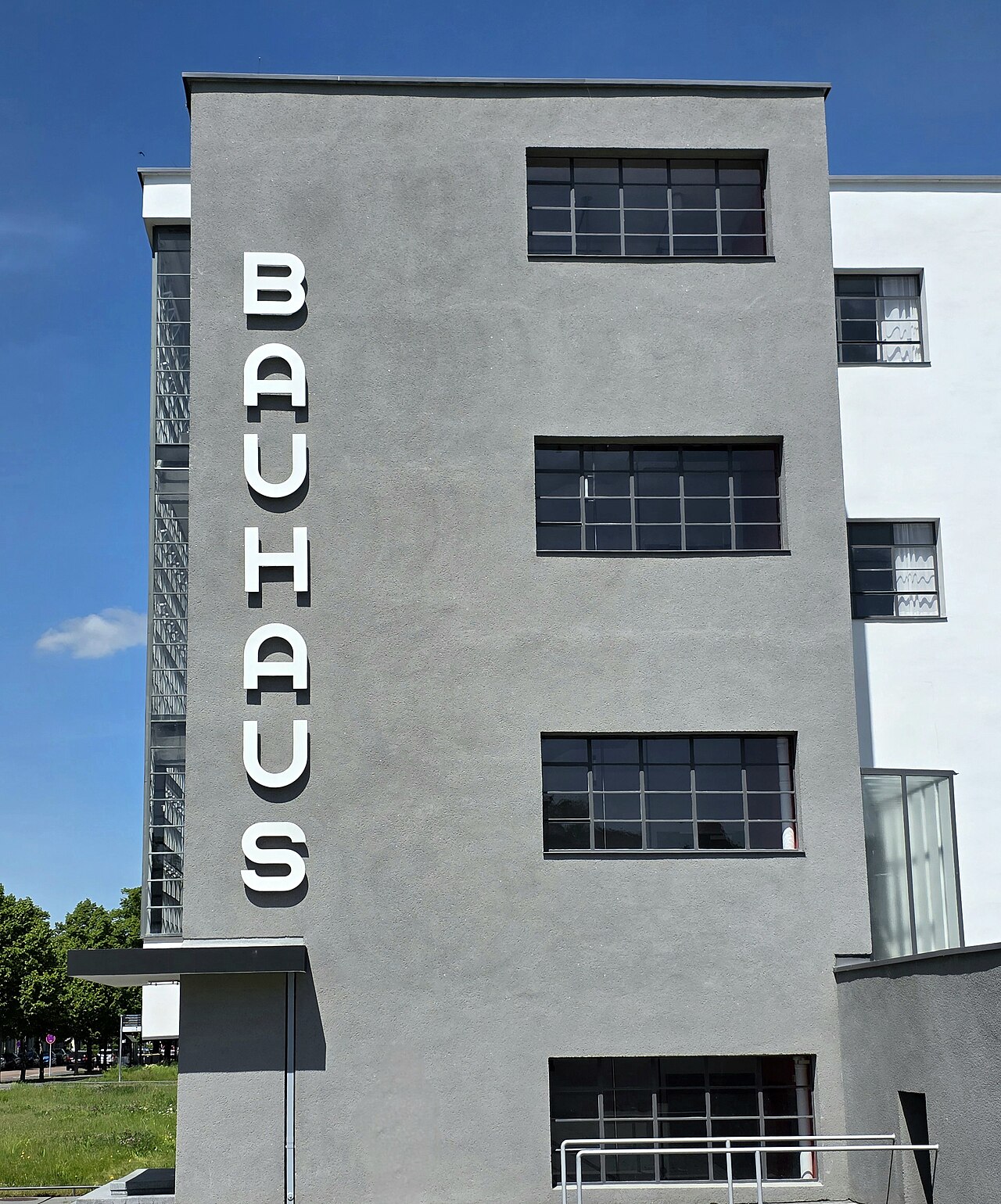
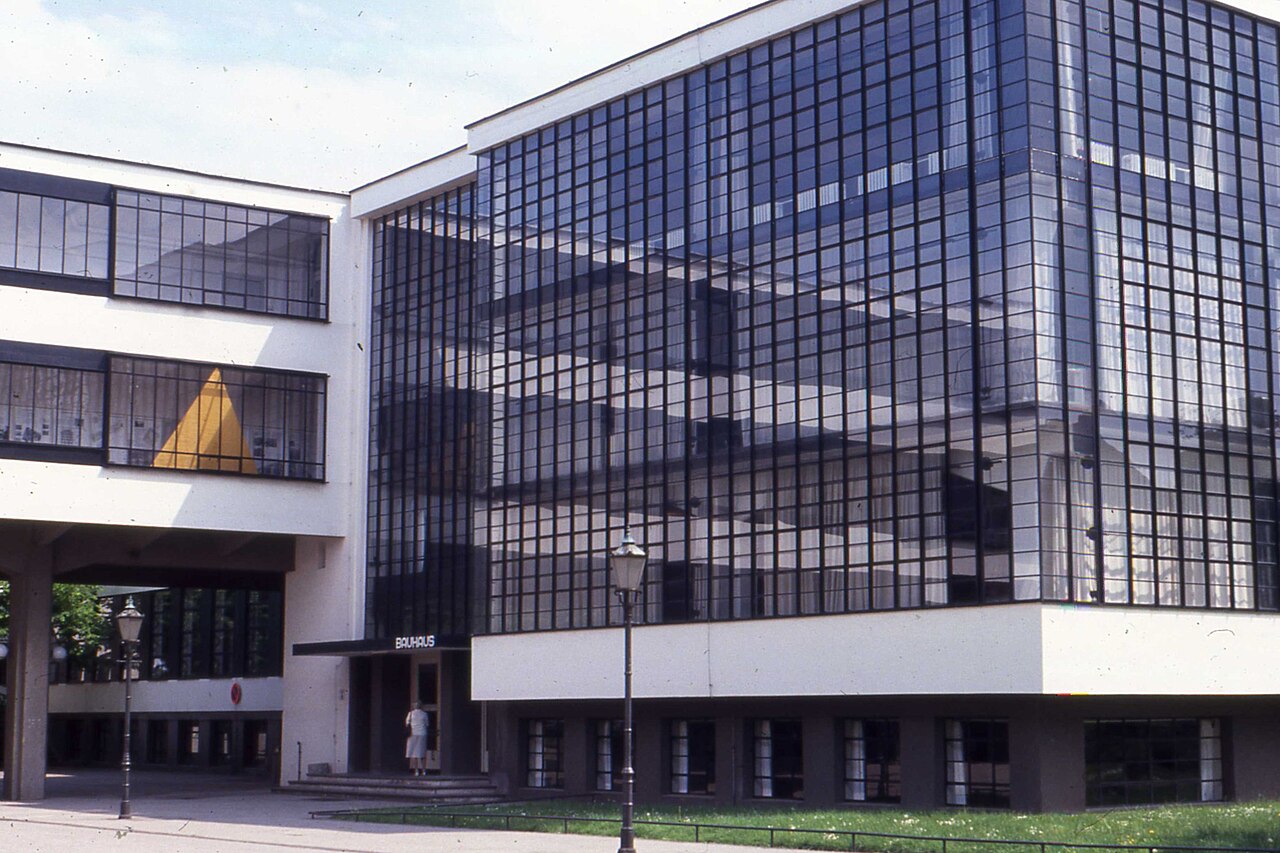
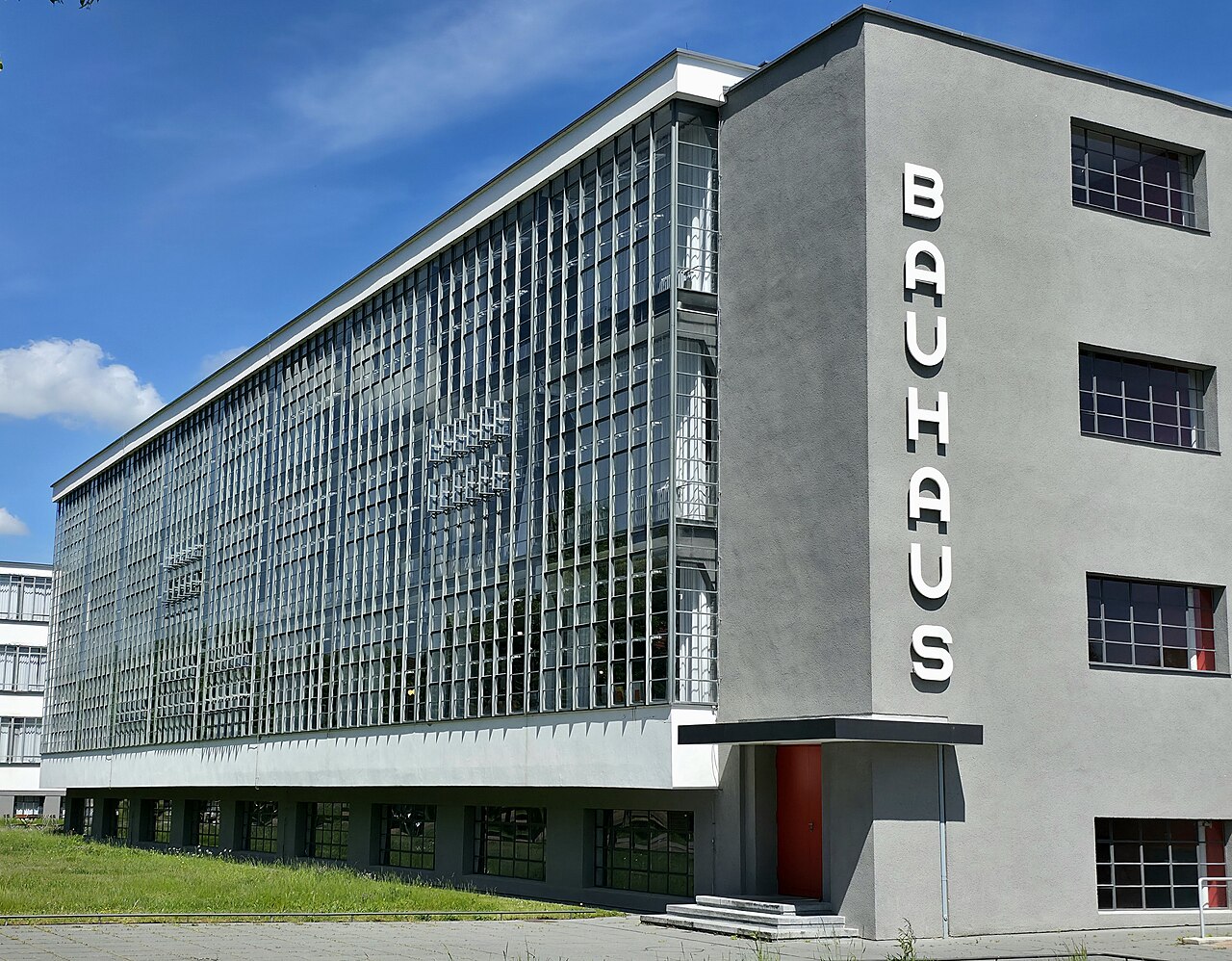
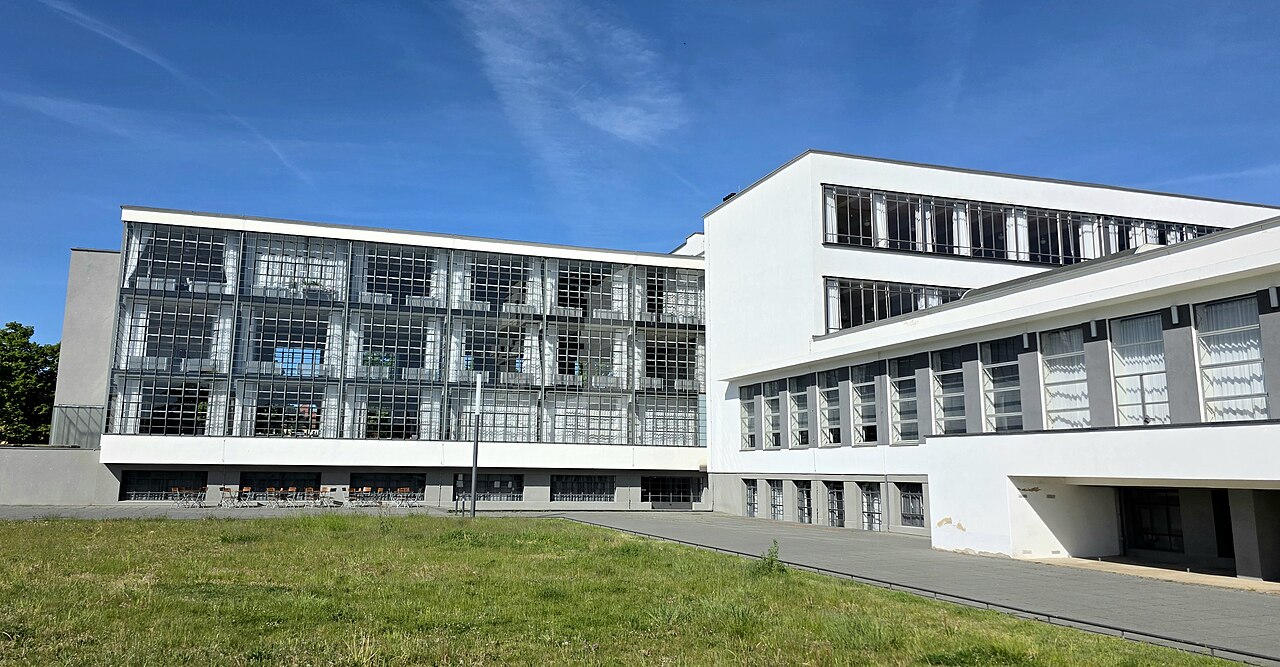
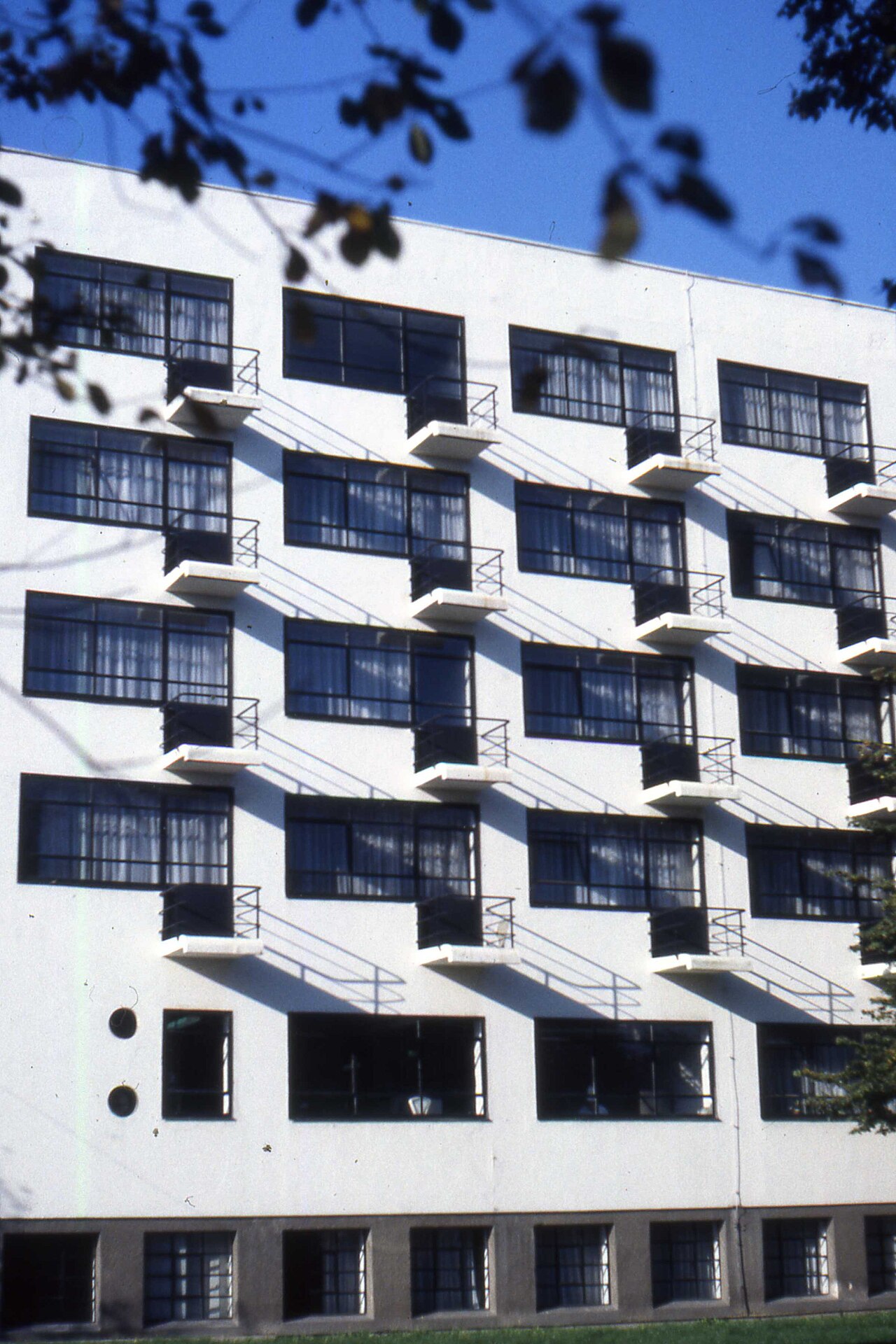
images via wikimedia commons, reused under their stated licenses ·
source category ·
Jens Kunstfreund (CC BY-SA 4.0), Sludge G (CC BY-SA 2.0)
a school that fused art and industry in the workshop to manufacture a new, total, modern environment — and a new modern human to inhabit it.
The Bauhaus was less an art school than a laboratory for a whole way of living. Founded in the ferment of the early Weimar Republic, it set out to heal the modern rupture between art and craft, and between both and industrial production — to train a new kind of maker who could design everything from a teacup to a city on unified, rational-yet-spiritual principles.
Its fourteen years spanned an expressionist, mystical founding phase under Itten, a hard turn toward "art into industry" and the machine after 1923, and a politically embattled late phase under Meyer and Mies before the Nazis closed it in 1933.
What makes it the archetypal generative scene is that its influence vastly outran its tiny size: a school that never had more than a few hundred students at a time reset the visual language of the twentieth century.
the grid and the primary colours
form follows function
the preliminary course (Vorkurs) that unlearns, then rebuilds, the eye
the workshop uniting craft and design
the building as a synthesis of all the arts
art and technology are a new unity; good design is a moral and social act; the artist is a craftsman serving the whole environment, not a genius serving the market.
The intoxicating promise that redesigning a teacup could redesign society gave total stakes to small objects. The master–apprentice bond made the pedagogy a conversion experience, and persecution by the right turned membership into an identity worth defending.
A charismatic-director model swung the school ideologically with each leader — Gropius, then Meyer's Marxism, then Mies's depoliticized rigor — amid perpetual money and political crisis. Brilliance forged under siege.